- Home
- Cruising Yachts 40' to 45'
- Norseman 447
The Norseman 447 Sailboat
Specs & Key Performance Indicators
Key Takeaways: The Norseman 447 is a premier aft-cockpit or centre-cockpit blue-water cruiser designed by Robert Perry and built by the renowned Ta Shing yard. Its hand-laid GRP construction and high ballast-to-displacement ratio make it a respected long-distance passage-maker. Prospective buyers should focus inspections on the original teak decks, black iron fuel tanks, and the age of the standing rigging.
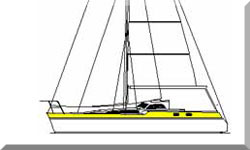
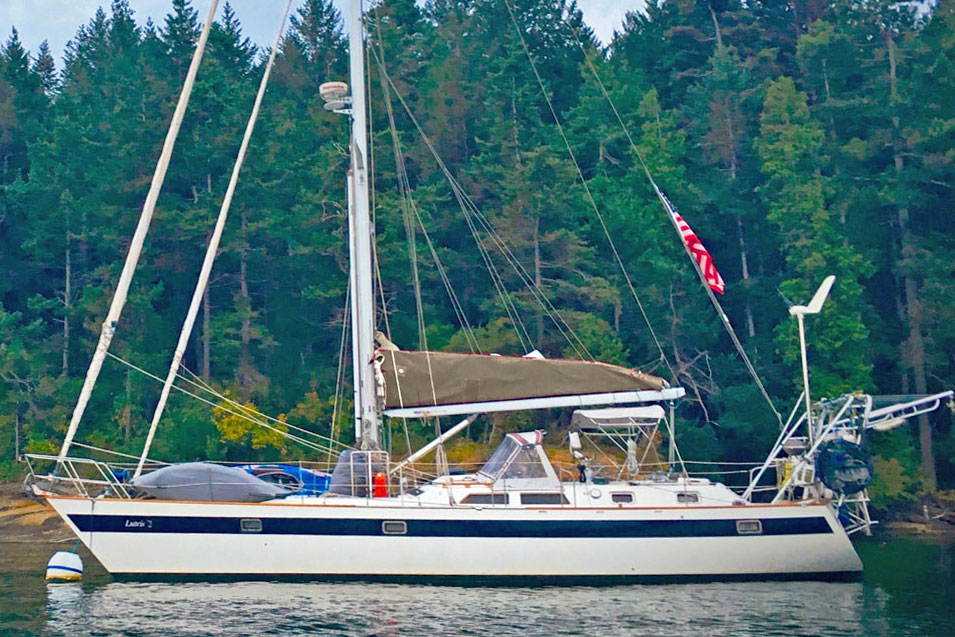 A centre-cockpit version of the Norseman 447
Table of Contents
- Design & Construction
- Sail Areas & Rig Dimensions
- Configuration, Layout & Cruising Characteristics
- Published Specification: The Norseman 447 Blueprint
- Performance Analysis: Understanding the Design Ratios
- The Buyer’s Checklist: Common Problem Areas
- Comparison: Norseman 447 vs The Competition
- Summing Up
- Frequently Asked Questions (FAQs)
Design & Construction
The Norseman 447 is the result of a collaboration between the celebrated yacht designer Robert Perry and the Ta Shing Yacht Service yard in Taiwan. First launched in 1980, these yachts were built to a standard that remains an industry benchmark. Unlike many contemporary designs that prioritise internal volume at the expense of sea-kindliness, the 447 was conceived as a serious offshore machine intended for extended periods at sea.
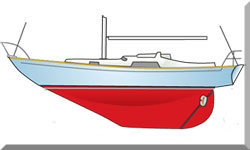
A defining feature of the Norseman 447 is its modified fin keel with a skeg-hung rudder. This configuration provides essential protection for the steering gear in blue-water cruising. At the same time, the fin keel keeps the boat responsive and capable of pointing well to windward. In practical terms, this means the 447 can claw its way off a lee shore with more agility than a traditional full-keel cruiser. Yet it still maintains enough directional stability to be handled easily by a vane gear or autopilot.
Several versions were produced during its run from 1980 to 1988. Buyers can find both aft-cockpit and centre-cockpit layouts. The aft-cockpit version is often preferred by traditionalists for its sleeker profile and better helm feel, while the centre-cockpit model offers a substantial master suite aft. Most were rigged as cutters, providing a versatile sail plan for varying wind strengths.
Sail Areas & Rig Dimensions
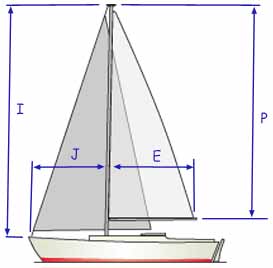 Rig dimensions
The Norseman 447 carries a powerful rig designed to move its significant displacement even in light airs. Most vessels are encountered with the cutter rig, which allows for a flexible combination of staysail and headsail.
- Total Sail Area: 1,008 ft² (93.6 m²)
- I (Forestay Height): 57'1" (17.40 m)
- J (Foretriangle Base): 19'1" (5.82 m)
- P (Mainsail Hoist): 51'2" (15.60 m)
- E (Mainsail Foot): 16'5" (5.00 m)
Configuration, Layout & Cruising Characteristics
Step below deck and the quality of the Ta Shing joinery is immediately apparent. The use of solid teak and high-grade veneers creates a warm, secure environment. The galley is typically U-shaped and located to port or starboard of the companionway, providing a safe braced position for the cook while underway. Tankage is generous. Many boats carry over 150 gallons (680 litres) of water and 100 gallons (450 litres) of fuel, allowing for significant self-sufficiency during long passages.
The cockpit, whether aft or centre, is designed with deep coamings for protection. Drainage is excellent, and the winch placements are generally well-thought-out for shorthanded sailing. One minor drawback noted by owners is that the deck layout on the aft-cockpit version can feel a bit crowded with a large crew aboard. For a couple, however, it is well proportioned.
Published Specs: The Norseman 447 Blueprint
| Specification | Data |
|---|---|
| LOA | 44'7" (13.59 m) |
| LWL | 36'3" (11.05 m) |
| Beam | 13'0" (3.96 m) |
| Draft | 6'4" (1.93 m) |
| Displacement | 28,000 lbs (12,701 kg) |
| Ballast | 12,000 lbs (5,443 kg) |
| Rig Type | Cutter or Sloop |
| Hull Material | GRP (Fibreglass) |
| Production Dates | 1980 – 1988 |
Performance Analysis: Understanding the Design Ratios
Evaluating the Norseman 447 means looking beyond the raw dimensions. The design ratios help predict how she will behave in a variety of sea states.
| Ratio | Value | Interpretation |
|---|---|---|
| Sail Area/Displacement (SA/D) | 17.4 | Moderate: Sufficient power for cruising without being over-canvassed. |
| Displacement/Length (D/L) | 263 | Medium-Heavy: Offers a stable, predictable motion in a seaway. |
| Ballast/Displacement (B/D) | 42.8% | High: Exceptionally stiff; can carry sail longer than lighter yachts. |
| Capsize Screening Formula (CSF) | 1.71 | Excellent: Well under the 2.0 limit recommended for offshore work. |
| Brewer Motion Comfort Ratio | 36.2 | High: A "gentle" boat that won't exhaust the crew in rough water. |
For a deeper look into how these figures compare to other designs, see our guide on Understanding Boat Performance & Design Ratios.
Structural Integrity & Stability Dynamics
The Norseman 447 is built with substantial structural reserves. The solid GRP hull is reinforced with a massive internal grid system, which handles the loads from the mast and keel. Because the lead ballast is encapsulated within the keel stub, the risk of "keel smile" is significantly reduced. It also lowers the risk of structural failure associated with external bolt-on keels. This structural rigidity ensures that the boat does not flex when punching into head seas, maintaining the integrity of the rig tension and interior joinery.
The Buyer’s Checklist: Common Problem Areas
While the Norseman 447 is a high-quality build, age dictates a careful inspection of several areas:
- Teak Decks: Many 447s were built with thick teak decks screwed into the sub-deck. Over forty years, these screws can allow moisture into the balsa core. Check for soft spots or signs of previous re-caulking.
- Standing Rigging: These boats typically use 1×19 stainless steel wire. The mechanical Norseman terminals are reusable, but the wire itself and the internal cones should be replaced every 10 to 12 years for blue-water work.
- Fuel Tanks: The original black iron fuel tanks can corrode from the outside in if they have been sitting in damp bilge water. Replacing them often requires removal of the engine or cockpit sole.
- Osmosis: While Ta Shing hulls are generally excellent, any boat of this era should be hauled and moisture-tested.
- Chainplates: Inspect the stainless steel chainplates where they pass through the deck; crevice corrosion is a known issue on yachts of this vintage.
Comparison: The Norseman 447 vs The Competition
When looking at the Norseman 447, it is often compared to other respected cruisers:
- Passport 42: Also a Robert Perry design, but slightly smaller. The Norseman 447 generally offers more speed and a more modern hull shape.
- Hylas 44: A German Frers design. The Hylas is slightly more performance-oriented but often feels less traditional below deck than the Norseman.
- Tayana 42: A legendary cruiser, but the Norseman 447 is widely considered to have a higher level of fit and finish and a slightly better turn of speed.
If you'd like to compare this boat with others in this size range, take a look at Cruising Boats from 40' to 45' overall....
Could this be your ideal cruising boat?
It may well be, but before going any further, it might be worth taking a look at my eBook 'How to Avoid Buying the Wrong Sailboat'...
Summing Up
The Norseman 447 remains one of the most respected blue-water cruisers ever to come out of Taiwan. It avoids the sluggishness of traditional heavy-displacement boats while maintaining a comfort ratio that shames many modern light-displacement yachts. While a prospective buyer must be wary of the maintenance costs associated with teak decks and ageing systems, the underlying "bones" of the 447 are exceptional. It is a boat for the sailor who values substance and seaworthiness over modern trends.
This article was written by Dick McClary, RYA Yachtmaster and author of the RYA publications 'Offshore Sailing' and 'Fishing Afloat', member of The Yachting Journalists Association (YJA), and erstwhile member of the Ocean Cruising Club (OCC).
Frequently Asked Questions (FAQs)
Is the Norseman 447 suitable for a solo sailor?
Is the Norseman 447 suitable for a solo sailor?
Yes, particularly if it is rigged with a well-organised slab-reefing system. The cutter rig allows for easy sail reductions, and the boat's natural directional stability makes it very forgiving.
How does the aft-cockpit compare to the centre-cockpit in terms of storage?
How does the aft-cockpit compare to the centre-cockpit in terms of storage?
The aft-cockpit version generally offers more lazarette storage on deck, whereas the centre-cockpit version sacrifices some deck storage for the large aft stateroom below.
What is the difference between Norseman rigging and rod rigging?
What is the difference between Norseman rigging and rod rigging?
Norseman rigging refers to the mechanical "Norseman" brand terminals used to secure standard 1×19 stainless steel wire. Rod rigging is a solid cold-headed bar. The 447 typically uses wire with Norseman terminals.
What is the typical cruising speed under engine?
What is the typical cruising speed under engine?
With a well-maintained 50 to 70hp diesel, you can expect an economical cruising speed of 6.5 to 7.2 knots.
Does the Norseman 447 point well to windward?
Does the Norseman 447 point well to windward?
Surprisingly well for a cruiser of its weight. The Perry-designed fin keel and skeg rudder provide a clean exit for water and enough lift to keep tacking angles respectable.
Recent Articles


-
Rigging a Carbon Mast: Carbon, PBO or Dyneema Compared
Sep 20, 26 08:01 AM
Rigging a carbon mast: how carbon rod, PBO and Dyneema compare on cost, weight and inspection, and why stainless wire or rod rarely make sense. -
Top-Down Furling Guide: Code Zeros and Asymmetric Spinnakers
Sep 19, 26 04:57 PM
Top-down furling explained for cruisers: how it works, which boats need one, common faults, sock versus furler costs, and the rule everyone forgets. -
Standing Rigging Inspection Checklist: A Sailor's Full Guide
Sep 19, 26 03:46 PM
A complete standing rigging inspection checklist covering swage fittings, chainplates, tension and going aloft safely, plus when to call in a professional rigger.