- Home
- Cruising Yachts 40' to 45'
- Offshore 41 Sailboat
The Offshore 41 Sailboat: Specs, Performance Analysis & Cruising Characteristics
Key Takeaways: The Offshore 41, designed by Ray Richards and built by the renowned Cheoy Lee Shipyard, is a stout, heavy-displacement bluewater cruiser built for comfort and security rather than outright speed. Characterised by its classic lines and substantial construction, it offers a stable motion in heavy seas and a spacious interior layout suitable for long-term liveaboard use. While its teak-heavy construction requires diligent maintenance and its light-wind performance is modest, it remains a highly respected choice for traditionalists seeking a proven ocean-crossing platform. Uniquely for its class, it was offered in three distinct rig configurations: ketch, sloop, and a rarer yawl version.
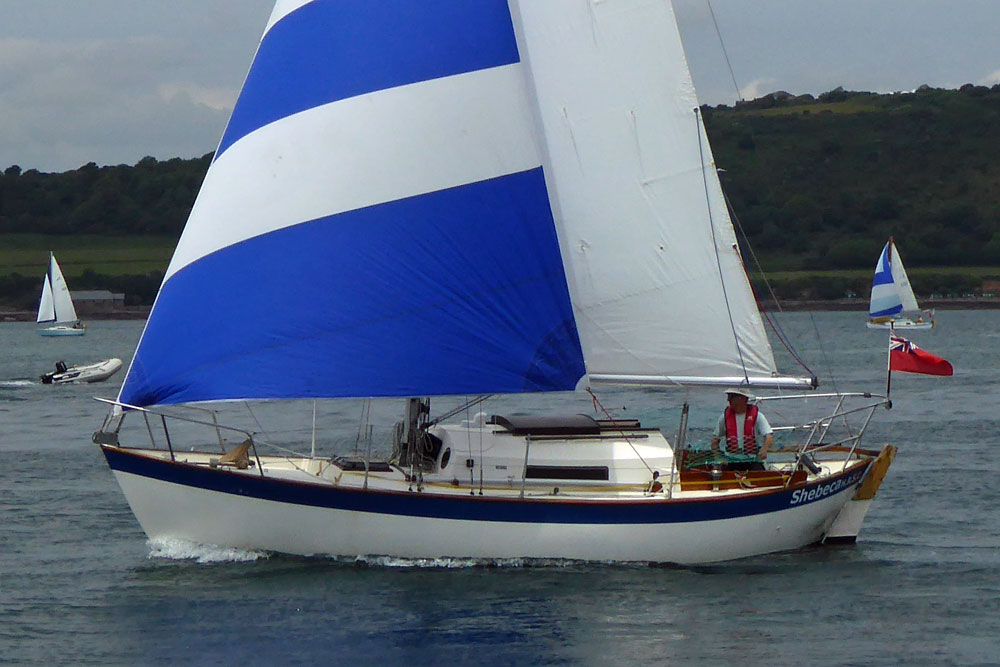
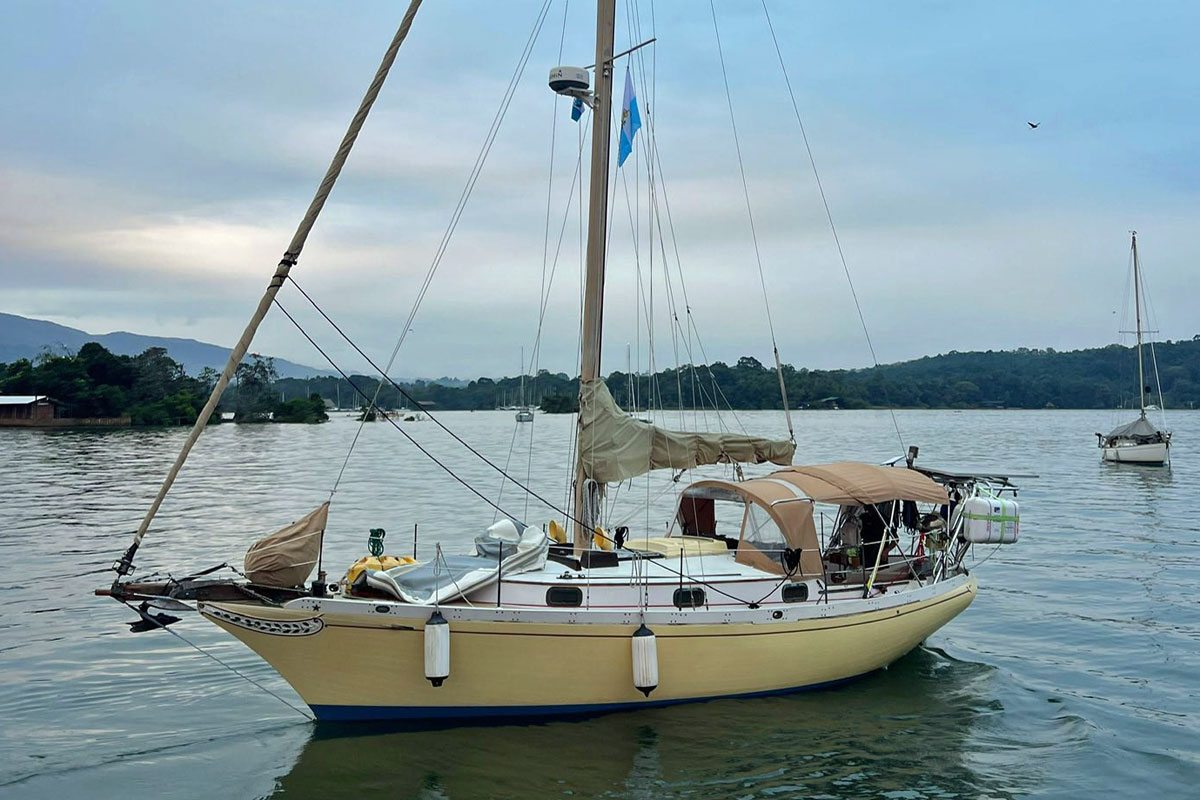
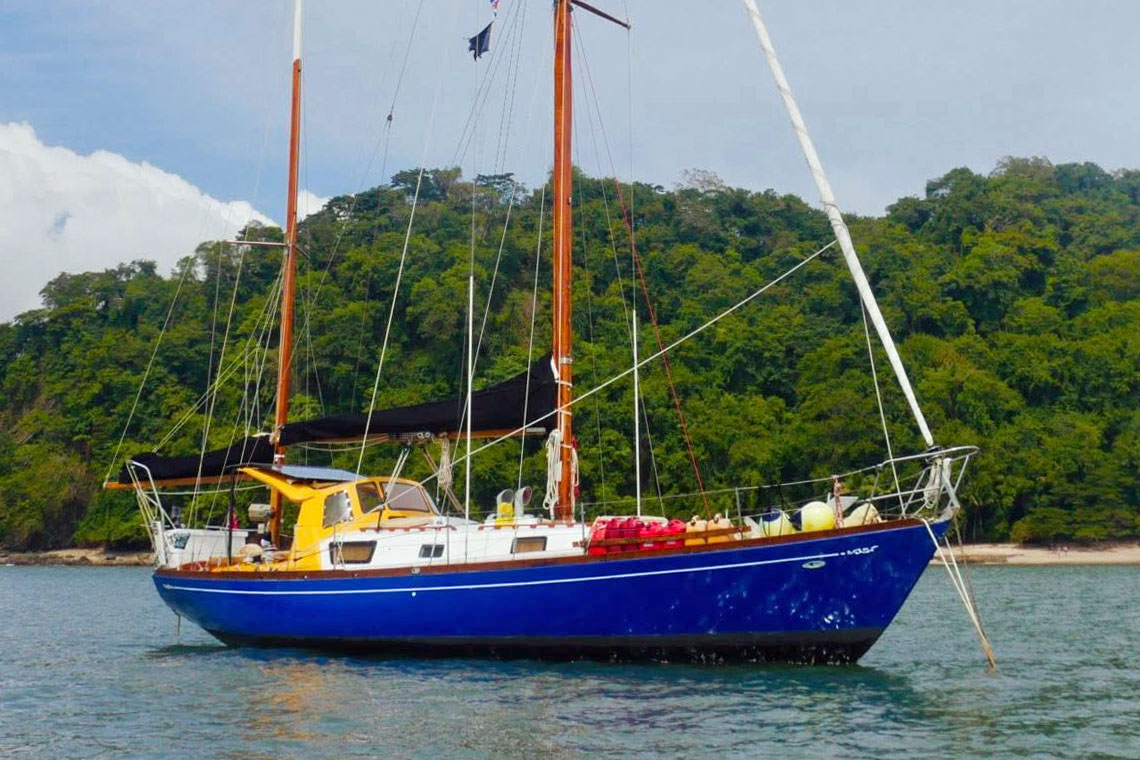 'Sitka', an Offshore 41. This one is the rarer yawl version
Table of Contents
- Design & Construction
- Sail Areas & Rig Dimensions
- Configuration, Layout & Cruising Characteristics
- Published Specification: The Offshore 41 Blueprint
- Performance Analysis: Understanding the Design Ratios
- The Buyer’s Checklist: Common Problem Areas
- Comparison: Offshore 41 vs The Competition
- Summing Up
- Frequently Asked Questions (FAQs)
Design & Construction
The Offshore 41 is the work of American naval architect Ray Richards, whose collaboration with the Cheoy Lee Shipyard in Hong Kong produced some of the most recognisable cruising yachts of the 1970s. Unlike the earlier Philip Rhodes designs, the Richards 41 was conceived during an era when fiberglass (GRP) construction was becoming more sophisticated. Builders were still using heavy hand-laid laminates that are thicker than those used in many modern boats.
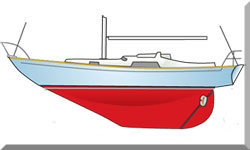
The defining feature of the Offshore 41 is its long fin keel with a cutaway forefoot and a large, protected skeg-hung rudder. This configuration provides a balance between the steady tracking of a full-keel boat and the improved maneuverability of a fin keel. It is a design that prioritises directional stability when running downwind in a swell, a trait highly valued by offshore sailors.
While most Offshore 41s were rigged as ketches to divide the sail area for easier handling by a couple, a sloop/cutter version was also produced. Most models feature a deep-draft configuration of 6'0" (1.83m), though draft varied somewhat with the ballast package installed during production.
While most Offshore 41s were rigged as ketches to break up the sail area for easier handling by a couple, the shipyard also produced sloop and yawl variants. The yawl rig is particularly interesting for those who appreciate the aesthetic and balance of a split rig but prefer the mizzen mast to be stepped further aft, typically behind the rudder post, to keep the cockpit more open than the ketch. Most models feature a deep-draft configuration of 6'0" (1.83m), though some variation exists depending on the specific ballast package installed during the production run.
Regarding stability standards, while the Offshore 41 predates the formal ISO STIX ratings, its physical characteristics and high ballast ratio would comfortably place it in Design Category A (Ocean), reflecting its ability to handle self-sufficient voyages in conditions exceeding Beaufort Force 8.
Sail Areas & Rig Dimensions
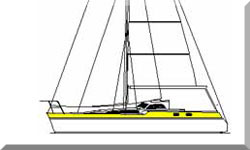
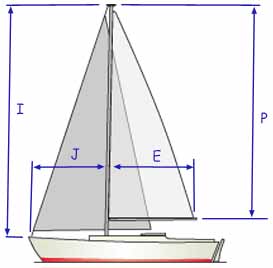 Rig dimensions
The Offshore 41 rig was designed for versatility. The choice between ketch, sloop, and yawl allowed owners to tailor the boat to their specific cruising grounds. The ketch rig allows for numerous sail combinations, which is helpful when the wind picks up and the crew wishes to maintain balance without excessive heel. The yawl rig provides a similar balance but with a smaller mizzen sail that acts more as a steering sail or "riding sail" at anchor.
- Total Sail Area (Ketch): 778 ft² (72.28 m²)
- Total Sail Area (Sloop): 715 ft² (66.43 m²)
- Total Sail Area (Yawl): 863 ft² (80.17 m²)
- I (Forestay Height): 46'0" (14.02m)
- J (Foretriangle Base): 16'10" (5.13m)
- P (Main Hoist): 40'0" (12.19m)
- E (Main Foot): 13'6" (4.11m)
- Mizzen P: 24'0" (7.32m)
- Mizzen E: 8'6" (2.59m)
Configuration, Layout & Cruising Characteristics
The interior of the Offshore 41 is a masterclass in traditional joinery, usually finished in rich Burmese teak. For a cruising couple, the layout is functional and secure. The galley is typically U-shaped and located near the companionway, providing a safe brace point for the cook while underway. Tankage is generous for a vessel of this era. Many hulls carry approximately 100 gallons (378 litres) of water and 60 gallons (227 litres) of fuel, though many owners have expanded these capacities for extended cruising.
On deck, the cockpit is deep and well-protected. In the ketch version, the mizzen mast is stepped just forward of the pedestal, which can bisect the social area of the cockpit. In contrast, the yawl version places the mizzen mast further aft, offering a slightly more spacious feel for the helmsman. The wide side decks make moving forward to handle ground tackle or reef the main feel secure, even in a seaway.
One notable consideration is the extensive use of teak on the deck and coachroof. While aesthetically beautiful, it adds to the thermal load in tropical climates and requires a strict maintenance schedule to prevent leaks into the sub-deck.
Published Specs: The Offshore 41 Blueprint
| Specification | Measurement (Imperial & Metric) |
|---|---|
| LOA | 40'11" (12.47m) |
| LWL | 32'6" (9.91m) |
| Beam | 12'6" (3.81m) |
| Draft | 6'0" (1.83m) |
| Displacement | 23,000 lbs (10,433 kg) |
| Ballast | 8,000 lbs (3,629 kg) |
| Rig Type | Ketch, Yawl & Sloop |
| Hull Material | GRP (Glassfibre) |
| Production Dates | 1973 – 1980s |
Performance Analysis: Understanding the Design Ratios
To truly evaluate how this vessel behaves at sea, we must look beyond the aesthetics and examine the mathematical footprint of the hull. These ratios provide a window into the sailing soul of the Offshore 41.
| Ratio | Value | Interpretation |
|---|---|---|
| Sail Area/Displacement (SA/D) | 15.4 – 18.1 | Varies by rig; the yawl and ketch offer more power in light winds. |
| Displacement/Length (D/L) | 299 | Heavy displacement; provides excellent load-carrying ability and a steady motion. |
| Ballast/Displacement (B/D) | 35% | Solid stability profile, typical for ocean-going cruisers of this era. |
| Capsize Screening Formula (CSF) | 1.76 | Values under 2.0 are considered suitable for ocean passages; this is a very safe score. |
| Brewer Motion Comfort Ratio | 35.2 | A high score indicating a very comfortable, "kindly" motion in heavy seas. |
The SA/D of 15.4 to 18.1 confirms that the Offshore 41 is not a light-air specialist, though the yawl rig provides a bit more "get up and go" than the standard sloop. In winds under 10 knots, you will likely be reaching for the ignition key or flying a large reaching sail. However, as the wind rises above 15 knots, the boat finds its stride, using its momentum to power through chop that would stop lighter boats in their tracks.
The D/L of 299 classifies it as a heavy cruiser. This mass, combined with a Motion Comfort Ratio of 35.2, means that the crew will suffer less fatigue during long passages. The boat does not "jump" or "skitter" over waves; it moves through them with a predictable, rhythmic motion. For more information on how these figures compare to other designs, see our guide on Understanding Boat Performance & Design Ratios.
Structural Integrity & Stability Dynamics
The use of solid glassfibre for the hull provides a level of impact resistance that is hard to match in modern cored constructions. While heavier, this "over-built" approach offers peace of mind when navigating poorly charted waters or encountering floating debris. The stability is further enhanced by the keel design, which keeps the centre of gravity low while providing enough lateral plane to track well.
One must consider that the heavy displacement and large wetted surface area do come at a cost: the boat will not point as high into the wind as a modern performance cruiser with a fin keel and spade rudder. You should expect to tack through 95 to 100 degrees rather than the 80 degrees seen on racing-oriented designs. This is particularly true for the ketch and yawl rigs, which introduce more aerodynamic drag.
The Buyer’s Checklist: Common Problem Areas
Buying a classic Cheoy Lee requires a discerning eye, particularly when assessing the shipyard's distinctive construction methods from the 1970s.
- Teak Deck Leaks: Most Offshore 41s were built with teak decks fastened with hundreds of screws into a fiberglass-and-plywood sandwich. Over time, the sealant fails, allowing water to migrate into the core. Check for "springy" spots on deck and water stains on the interior overhead.
- Chainplates: The stainless steel chainplates are often buried behind cabinetry. Because they pass through the deck, they are prone to crevice corrosion. A thorough inspection (or replacement) is mandatory for any boat planning an offshore passage.
- Osmotic Blistering: While the hulls are thick, some 1970s resins were prone to blistering. A haul-out and moisture meter test are essential.
- Engine Access: While the engine is generally reliable (often original Perkins or Westerbeke units), access can be tight in some layouts. Check the state of the motor mounts and the exhaust elbow.
- Wiring: Original Cheoy Lee wiring often lacked the color-coding and labeling found in modern standards. Many boats will require a full electrical refit to safely handle modern electronics and solar arrays.
Comparison: The Offshore 41 vs The Competition
When looking at the Offshore 41, buyers often consider other "classic" heavyweights.
- Tayana 37: The Tayana is perhaps the most direct competitor. It has a more "salty" double-ended look and similar heavy-displacement characteristics but is slightly smaller internally.
- Morgan 41 Out Island: The Morgan is much beamier and offers more interior volume but lacks the sailing performance and "pointing" ability of the Offshore 41. The Morgan is a coastal charter boat; the Offshore is an ocean cruiser.
- Valiant 40: The Valiant is a "performance" bluewater cruiser. It is significantly faster and more weatherly than the Offshore 41 but often commands a much higher price on the used market.
If you'd like to compare this boat with others in this size range, take a look at Cruising Boats from 40' to 45' overall....
Could this be your ideal cruising boat?
It may well be, but before going any further, it might be worth taking a look at my eBook 'How to Avoid Buying the Wrong Sailboat'...
Summing Up
The Offshore 41 remains a steadfast choice for the sailor who values substance over sizzle. It is a vessel that looks like a sailboat should, with a motion that protects its crew from the rigours of the open sea. Whether rigged as a ketch, sloop, or the elusive yawl, it provides a level of versatility and seaworthiness that few modern designs can match at this price point. While it requires a commitment to maintenance—specifically regarding its teak work and aging systems—the reward is a capable, ocean-ready home that will take you anywhere in the world with a high degree of safety and comfort. It is not a boat for those in a hurry, but for those who believe the journey is just as important as the destination, it is a difficult design to fault.
This article was written by Dick McClary, RYA Yachtmaster and author of the RYA publications 'Offshore Sailing' and 'Fishing Afloat', member of The Yachting Journalists Association (YJA), and erstwhile member of the Ocean Cruising Club (OCC).
Frequently Asked Questions (FAQs)
Is the Offshore 41 suitable for single-handed sailing?
Is the Offshore 41 suitable for single-handed sailing?
While large and heavy, the split rigs (ketch and yawl) make it manageable for a solo sailor as the individual sails are smaller. However, the lack of modern lines led back to the cockpit on original models means you will spend time on deck. Installing an oversized windvane or a powerful linear-drive autopilot is highly recommended.
How does the Offshore 41 handle under power?
How does the Offshore 41 handle under power?
Due to the long keel and the propeller's position, "prop walk" is significant when in reverse. It requires a practiced hand in tight marinas. Many owners find that the boat handles best under power when given a bit of speed to let the large rudder take effect.
What is the typical cruising speed I should expect?
What is the typical cruising speed I should expect?
Under sail, in a moderate breeze (15-20 knots), you can comfortably average 6 to 6.5 knots. Under power, with a well-maintained 40-50hp engine, a cruising speed of 6 knots at 2,200 RPM is standard.
Are the masts on the Offshore 41 wood or aluminium?
Are the masts on the Offshore 41 wood or aluminium?
Most Offshore 41s were delivered with painted aluminium masts, which are generally robust. However, some early custom orders may have had Sitka spruce masts. Aluminium is preferred for lower maintenance and longevity in offshore environments.
Can I remove the teak decks if they are leaking?
Can I remove the teak decks if they are leaking?
Yes, many owners have successfully "de-teaked" their boats. This involves removing the planks, filling hundreds of screw holes with epoxy, and applying a non-skid fiberglass finish. This significantly reduces maintenance and heat absorption but changes the classic aesthetic.
Recent Articles


-
Discovery 55 Sailboat Review: Specs, Ratios & Bluewater Capability
Oct 14, 26 06:04 AM
Detailed Discovery 55 buyer’s guide covering specs, ratios, sailing behaviour, problem areas and bluewater suitability. -
Should I Buy a Boat? Four Questions to Answer Before You Commit
Oct 02, 26 04:40 AM
Thinking "Should I buy a boat?" This guide helps you decide, with key considerations from cost & maintenance to your personal sailing aspirations. -
Offshore Internet with Starlink: Hardware, Plans, and Setup Guidance
Oct 01, 26 01:15 PM
A clear, practical guide to choosing the right Starlink hardware and plan for offshore cruising. Learn what to buy, how to install it, and how to manage power afloat.