- Home
- Cruising Yachts 30' to 35'
- Sirius 35 Sailboat
The Sirius 35 Sailboat: Specs, Performance Analysis & Cruising Characteristics
Key Takeaways: The Sirius 35 is a premium German-built deck saloon cruiser designed for long-distance liveaboard comfort. Its standout features are exceptional build quality, RCD Category A (Ocean) certification, and a clever split-level interior that delivers the living space of a much larger vessel. Its heavy displacement and moderate sail area favour stability and comfort over light-wind speed, but it remains a highly capable offshore passage maker for sailors who value safety and craftsmanship over racing credentials.
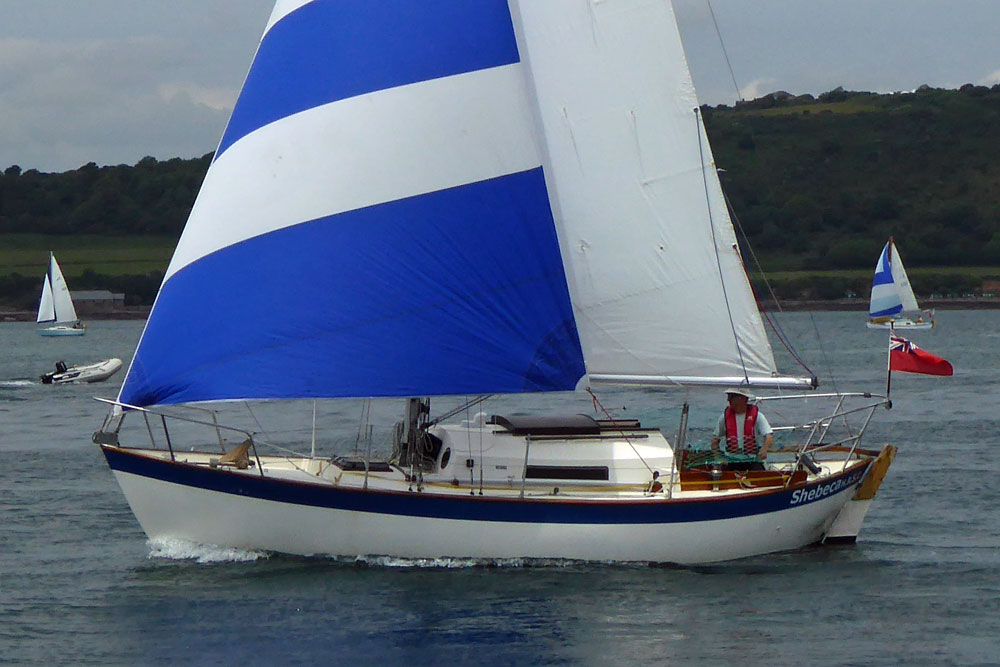
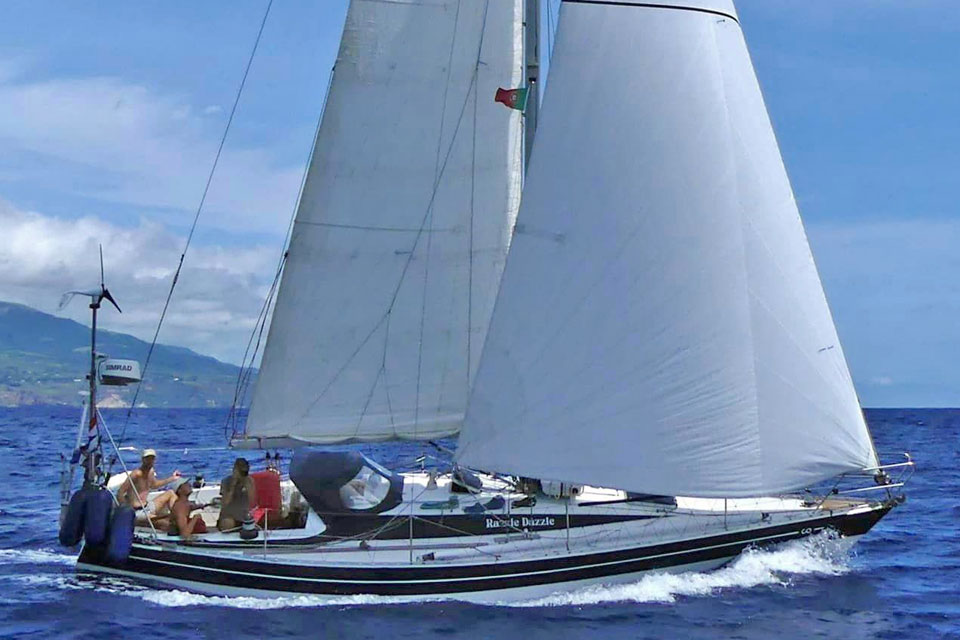
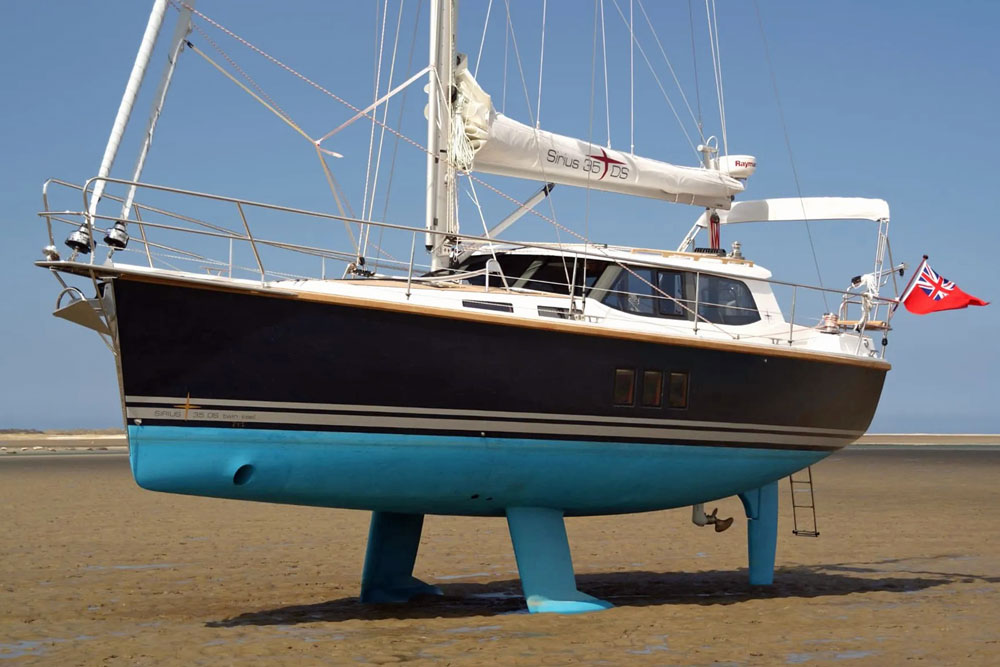 A twin (bilge) keel version of the Sirius 35, with a non-standard Solent rig.
Table of Contents
- Design & Construction
- Sail Areas & Rig Dimensions
- Configuration, Layout & Cruising Characteristics
- Published Specification: The Sirius 35 Blueprint
- Performance Analysis: Understanding the Design Ratios
- The Buyer’s Checklist: Common Problem Areas
- Comparison: Sirius 35 vs The Competition
- Summing Up
- Frequently Asked Questions (FAQs)
Design & Construction
The Sirius 35 was designed by Heribert Streuer and built by the boutique Sirius-Werft shipyard in Plön, Germany. Unlike many mass-production manufacturers, Sirius-Werft focuses on semi-custom builds, allowing for a level of customisation and build quality rarely seen in the 35' (10.67m) class. The hull is constructed from hand-laid GRP, engineered for maximum impact resistance.
A defining feature of this vessel is the deck saloon concept, which creates a split-level living space. This layout is not just about the view. It also allows heavy equipment such as the engine and tanks to be located centrally and low in the hull, improving the boat's centre of gravity. The cabin windows are chemically bonded to the GRP superstructure rather than thru-bolted. This modern technique eliminates point-loading stresses and provides a more reliable seal against the elements. Furthermore, the chainplates are robustly integrated, typically bonded and laminated into the hull structure to ensure rig loads are distributed over a wide surface area.
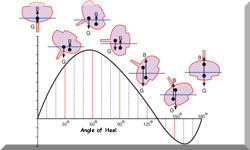
The Sirius 35 was produced in several variations to cater to diverse sailing environments. Buyers could choose between a standard deep fin keel, a shallow draft version, or even twin (bilge) keels for tidal drying. The internal layout is equally flexible, offering two or three cabin configurations. The vessel also carries a high STIX (Stability Index) rating within its RCD Category A (Ocean) certification. This index measures a boat's ability to resist capsize and recover from a knockdown. For the Sirius 35, it confirms that the vessel is technically qualified for extended voyages in extreme sea conditions.
Sail Areas & Rig Dimensions
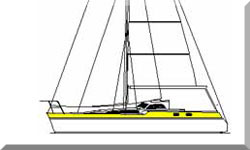
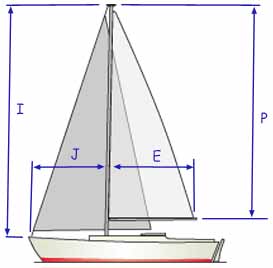 Rig dimensions
The Sirius 35 is typically rigged as a 9/10 fractional sloop, though many owners opt for a self-tacking jib for ease of handling. The rig is designed for control and reliability rather than sheer speed.
- Mainsail: 409 ft² (38.00 m²)
- Jib (Self-tacking): 237 ft² (22.00 m²)
- Genoa (140%): 463 ft² (43.00 m²)
- I (Forestay Height): 44'11" (13.70m)
- J (Foretriangle Base): 12'8" (3.85m)
- P (Mainsail Luff): 42'0" (12.80m)
- E (Mainsail Foot): 15'1" (4.60m)
Rigging Options & the Solent Configuration
While the fractional sloop is standard, the Solent rig is a common upgrade for sailors planning serious blue-water passages. This setup uses two permanent forestays: an outer stay for a large genoa or reacher in light winds, and an inner stay for the self-tacking jib when the wind freshens. It gives the boat more options without requiring a true cutter stay or the complication of running backstays. However, because the stays are close together, the outer sail must be furled before tacking, which makes the standard sloop rig more efficient in coastal waters where frequent tacking is common.
Configuration, Layout & Cruising Characteristics
The Sirius 35 is built for the practical cruiser. The cockpit is deep and secure, with high coamings that provide excellent back support and protection from spray. The deck saloon allows the navigator to maintain a 360-degree watch from inside the cabin, which is a major benefit in cold or wet weather.
The interior volume is impressive for a boat of this length. The galley is well-appointed with deep sinks and secure bracing, while the technical room—located under the saloon floor—offers easy access to the engine, batteries, and plumbing systems. Tankage is generous, supporting long-term self-sufficiency. The motion underway is steady and predictable, lacking the "skittish" feel of lighter modern cruisers, which significantly reduces crew fatigue during multi-day passages.
Published Specification: The Sirius 35 Blueprint
| Specification Item | Measurement / Detail |
|---|---|
| LOA (Length Overall) | 34'9" (10.60m) |
| LWL (Length Waterline) | 30'10" (9.40m) |
| Beam | 11'5" (3.48m) |
| Draft (Min/Max) | 4'5" (1.35m) / 6'6" (1.98m) |
| Displacement | 15,212 lbs (6,900 kg) |
| Ballast | 5,732 lbs (2,600 kg) |
| Rig Type | 9/10 Fractional Sloop (Solent Optional) |
| Hull Material | GRP (Hand-laid) |
| Production Dates | 2010 – Present |
Performance Analysis: Understanding the Design Ratios
To understand how the Sirius 35 behaves in open water, we can examine the following design ratios.
| Ratio Metric | Calculated Value | Performance Interpretation |
|---|---|---|
| Sail Area / Displacement (SA/D) | 17.2 | Moderate; balanced for safety & stability. |
| Displacement / Length (D/L) | 231 | Medium-heavy; provides a comfortable offshore motion. |
| Ballast / Displacement (B/D) | 37.7% | High stiffness & excellent resistance to heeling. |
| Capsize Screening Formula (CSF) | 1.85 | Very safe; well below the 2.0 ocean limit. |
| Brewer Motion Comfort Ratio | 28.4 | Steady & predictable; less prone to pitching. |
The SA/D ratio of 17.2 confirms that the boat is designed as a cruiser rather than a racer. It needs a moderate breeze to reach its hull speed. The D/L ratio of 231 and a Comfort Ratio of 28.4 suggest a hull that will handle a chop with composure, avoiding the jarring motion typical of flat-bottomed, lightweight modern boats. With a CSF of 1.85, it sits comfortably within accepted offshore guidance and supports the boat's blue-water credentials. For a broader context on these figures, refer to our page on Understanding Boat Performance & Design Ratios.
Structural Integrity & Stability Dynamics
The hand-laid GRP construction provides a thick laminate that is far more resistant to impact than mass-market hulls. Because the Sirius 35 often carries a heavy ballast package (37.7%), the load on the keel joint is immense. Sirius addresses this with a massive internal grid system that distributes these loads throughout the hull. The deck saloon, while raising the coachroof, does not compromise stability because the most significant weights are placed at the lowest possible point in the technical room. This engineering ensures the boat has a high limit of positive stability, essential for its Ocean Category A rating.
The Buyer’s Checklist: Common Problem Areas
- Bonded Window Seals: The chemical bonding is excellent but not eternal. Check for any signs of "creeping" or fogging between the panes. A full re-bond of all saloon windows can cost between £3,000 and £5,000.
- Technical Room Maintenance: Because the engine and systems are centralised, check for any oil or fluid accumulation in the lower bilge areas which can be hard to spot without a mirror.
- Electrical Complexity: Many Sirius 35s were ordered with high-end electrical suites. Ensure that the batteries (often AGM or Lithium) are in good health and that the charging system is fully operational.
- Rigging Tension: On Solent-rigged versions, the forestay tension is critical. Check the chainplates and the stemhead fitting for any signs of movement or stress.
- Keel Bolts: If inspecting a second-hand model, look for any weeping around the keel bolts inside the technical room.
Comparison: The Sirius 35 vs The Competition
Compared to the Hallberg-Rassy 342, the Sirius 35 offers significantly more interior volume and the advantage of the deck saloon, though the HR may outpace it in light winds. Against the Moody 346, the Sirius is a much more modern, structurally sound offshore platform. While a Westerly Seahawk offers a similar aft-cabin layout, it lacks the technical sophistication and RCD Category A engineering that makes the Sirius 35 a true world cruiser.
Could this be your ideal cruising boat?
It may well be, but before going any further, it might be worth taking a look at my eBook 'How to Avoid Buying the Wrong Sailboat'...
Summing Up
The Sirius 35 is a strong example of spatial engineering and build quality. It prioritises safety and comfort, offering a split-level living arrangement that remains functional even in heavy seas. While its displacement means it is not a light-air flyer, its performance ratios and stability index support its appeal for sailors who want long-range comfort. It is not an inexpensive boat, but its craftsmanship and thoughtful technical room layout make it a distinctive liveaboard cruiser.

This article was written by Dick McClary, RYA Yachtmaster and author of the RYA publications 'Offshore Sailing' and 'Fishing Afloat', member of The Yachting Journalists Association (YJA), erstwhile member of the Ocean Cruising Club (OCC) and owner/administrator of 'Liveaboard Sailboats for Sale'.

Frequently Asked Questions (FAQs)
Is the Sirius 35 really suitable for solo ocean crossings?
Is the Sirius 35 really suitable for solo ocean crossings?
Yes, the boat is RCD Category A certified and many are equipped with self-tacking jibs and lines led aft to the cockpit, making it exceptionally easy for a single-hander to manage in heavy weather.
How does the split-level saloon affect the boat's motion in a seaway?
How does the split-level saloon affect the boat's motion in a seaway?
While the saloon is raised, heavy items such as the engine and tanks are placed very low. This produces a stable, predictable motion, with a Comfort Ratio higher than that of many lightweight modern cruisers.
Can the Sirius 35 be kept on a drying mooring?
Can the Sirius 35 be kept on a drying mooring?
Yes, if you specify the twin-keel version. Sirius is one of the few premium builders that has perfected the performance of twin keels, allowing the boat to stand safely on its own while maintaining good windward performance.
What is the expected cruising speed under power?
What is the expected cruising speed under power?
Equipped with a standard 30hp or 40hp engine, the Sirius 35 comfortably cruises at 6 to 6.5 knots, with a top speed near its theoretical hull speed of approximately 7.4 knots.
Are the bonded windows a safety risk in a rollover?
Are the bonded windows a safety risk in a rollover?
On the contrary, the bonding agent is designed to be stronger than the surrounding GRP. In a knockdown, these windows are less likely to "pop" or leak than traditional bolted frames, which can distort under stress.
Can the boat be sailed comfortably by a couple?
Can the boat be sailed comfortably by a couple?
Absolutely. With a self-tacking jib and lines led to the cockpit, the Sirius 35 is designed specifically for short-handed crews.
Are the twin-keel versions as fast as the fin keel?
Are the twin-keel versions as fast as the fin keel?
There is a slight increase in wetted surface area with twin keels, but for most cruisers, the difference in speed is negligible, and the ability to dry out in tidal harbours is a major benefit.
Recent Articles


-
Mystery 35 Review: Specs, Performance & Buying Guide
Aug 29, 26 09:42 AM
An in-depth review of the Mystery 35 sailboat. Read technical specs, design ratios, sail performance, and common buyer inspection areas. -
Beneteau First 405 Review: Specs, Performance & Buyer’s Guide
Aug 26, 26 03:58 AM
Detailed Beneteau First 405 review covering specs, performance, bluewater capability, layouts and buyer’s checklist. -
Moody S38 Review: Specs, Ratios & Buyer’s Guide
Aug 12, 26 04:22 AM
In‑depth Moody S38 review covering specs, performance, design ratios, layout, strengths, trade‑offs & buyer inspection points.