- Home
- Cruising Yachts 40' to 45'
- Jeanneau Sun Odyssey 40.3
The Jeanneau Sun Odyssey 40.3 Sailboat: Specs, Performance Analysis & Cruising Characteristics
Key Takeaways: The Jeanneau Sun Odyssey 40.3 is a balanced, moderate-displacement cruiser designed for comfort and ease of handling. While it offers respectable performance in a breeze, it is primarily a coastal and offshore liveaboard vessel known for its spacious interior and twin-wheel cockpit. Prospective buyers should focus on its CE Category A certification and the high-quality Yanmar power plant, though they must remain vigilant regarding typical age-related maintenance of the spade rudder and sail-drive seals.
Table of Contents
- Design & Construction
- Sail Areas & Rig Dimensions
- Configuration, Layout & Cruising Characteristics
- Published Specification: The Jeanneau Sun Odyssey 40.3 Blueprint
- Performance Analysis: Understanding the Design Ratios
- The Buyer’s Checklist: Common Problem Areas
- Comparison: Jeanneau Sun Odyssey 40.3 vs The Competition
- Summing Up
- Frequently Asked Questions (FAQs)
Design & Construction
The Sun Odyssey 40.3 was designed by the prolific naval architect Daniel Andrieu and built by Jeanneau in France between 2004 and 2007. Constructed from solid hand-laid GRP with a structural inner grid for stiffness, the hull incorporates Kevlar reinforcements in the forward sections for added impact resistance.
A defining feature is the twin-wheel steering system, which was unusual on a 40' production boat at the time. This layout provides an unobstructed passage from the companionway to the sugar-scoop transom, significantly improving cockpit ergonomics for Mediterranean-style mooring and socialising.
Jeanneau produced several variants to suit different cruising grounds. The standard version features a deep fin keel with a bulb, while a shoal draft version was available for those navigating thinner waters.
The interior was offered in two main layouts: a two-cabin 'Owner' version with a massive galley and separate shower, and a three-cabin version better suited for families or the charter market.
The 40.3 carries a STIX (Stability Index) Category A (Ocean) certification. This means the vessel is designed for extended voyages where conditions may exceed wind force 8 (Beaufort scale) and significant wave heights of 4m (13.1") and above, making it a legitimate choice for blue water aspirations.
Glazing & Coachroof Integrity
The Sun Odyssey 40.3 adopted the sleek "eyebrow" styling seen in Jeanneau’s larger Deck Saloon range, utilising bonded acrylic windows rather than traditional bolted frames. While this creates a modern profile and eliminates dozens of potential bolt-hole leak points, it introduces a specific long-term maintenance requirement.
- The Bonded System: The long, fixed side windows are chemically bonded to the GRP using structural polyurethanes. A black ceramic "frit" on the internal surface of the acrylic protects the adhesive from UV degradation.
- Maintenance Concerns: After two decades, the bond between the acrylic and the deck can suffer from thermal expansion fatigue. Prospective buyers should inspect the edges of the glazing for "milking" or whitening, which indicates the bond is beginning to delaminate.
- Refit Implications: Replacing these is a specialist task. It requires the total removal of the old adhesive and the use of specific primers and UV-stable sealants (such as Sikaflex 295 UV). Using standard silicone is a common DIY mistake that inevitably leads to failure within a single season.
Sail Areas & Rig Dimensions
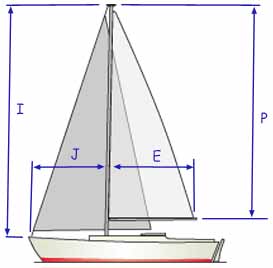 Rig dimensions
The 40.3 is typically rigged as a masthead sloop with two sets of swept-back spreaders. Most second-hand examples feature in-mast furling, though a slab-reefing performance version exists.
- Mainsail Area: 341.1 ft² (31.7 m²)
- Genoa Area (140%): 345.5 ft² (32.1 m²)
- Total Sail Area (100% foretriangle): 686.5 ft² (63.8 m²)
Rig Dimensions:
- I (Foretriangle Height): 50'0" (15.25 m)
- J (Foretriangle Base): 13'10" (4.21 m)
- P (Mainsail Luff): 43'4" (13.20 m)
- E (Mainsail Foot): 15'9" (4.80 m)
Configuration, Layout & Cruising Characteristics
Underway, the 40.3 is a predictable and forgiving platform. The twin wheels offer excellent visibility on both tacks, although some purists find the linkage lacks the "feel" of a single-wheel setup. The cockpit is deep and secure, with a large permanent table that doubles as a bracing point during passage-making.
Storage is a strength of the design. The two-cabin version, in particular, offers a cavernous port-side cockpit locker capable of swallowing an inflatable dinghy and multiple fenders.
Tankage is adequate for coastal hopping. However, serious long-term cruisers often add extra water storage or a watermaker, as the standard 310L (68 imp gal) capacity can be lean for a crew of four.
The galley is an L-shaped (or U-shaped in the 2-cabin) masterclass in maritime ergonomics, featuring high fiddles and a deep fridge. Ventilation is excellent throughout the cabin, thanks to multiple opening Lewmar hatches and ports.
Published Specs: The Jeanneau Sun Odyssey 40.3 Blueprint
| Specification | Data |
|---|---|
| LOA | 40'0" (12.20 m) |
| LWL | 35'3" (10.74 m) |
| Beam | 13'0" (3.95 m) |
| Draft (Standard) | 6'5" (1.95 m) |
| Draft (Shoal) | 4'11" (1.50 m) |
| Displacement | 17,835 lbs (8,090 kg) |
| Ballast | 5,357 lbs (2,430 kg) |
| Rig Type | Masthead Sloop |
| Hull Material | GRP & Kevlar |
| Production Dates | 2004 – 2007 |
Performance Analysis: Understanding the Design Ratios
To understand how the 40.3 behaves in various conditions, we need to look at the key mathematical relationships within her design.
| Ratio | Value | Interpretation |
|---|---|---|
| SA/D | 16.1 | Moderate. This suggests the boat is a capable cruiser but may require the iron breeze in light winds below 8 knots. |
| D/L | 182 | Light-Moderate. Indicates a hull that can achieve its hull speed easily and may even surf in following seas. |
| B/D | 30% | Standard. Provides a good balance of stiffness and comfort without excessive weight. |
| CSF | 1.99 | Safe. A value below 2.0 is the benchmark for ocean-going stability and capsize resistance. |
| Comfort Ratio | 24.8 | Moderate. Ted Brewer’s scale places this as a comfortable coastal cruiser; it will be livelier than a heavy blue water yacht. |
Ratio Interpretation:
The Sail Area/Displacement (SA/D) ratio of 16.1 confirms that this is not a racing machine. However, the Displacement/Length (D/L) of 182 shows it isn't a "slug" either; it has a modern, efficient hull form that moves well. The Brewer Motion Comfort Ratio of 24.8 indicates that while she will be stable, the motion will be quicker than a traditional heavy-displacement yacht like a Hallberg-Rassy. For a more detailed look at these metrics, see our guide on Understanding Boat Performance & Design Ratios.
Structural Integrity & Stability Dynamics
The GRP hull helps keep maintenance relatively low, while the Kevlar reinforcement in the bow provides peace of mind for those concerned about floating debris. The spade rudder provides exceptional manoeuvrability, making the boat a joy to handle in tight marinas, though it lacks the ultimate protection of a skeg-hung design found on more dedicated ocean voyagers.
Stability is primarily derived from the 30% ballast ratio concentrated in the bulb. This design keeps the boat relatively flat in a breeze, which reduces crew fatigue and increases comfort for those below decks.
The Buyer’s Checklist: Common Problem Areas
- Rudder Bearings: Check for excessive play in the twin wheels. The linkages and bearings can wear over time, leading to a "clunky" feel.
- Sail-drive / Shaft Seals: While many 40.3s used shaft drives (with Yanmar 4JH engines), some have sail-drives. If the boat has a sail-drive, check the age of the rubber gaiter. If it is older than 7 years, factor in replacement costs.
- Standing Rigging: Many units from the 2004-2007 era are due (or overdue) for their second standing rigging replacement.
- Deck Crazing: Inspect the gelcoat around the stanchion bases and the windlass for stress cracks.
- Teak Health: If the boat has a teak cockpit or side decks, check for thinning or loose caulking, as Jeanneau's teak was often decorative rather than structural.
- Window Delamination: Check the large coachroof windows for signs of leaks or separation from the hull. Bonded windows are aesthetically superior but can be costly to re-seat if the original adhesive has perished after 20 years of UV exposure.
Comparison: The Jeanneau Sun Odyssey 40.3 vs The Competition
In the 40' to 42' range, the 40.3 competes directly with the Bavaria 40 Cruiser and the Beneteau Oceanis 411. Compared to the Bavaria, the Jeanneau generally offers a slightly more "spirited" sail and a more modern cockpit layout.
The Oceanis 411 is often considered more of a traditional cruiser with a softer motion, but the Jeanneau 40.3 wins on light-air performance and interior volume for its length.
If you'd like to compare this boat with others in this size range, take a look at Cruising Boats from XX' to XX' overall....
Could this be your ideal cruising boat?
It may well be, but before going any further, it might be worth taking a look at my eBook 'How to Avoid Buying the Wrong Sailboat'...
Summing Up
The Jeanneau Sun Odyssey 40.3 remains a stalwart of the second-hand market for a reason. It is a pragmatically designed vessel that balances the requirements of a comfortable liveaboard with the performance needs of a modern sailor.
While its design ratios lean toward coastal and moderate offshore work, its CE Category A rating and robust construction make it more than capable of crossing oceans in the right hands. Provided the rudder and engine are well-maintained, it offers an exceptional amount of boat for the money.
This article was written by Dick McClary, RYA Yachtmaster and author of the RYA publications 'Offshore Sailing' and 'Fishing Afloat', member of The Yachting Journalists Association (YJA), and erstwhile member of the Ocean Cruising Club (OCC).
Frequently Asked Questions (FAQs)
Is the Jeanneau Sun Odyssey 40.3 suitable for single-handed sailing?
Is the Jeanneau Sun Odyssey 40.3 suitable for single-handed sailing?
Yes, the twin wheels and lines led aft to the cockpit winches make it very manageable for a solo sailor, especially when equipped with a reliable autopilot and in-mast furling.
What is the expected cruising speed under power?
What is the expected cruising speed under power?
Equipped with the standard 56hp Yanmar, you can expect a comfortable cruising speed of 6.5 to 7.0 knots, with a top speed of around 8 knots in calm water.
How does the shoal draft version compare in performance to the deep fin?
How does the shoal draft version compare in performance to the deep fin?
The shoal draft (1.50 m) version will lose a few degrees of pointing ability and will have slightly more leeway when close-hauled, but for most cruisers, the trade-off is worth it for access to shallower anchorages.
Can I fit a bow thruster to a 40.3?
Can I fit a bow thruster to a 40.3?
Many 40.3s were retrofitted with bow thrusters. There is sufficient space in the forward cabin under the berth, though it requires professional installation to maintain structural integrity.
What are the main differences between the Sun Odyssey 40 and the 40.3?
What are the main differences between the Sun Odyssey 40 and the 40.3?
The 40.3 was an evolution of the earlier 40, featuring the twin-wheel cockpit, a redesigned transom, and updated interior joinery with a more contemporary finish.
Are the large side windows on the 40.3 prone to leaking?
Are the large side windows on the 40.3 prone to leaking?
Like many yachts from the mid-2000s, the 40.3 uses bonded (glued) windows. While robust, the seal can degrade over 15–20 years. If you notice water ingress, it usually requires a full "remove and re-bond" rather than simply adding more sealant to the edges.
Recent Articles


-
Mystery 35 Review: Specs, Performance & Buying Guide
Aug 29, 26 09:42 AM
An in-depth review of the Mystery 35 sailboat. Read technical specs, design ratios, sail performance, and common buyer inspection areas. -
Beneteau First 405 Review: Specs, Performance & Buyer’s Guide
Aug 26, 26 03:58 AM
Detailed Beneteau First 405 review covering specs, performance, bluewater capability, layouts and buyer’s checklist. -
Moody S38 Review: Specs, Ratios & Buyer’s Guide
Aug 12, 26 04:22 AM
In‑depth Moody S38 review covering specs, performance, design ratios, layout, strengths, trade‑offs & buyer inspection points.