- Home
- Cruising Yachts 40' to 45'
- Victory 41 Sailboat
The Victory 41 Sailboat: Specs, Performance Analysis & Cruising Characteristics
Key Takeaways: The Victory 41 is a robust, heavy-displacement ketch built for serious offshore work and long-term liveaboard comfort. Its high ballast ratio and protected centre cockpit give it a secure motion in a seaway, though it needs a stiff breeze to perform at its best. It is a traditional "sailor’s boat" that prioritises structural integrity and interior volume over light-air speed or modern sleekness.
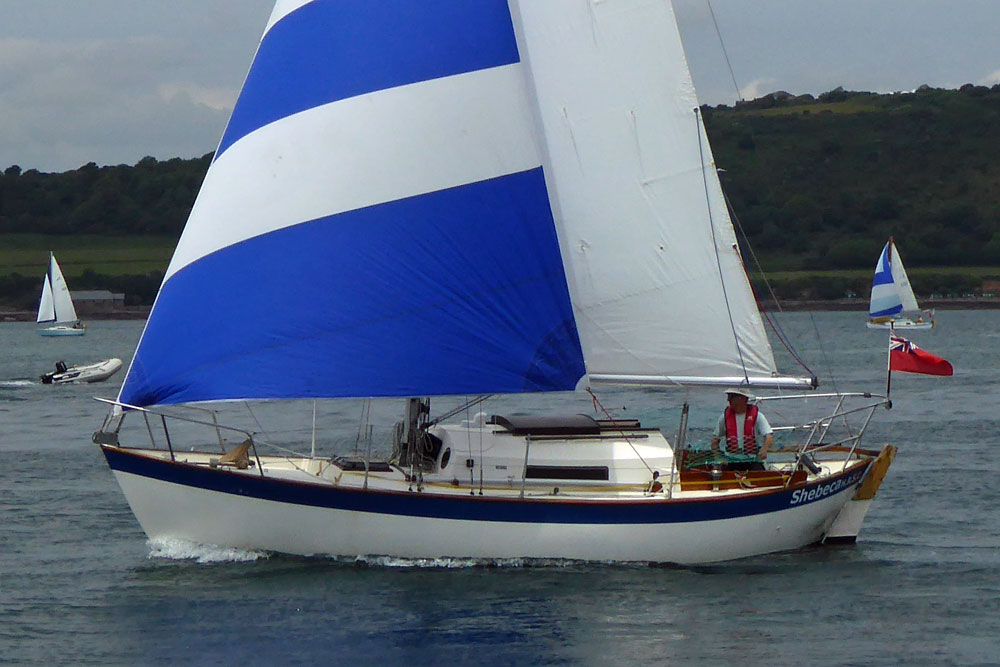
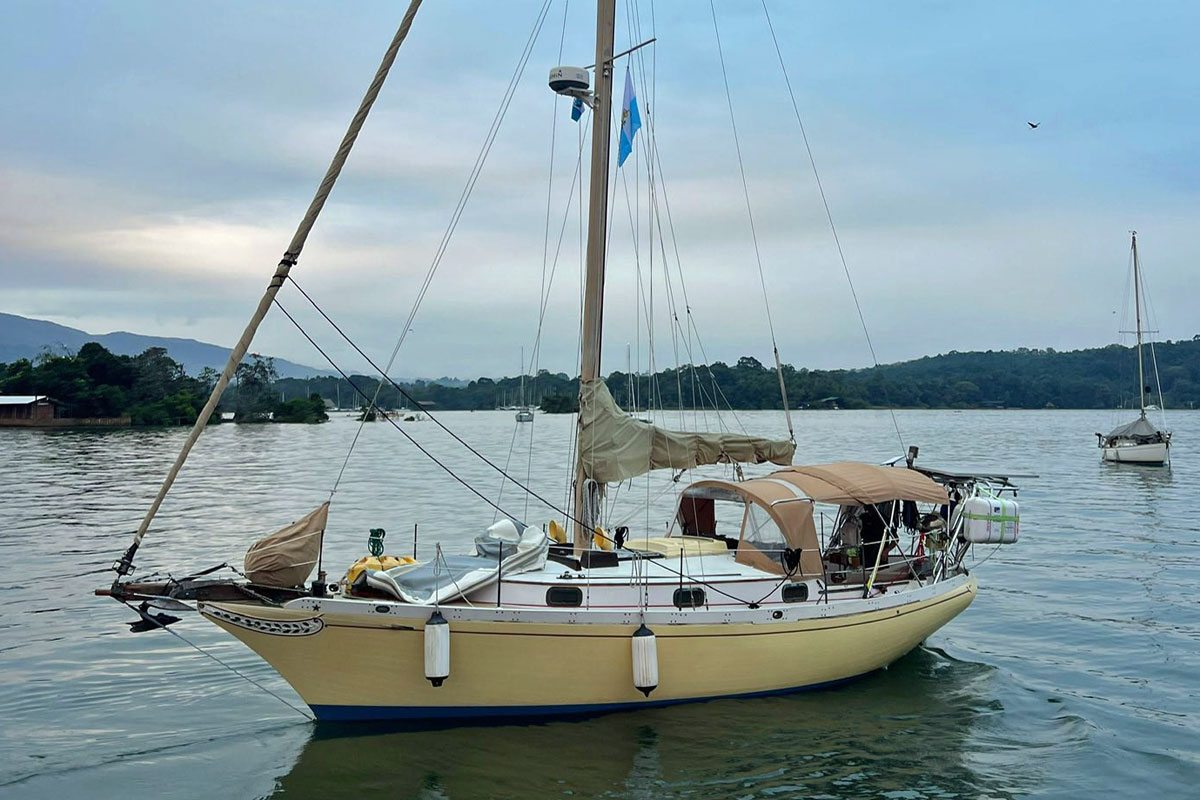
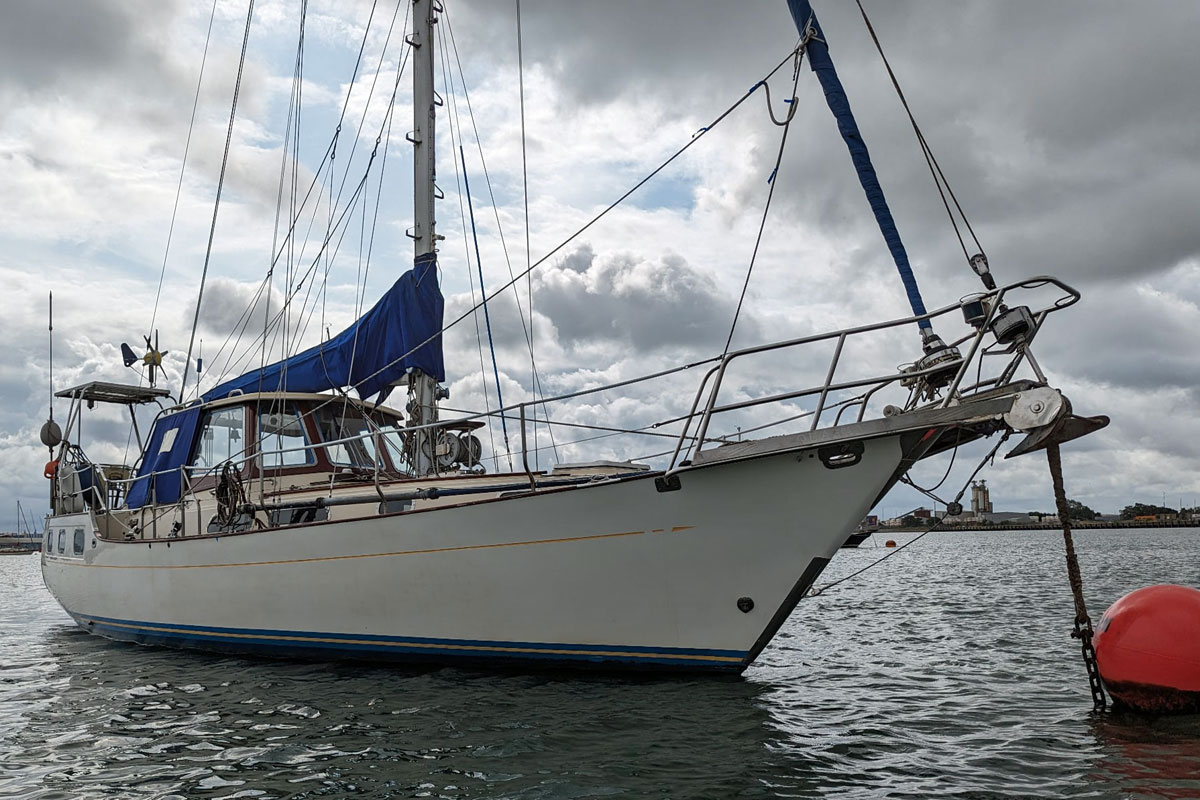 'Quaranta', a Victory 41
'Quaranta' represents a fascinating departure from the standard Victory 41 blueprint, serving as a bespoke evolution of the design. Commissioned as a "100:100 motorsailer," this unique vessel was intended to provide 100% of the performance of a pure sailing yacht alongside the 100% reliability and power of a dedicated motor cruiser. To achieve this, the traditional ketch rig was replaced with a powerful sloop configuration, and the standard auxiliary engine made way for a formidable 100hp Ford Dorset diesel. While the hull lines remain pure Bill Tripp, the Quaranta variant demonstrates the inherent versatility of the heavy-displacement Tyler mouldings, offering a more simplified sail plan for those who prefer the mechanical assurance of a high-capacity engine without sacrificing the sea-kindly motion for which the Victory 41 is rightly famous.
Table of Contents
- Design & Construction
- Sail Areas & Rig Dimensions
- Configuration, Layout & Cruising Characteristics
- Published Specification: The Victory 41 Blueprint
- Performance Analysis: Understanding the Design Ratios
- The Buyer’s Checklist: Common Problem Areas
- Comparison: Victory 41 vs The Competition
- Summing Up
- Frequently Asked Questions (FAQs)
Design & Construction
The Victory 41 was designed by the celebrated naval architect Bill Tripp Jr., whose name is closely associated with the powerful, seaworthy yachts that defined an era of American yachting. The mouldings were produced primarily by the Dutch yard Tyler Boats, and many boats were then finished by respected yards or skilled owners. The hull is made of heavy-duty Glass Reinforced Plastic (GRP).
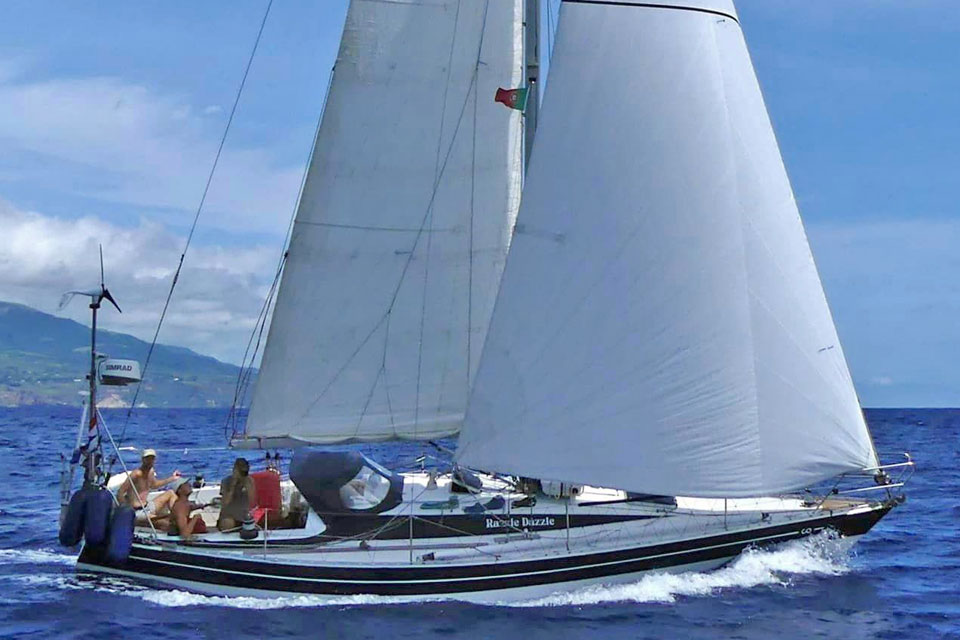
The defining features of this vessel are its encapsulated long keel and ketch rig. Together, they provide exceptional directional stability, allowing the boat to hold its course with minimal helm fatigue, even when the Atlantic is in a foul mood. While some versions were finished as sloops, the ketch remains the definitive choice for the 41, offering a versatile sail plan that is easily managed by a couple.
In terms of stability, the Victory 41 predates the modern STIX (Stability Index) ratings used for CE certification, but its design parameters align comfortably with Category A (Ocean). In practical terms, that means it is engineered to remain self-sufficient in winds exceeding Beaufort Force 8 and wave heights above 4 metres (13'1").
Sail Areas & Rig Dimensions
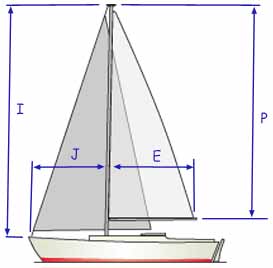 Rig dimensions
The ketch configuration allows for a split sail plan, which is a significant advantage when the wind picks up and you need to reduce canvas without losing balance.
- Mainsail: 322 ft² (29.9 m²)
- Mizzen: 115 ft² (10.7 m²)
- Genoa (100%): 468 ft² (43.5 m²)
- Total Sail Area: 905 ft² (84.1 m²)
Rig Dimensions:
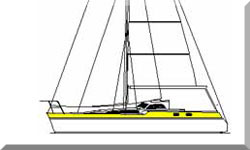
- I: 49'0" (14.94 m)
- J: 18'10" (5.74 m)
- P: 42'6" (12.95 m)
- E: 14'8" (4.47 m)
Configuration, Layout & Cruising Characteristics
Below decks, the Victory 41 shows why it has remained a favourite with liveaboard sailors. The centre cockpit design allows for a private, full-width aft cabin, often accessed through a walkthrough that also houses the engine room and a dedicated navigation station.
The galley is typically linear or U-shaped and designed to be used safely while the boat is heeled. Tankage is generous, reflecting its heritage as a long-range cruiser, with water and fuel capacities that often exceed those of modern "lightweight" 40-footers.
On deck, the high cockpit coamings offer excellent protection from spray, while the wide side decks make it safer to move forward to handle lines or the anchor.
Published Specs: The Victory 41 Blueprint
| Specification | Measurement |
|---|---|
| LOA | 40'8" (12.40 m) |
| LWL | 28'0" (8.53 m) |
| Beam | 10'11" (3.33 m) |
| Draft | 5'10" (1.78 m) |
| Displacement | 21,500 lbs (9,752 kg) |
| Ballast (Lead) | 8,500 lbs (3,856 kg) |
| Rig Type | Ketch & Sloop |
| Hull Material | GRP (Fibreglass) |
| Production Dates | 1964 – 1974 |
Performance Analysis: Understanding the Design Ratios
To understand how the Victory 41 behaves at sea, it helps to look at the relationships between its weight, length, and sail power. These figures are explained in our Understanding Boat Performance & Design Ratios article.
| Ratio | Value | Interpretation |
|---|---|---|
| SA/D | 18.7 | A moderate ratio indicating decent power, though the boat prefers a steady breeze. |
| D/L | 438 | Ultra-heavy displacement. This boat will carry momentum and ignore chop. |
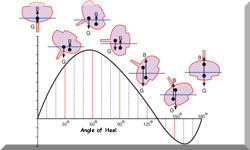
| B/D | 39.5% | High ballast ratio. This vessel is remarkably stiff and stands up well to its sails. |
| CSF | 1.58 | Well below the 2.0 threshold, suggesting excellent resistance to capsizing. |
| Comfort Ratio | 44.2 | A very high score; expect a slow, easy motion rather than a jerky, tiring one. |
Structural Integrity & Stability Dynamics
The heavy GRP layup of the Victory 41 provides a level of impact resistance that modern thin-skinned hulls simply cannot match. Because the ballast is encapsulated within the keel moulding rather than bolted on, there are no keel bolts to corrode or fail. For sailors venturing into remote waters, that design choice greatly enhances the boat’s safety profile.
The ketch rig further aids stability by keeping the centre of effort lower than a tall-masted sloop. Under "jib and jigger" (mizzen and headsail), the boat remains balanced and easy to steer even when the wind exceeds 30 knots.
The Buyer’s Checklist: Common Problem Areas
When inspecting a Victory 41, keep in mind that these boats are now half a century old. While the hulls are overbuilt, the following areas require scrutiny:
- Osmosis: Early hulls can be prone to blistering; check for moisture in the laminate.
- Chainplates: Inspect the stainless steel plates where the rigging attaches to the hull for signs of crevice corrosion or "bleeding."
- Mizzen Mast Step: Often neglected, the base of the mizzen mast can suffer from rot if water has pooled around it over the decades.
- Engine Access: While the engine room is large, check the condition of original plumbing and wiring, which likely needs updating for modern safety standards.
- Cored Decks: Check for soft spots on the coachroof and side decks, which may indicate water ingress into the balsa or plywood core.
Comparison: The Victory 41 vs The Competition
The Cheoy Lee Offshore 41
Designed by Ray Richards, the Offshore 41 is perhaps the Victory’s most natural rival. Built by the famous Cheoy Lee yard in Hong Kong, it shares the "over-built" philosophy, often floating lower than its lines suggest due to massive GRP layups.
- Keel & Rudder: Unlike the Victory’s traditional long keel, the Offshore 41 features a cutaway forefoot and a skeg-hung rudder. This makes it significantly more manoeuvrable in a marina and more responsive on the helm when running downwind.
- Performance: With a Displacement/Length (D/L) ratio of roughly 299, the Offshore 41 is technically "lighter" than the Victory (D/L 438), meaning it will pick up speed faster in moderate conditions but lacks the ultimate "freight train" momentum of the Victory in a storm.
The Hughes 40 (Northstar 80/20)
Designed by the legendary Sparkman & Stephens, the Hughes 40 is a Canadian-built powerhouse that mirrors the Victory 41’s heavy-displacement stats.
- Stability: The Hughes 40 is exceptionally stiff, with a Ballast/Displacement (B/D) ratio close to 39%, matching the Victory’s stability profile.
- Motion: Its Comfort Ratio sits around 41, very close to the Victory’s 44. Both boats offer that sought-after "slow" motion that prevents crew fatigue on long passages.
- Draft: One advantage of the Hughes is its slightly shallower draft (around 4'8"), which can be a deciding factor for sailors cruising the Bahamas or the US East Coast, whereas the Victory’s 5'10" draft is more restricted.
If you'd like to compare this boat with others in this size range, take a look at Cruising Boats from 40' to 45' overall....
Could this be your ideal cruising boat?
It may well be, but before going any further, it might be worth taking a look at my eBook 'How to Avoid Buying the Wrong Sailboat'...
Summing Up
The Victory 41 is a definitive blue-water cruiser for the sailor who values safety and motion comfort above all else. Its heavy displacement and high comfort ratio make it an ideal platform for crossing oceans without the physical toll that lighter boats demand. While it is not a "greyhound" in light winds and requires diligent maintenance of its ageing systems, its structural integrity remains a benchmark for the era. For a couple seeking a capable, traditional liveaboard, the Victory 41 remains a formidable and respected choice.
This article was written by Dick McClary, RYA Yachtmaster and author of the RYA publications 'Offshore Sailing' and 'Fishing Afloat', member of The Yachting Journalists Association (YJA), and erstwhile member of the Ocean Cruising Club (OCC).
Frequently Asked Questions (FAQs)
Is the Victory 41 easy to sail single-handed?
Is the Victory 41 easy to sail single-handed?
While heavy, the ketch rig allows you to break the sail area into smaller, more manageable pieces. With a reliable autopilot, she is quite docile, though her weight makes close-quarters manoeuvring in a marina a task that requires practice.
How does she perform in light winds?
How does she perform in light winds?
Due to the high displacement-to-length ratio, she is not a light-air specialist. You will likely find yourself reaching for the ignition key in anything under 8 to 10 knots of wind.
Are parts still available for the Victory 41?
Are parts still available for the Victory 41?
While the original manufacturer is long gone, most components—such as Lewmar winches, Perkins or Yanmar engines, and standard rigging—are easily serviced or replaced by modern marine suppliers.
Is the centre cockpit wet in a head sea?
Is the centre cockpit wet in a head sea?
Actually, no. The height of the cockpit above the waterline and the protective coamings keep it remarkably dry compared to many aft-cockpit boats of the same length.
What is the typical cruising speed under power?
What is the typical cruising speed under power?
With a well-maintained 50hp engine, you can expect a comfortable cruising speed of 6 to 6.5 knots, with a maximum hull speed of around 7.2 knots.
Recent Articles


-
Mystery 35 Review: Specs, Performance & Buying Guide
Aug 29, 26 09:42 AM
An in-depth review of the Mystery 35 sailboat. Read technical specs, design ratios, sail performance, and common buyer inspection areas. -
Beneteau First 405 Review: Specs, Performance & Buyer’s Guide
Aug 26, 26 03:58 AM
Detailed Beneteau First 405 review covering specs, performance, bluewater capability, layouts and buyer’s checklist. -
Moody S38 Review: Specs, Ratios & Buyer’s Guide
Aug 12, 26 04:22 AM
In‑depth Moody S38 review covering specs, performance, design ratios, layout, strengths, trade‑offs & buyer inspection points.