- Home
- Cruising Yachts 30' to 35'
- Albin Nova
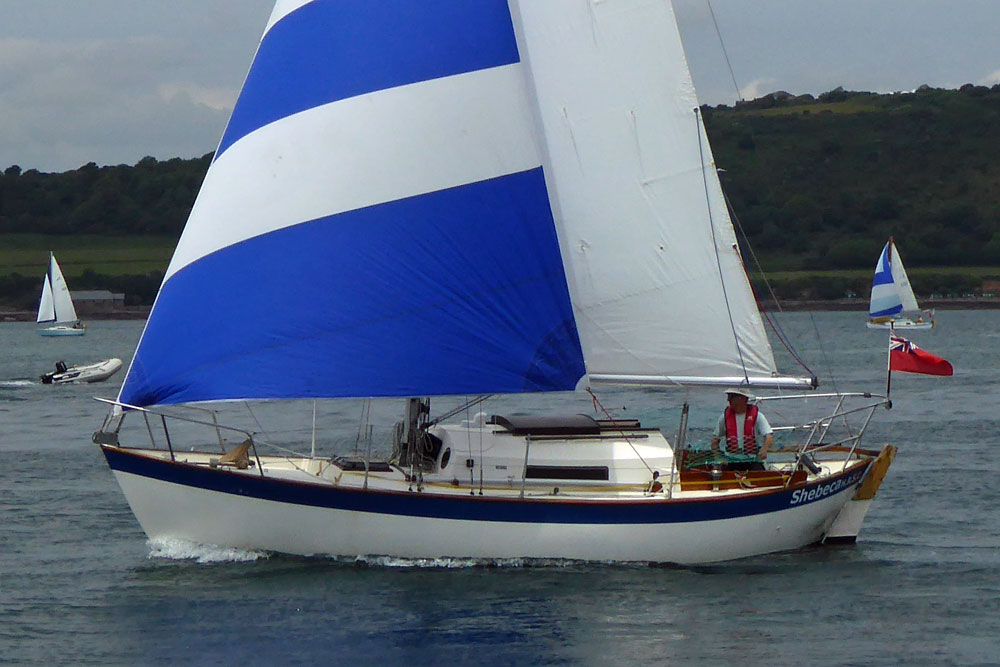
The Albin Nova Sailboat
Specs, Performance Analysis & Cruising Characteristics
Key Takeaways: The Albin Nova 33 is a sophisticated Swedish cruiser-racer that strikes an enviable balance between sharp sailing performance and offshore reliability. Designed by Peter Norlin, it avoids the "clunky" aesthetic of many 1980s cruisers, offering a sleek profile and a fractional rig that rewards an active trimmer. While its relatively narrow beam and modest displacement make it less of a "caravan" than modern equivalents, its superb build quality and balanced helm make it a top choice for shorthanded coastal hopping or cross-Channel hops. It is best suited for sailors who value speed and grace over sheer interior volume.
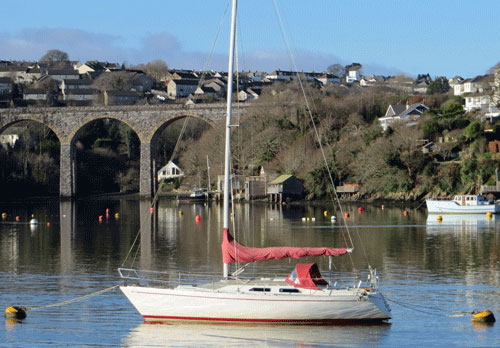 The Albin Nova
Table of Contents
- The Albin Nova at a Glance
- Design & Construction
- Published Specification: The Albin Nova Blueprint
- Sail Areas & Rig Dimensions
- Performance Analysis: Understanding the Design Ratios
- How the Albin Nova Sails
- Bluewater Capability: Strengths & Trade-Offs
- Configuration, Layout & Cruising Characteristics
- Who This Boat Is Best For
- The Buyer’s Checklist: Common Problem Areas
- Summing Up
- Frequently Asked Questions (FAQs)
The Albin Nova at a Glance
- Type: Cruiser-Racer
- Designer: Peter Norlin
- Builder: Albin Marine (Sweden)
- Production Years: 1981 – 1990
- Rig: Fractional Sloop (7/8)
- Best for: Performance-oriented cruising, club racing, and shorthanded coastal trekking.
- Strengths: Exceptional pointing ability, high-quality Swedish joinery, and a balanced, responsive helm.
- Trade-offs: Limited headroom for very tall sailors, narrow side decks, and a smaller galley compared to modern fat-sterned cruisers.
Design & Construction
The Albin Nova 33 was born during an era when Scandinavian boatbuilding was at its zenith. Peter Norlin, a designer famous for his successful IOR racers, was tasked with creating a boat that could win on the racecourse during the weekend and carry a family in comfort during the week. The result is a hull that is relatively narrow by today's standards but carries its lead keel deep enough to provide a stiff, stable ride.
The hull is constructed of solid GRP, while the deck utilizes a balsa core for stiffness and weight savings. It is important for prospective buyers to note that the cabin windows on the Nova 33 are typically bonded to the coachroof rather than through-bolted, which provides a very clean aesthetic but can lead to leaks if the sealant fails after decades of thermal expansion and contraction.
The Albin Nova utilizes stainless steel chainplate straps that pass through the deck and are securely through-bolted to heavy fiberglass knees tabbed directly into the hull. This provides a rigid, reliable connection that effectively manages the high loads of the 7/8 fractional rig while remaining accessible for periodic safety inspections.
Unlike many of its contemporaries that offered dozens of keel and rig options, the Albin Nova 33 remained remarkably consistent. It was primarily produced as a fin-keel sloop with an aft cockpit. While some interior cosmetic variations exist depending on the production year, the fundamental hull shape remained a dedicated deep-draft performer. The boat was built to a high standard, often receiving a Lloyd’s Hull Construction Certificate, though it does not have a formal STIX stability rating as it predates the RCD requirements.
Published Specification: The Albin Nova Blueprint
| Feature | Specification |
|---|---|
| LOA | 32'5" (9.89m) |
| LWL | 26'3" (8.00m) |
| Beam | 10'4" (3.15m) |
| Draft | 5'7" (1.70m) |
| Displacement | 9,700 lbs (4,400kg) |
| Ballast | 3,858 lbs (1,750kg) |
| Rig Type | Fractional Sloop |
| Hull Material | GRP (Solid) |
| Production Dates | 1981 – 1990 |
Important: Published specifications for the Albin Nova 33 vary by source and configuration. Dimensions, displacement, draft and rig details may differ between early design literature, later owner-modified boats, and secondary databases. Where figures vary, this table notes the most commonly cited values.
Sail Areas & Rig Dimensions
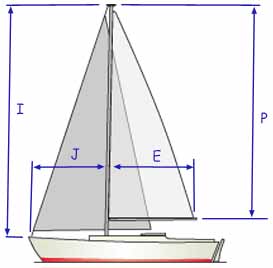 Rig dimensions
The 7/8 fractional rig is a hallmark of the Nova 33, allowing for a large, powerful mainsail and a smaller, easily handled jib. This setup makes the boat particularly easy to sail shorthanded, as the primary power comes from the main which can be controlled via the generous bridge-deck traveller.
- Total Sail Area (100% Foretriangle): 517 ft² (48.03 m²)
- Mainsail Area: 291 ft² (27.03 m²)
- Genoa Area (100%): 226 ft² (21.0 m²)
- I (Forestay Height): 37'1" (11.30m)
- J (Foredeck Length): 12'2" (3.71m)
- P (Mainsail Luff): 40'0" (12.19m)
- E (Mainsail Foot): 14'6" (4.42m)
Performance Analysis: Understanding the Design Ratios
| Ratio | Value | Interpretation |
|---|---|---|
| SA/D | 18.1 | Indicates a high-performance cruiser with plenty of power for light airs. |
| D/L | 238 | Classified as a medium-displacement cruiser, balancing speed and load capacity. |
| B/D | 39.8% | A very respectable ballast ratio, suggesting a stiff and stable platform. |
| CSF | 1.91 | Below 2.0, indicating the boat is suitable for offshore and ocean passages. |
| Comfort Ratio | 23.5 | Typical for a boat of this size; expect a lively but predictable motion. |
The Sail Area/Displacement (SA/D) of 18.1 confirms that the Nova 33 is no slouch. It will start moving in the lightest of zephyrs when heavier cruising boats are still reaching for the ignition key.
The Displacement/Length (D/L) ratio of 238 places it firmly in the "all-rounder" category, meaning it has enough mass to maintain momentum through a chop without being so heavy that it feels sluggish.
A Ballast/Displacement (B/D) of nearly 40% is excellent for a production boat, translating to a boat that stands up well to its canvas and points exceptionally high.
The Capsize Screening Formula (CSF) of 1.91 is technically under the 2.0 limit for ocean racing, and the Brewer Motion Comfort Ratio of 23.5 suggests that while you will feel the sea, the movement will not be the jarring "snap" often found in wider, flatter modern hulls.
For more on this topic, you might want to take a look at Understanding Boat Performance & Design Ratios...
How the Albin Nova Sails
Under sail, the Albin Nova 33 is a joy for those who actually like to sail. Upwind, it is a scalpel. Thanks to the deep fin keel and the narrowish hull form, it can point significantly higher than many modern "fat" cruisers. The helm remains light and communicative, giving the sailor plenty of warning before it loses grip.
Downwind, the boat is stable, though like most boats of its era with a pinched stern, it can exhibit some rhythmic rolling if pushed too hard under a large spinnaker in heavy seas. Because the rig is fractional, reefing the mainsail is the primary way to depower. The boat remains well-balanced even with a deep reef in the main and just a scrap of headsail unrolled. For shorthanded sailors, the ability to control the boat's power primarily through the mainsail and backstay tension is a significant advantage.
Bluewater Capability: Strengths & Trade-Offs
While the Albin Nova 33 is often seen as a coastal cruiser, it possesses the DNA for longer passages. Its solid construction and conservative CSF ratio make it a safe place to be when the weather turns sour. However, there are trade-offs.
The tankage is modest. With roughly 45 litres of fuel and 100 litres of water, long-distance voyagers will need to supplement with jerry cans or install a watermaker. Additionally, the interior volume is optimized for living while tucked into a cove rather than carrying tons of offshore gear. The deck layout is safe, with good handholds, though the side decks are narrow, making the transition to the foredeck a bit more "athletic" in a seaway.
Configuration, Layout & Cruising Characteristics
Step below, and the Swedish influence is immediate. The mahogany joinery is usually of a much higher standard than what you would find on French or American boats of the same vintage.
The layout is classic: a V-berth forward, a saloon with two setties that double as sea-berths, and an aft quarter-berth. The galley is compact, situated to starboard, and while functional, it lacks the counter space found on dedicated liveaboards. One standout feature is the folding table that wraps around the mast compression post, creating a social space that feels larger than it is.
Storage is adequate for a couple cruising for a few weeks, but a family of four would find it a squeeze for anything longer. The cockpit is deep and protective, though the large traveller does bisect the space, which is great for sail control but can be a bit of a hurdle when entertaining at anchor.
Who This Boat Is Best For
Good fit for:
- Couples who enjoy the "sport" of sailing and want a boat that rewards good trimming.
- Single-handed sailors looking for a manageable, high-quality vessel.
- Those stepping up from a smaller boat who want "big boat" performance in a 33' package.
Less ideal for:
- Families requiring three separate cabins or two heads.
- Liveaboards who prioritize interior "floor space" and massive galley storage.
- Sailors who prefer "motoring at the first sign of a breeze"—this boat wants to sail.
The Buyer’s Checklist: Common Problem Areas
When inspecting an Albin Nova 33, pay close attention to these specific areas:
- Deck Core: Like many balsa-cored decks, moisture can ingress through poorly bedded deck hardware. Check for soft spots around the stanchion bases and the mast step.
- Bonded Windows: Look for evidence of water staining on the internal woodwork around the long cabin windows. Re-seating these is a meticulous job.
- Engine Maintenance: Many Novas came with the Yanmar 2GM20F or Volvo Penta MD7B. Check the heat exchanger and sail-drive seals (if equipped) for age-related fatigue.
- Rudder Bearings: Check for excessive play in the spade rudder, which can develop over thousands of miles.
- The "Smile": Inspect the leading edge of the keel-to-hull joint for any cracking or separation, often referred to as the "Albin Smile," which may indicate the need for re-torquing the keel bolts.
- Could this be your ideal cruising boat?
It may well be, but before going any further, it might be worth taking a look at my eBook 'How to Avoid Buying the Wrong Sailboat'...
Summing Up
The Albin Nova 33 is a refined example of Peter Norlin's ability to blend speed with seaworthiness. It is a boat that feels bigger than its 33' length when you are at the helm, yet manageable when you are docking in a tight marina. While it lacks the cavernous interior of modern cruisers, it compensates with superior build quality and a sailing profile that can handle genuine offshore conditions. If you prioritize the journey and the "feel" of the boat under sail, the Nova 33 remains one of the best value-for-money cruisers on the second-hand market today.
The Albin Nova sits in the 30'—35' cruising boat range where you'll find several other boats that stand comparison with the Nova, for example:
- The Ohlson 35
- The Catalina 34
- The Wauquiez Centurion 32
- The Sigma 33
- The Scanmar 33
- The Maxi 1000
- The Sadler 32
- The Westerly Tempest 31
- The Elizabethan 33

Written by Dick McClary, cruising sailor and yachting journalist, publisher of Sailboat‑Cruising.com and admin of the Liveaboard Sailboats for Sale community.

Frequently Asked Questions (FAQs)
Is the Albin Nova 33 suitable for solo sailing?
Is the Albin Nova 33 suitable for solo sailing?
Yes, it is exceptionally well-suited for solo sailing. The fractional rig keeps the headsail small and manageable, and the primary sail controls are within easy reach of the helm.
How does the Albin Nova 33 handle heavy weather?
How does the Albin Nova 33 handle heavy weather?
Due to its high ballast ratio and relatively deep keel, it is a stiff boat that stays upright and maintains steerage even in significant gusts. It does not "slam" as much as modern flat-bottomed designs.
What is the typical cruising speed under engine?
What is the typical cruising speed under engine?
With a well-maintained 18hp or 20hp diesel, you can expect a comfortable cruising speed of about 5.5 to 6 knots.
Are parts still available for the Albin Nova 33?
Are parts still available for the Albin Nova 33?
While Albin Marine is no longer in production, the boats use standard components (Yanmar/Volvo engines, Selden masts, Lewmar winches). There is also a very active owners' association in Scandinavia that provides a wealth of technical support.
Can I stand up straight in the cabin?
Can I stand up straight in the cabin?
Headroom in the main saloon is approximately 6'1" (1.85m), though it tapers slightly as you move forward toward the V-berth.
Recent Articles


-
Mystery 35 Review: Specs, Performance & Buying Guide
Aug 29, 26 09:42 AM
An in-depth review of the Mystery 35 sailboat. Read technical specs, design ratios, sail performance, and common buyer inspection areas. -
Beneteau First 405 Review: Specs, Performance & Buyer’s Guide
Aug 26, 26 03:58 AM
Detailed Beneteau First 405 review covering specs, performance, bluewater capability, layouts and buyer’s checklist. -
Moody S38 Review: Specs, Ratios & Buyer’s Guide
Aug 12, 26 04:22 AM
In‑depth Moody S38 review covering specs, performance, design ratios, layout, strengths, trade‑offs & buyer inspection points.