- Home
- Cruising Yachts 45' to 50'
- Dawn 48 Sailboat Review
The Dawn 48 Sailboat
Specs, Performance Analysis & Cruising Characteristics
Key Takeaways: The Dawn 48 is a 48'1" (14.7m) centre‑cockpit masthead ketch from Kong & Halvorsen in Hong Kong, drawn by Germán Frers and built between 1983 and 1985 in small numbers. It is a moderate‑displacement GRP cruiser with a fin keel and spade rudder, a proper offshore‑friendly interior and a rig that balances power with manageable loads. The design ratios point to good, not extreme, performance, a motion comfort score in the moderate offshore band and a capsize number under 2.0. The strengths are build quality, seakindliness, liveaboard comfort and load‑carrying; the trade‑offs are age‑related maintenance, a relatively complex ketch rig and the usual 1980s issues around chainplates, tanks and deck hardware. It suits experienced coastal and ocean sailors who value a serious cruising platform more than fashion.
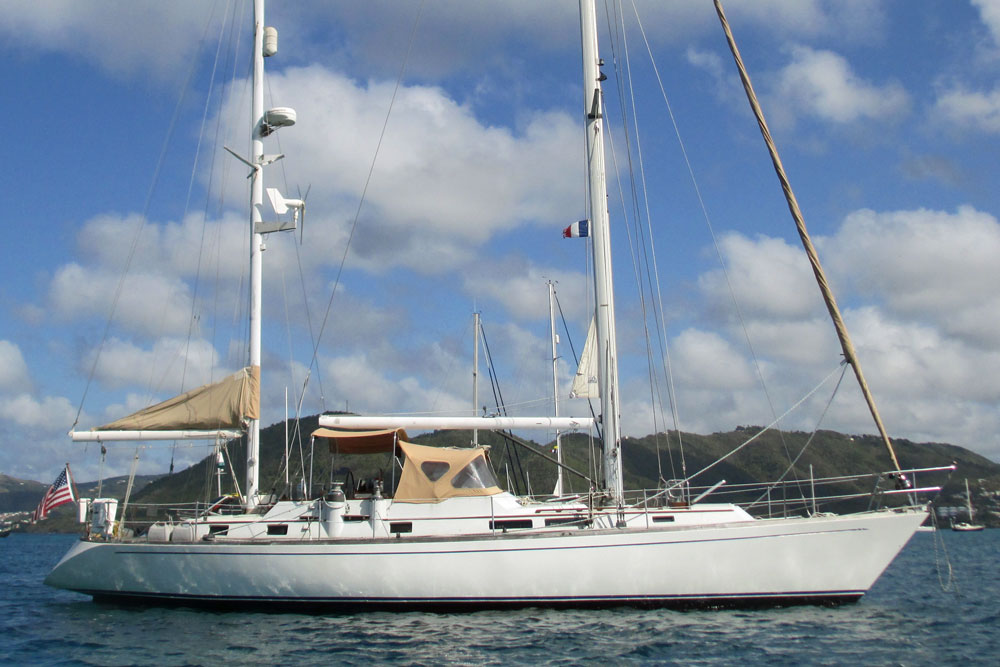
Table of Contents
- The Dawn 48 at a Glance
- Design & Construction
- Published Specification: The Dawn 48 Blueprint
- Sail Areas & Rig Dimensions
- Performance Analysis: Understanding the Design Ratios
- How the Dawn 48 Sails
- Bluewater Capability: Strengths & Trade-Offs
- Configuration, Layout & Cruising Characteristics
- Who This Boat Is Best For
- The Buyer’s Checklist: Common Problem Areas
- Summing Up
- Frequently Asked Questions (FAQs)
The Dawn 48 at a Glance
- Type: Bluewater cruising yacht, centre‑cockpit masthead ketch
- Designer: Germán Frers
- Builder: Kong & Halvorsen Marine & Engineering Co. Ltd., Hong Kong
- Production Years: 1983–1985, around 18 hulls built
- Rig: Masthead ketch, single wheel steering
- Best for: Long‑distance coastal and ocean cruising, liveaboard use, couples or small crews wanting separate cabins
- Strengths: Solid GRP hull, sensible underwater profile, good design ratios, comfortable motion, practical interior layout
- Trade‑offs: Ageing systems, ketch rig complexity, limited market familiarity, inspection‑critical chainplates and tanks
Design & Construction
Frers’ hand is obvious in the Dawn 48’s hull: fine entry, moderate beam and a relatively flat run aft that lets the boat carry weight without feeling sluggish. The hull is solid GRP (fibreglass) with internal framing and bulkheads bonded to the shell, typical of quality Hong Kong production of the period. There is no cored hull to worry about, though some decks may have plywood or foam coring under the moulded non‑skid and any teak overlay, so moisture checks are sensible.
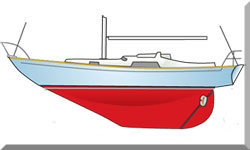
Underwater, most technical references describe a fin keel with a spade rudder, giving a good balance between tracking and manoeuvrability. Some narrative sources mention a skeg‑hung rudder; in practice, boats on the market tend to show a partial skeg or substantial rudder stock support rather than a fully free‑standing blade. Either way, the configuration is aimed at offshore work: a moderate draft of around 6'0" (1.83m), enough keel area for directional stability and a rudder that is large enough to keep control when pressed.
The deck and coachroof are GRP with moulded bulwarks and substantial teak trim. Windows are typically framed in aluminium and mechanically fastened through the cabin moulding rather than being frameless bonded glass. That is good news structurally, but it does mean you should inspect for frame corrosion, sealant failure and any signs of leaks around the saloon windows and opening ports. Chainplates are stainless steel strap types, welded and bolted to internal structure rather than fully encapsulated composite chainplates. A Cruisers Forum thread highlights at least one butt‑weld failure and a suspect reciprocal chainplate, so ultrasonic testing or at least careful visual inspection of welds and fasteners is strongly advised on any original set.
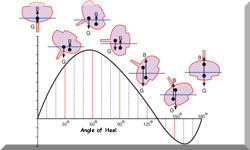
The rig is a masthead ketch: a main mast with a mizzen aft, giving a flexible sail plan that can be tailored to conditions and crew strength. Standing rigging is conventional wire with through‑bolted chainplates and deck‑stepped spars. There are no widely documented alternative versions such as shallow‑draft keels, centreboards or sloop rigs; the typical Dawn 48 is a centre‑cockpit ketch with a fin keel and spade or semi‑skeg rudder. Interior layouts are broadly similar: aft owner’s cabin with en‑suite, forward guest cabin, two heads, a walkthrough galley and a raised saloon, with minor variations in joinery and locker arrangements between hulls. No published STIX stability index appears in the usual databases; instead, the design ratios and capsize screening number are used as the primary quantitative indicators of offshore suitability.
Published Specification: The Dawn 48 Blueprint
| Spec | Value |
|---|---|
| LOA | 48'1" (14.7m) |
| LWL | 37'7" (11.5m) |
| Beam | 14'6" (4.4m) |
| Draft (max) | 6'0" (1.83m) |
| Displacement | 27,500lb (12,474kg) |
| Ballast | 11,600lb (5,262kg) |
| Rig Type | Masthead ketch |
| Hull Material | GRP (fibreglass) |
| Production Dates | 1983–1985 |
Sail Areas & Rig Dimensions
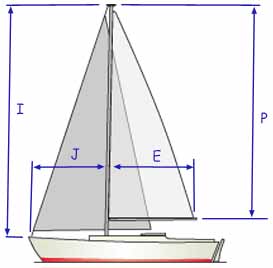 Rig dimensions
- I: 57.5' (17.53m)
- J: 15.5' (4.72m)
- P (main): 50.25' (15.32m)
- E (main): 15'0" (4.57m)
From these:
- Foretriangle area (100% foretriangle): ~445.3ft² (41.37m²)
- Mainsail area: ~376.8ft² (35.01m²)
- Total working sail area (main + foretriangle): ~822.1ft² (76.38m²)
Some calculators and listing sites quote a larger total sail area around 1,059ft² (98.38m²), which typically assumes a larger genoa and mizzen contribution. For design‑ratio work, the 822ft² figure is commonly used; for practical sailing, expect the full inventory (main, mizzen, genoa and downwind sails) to give you more horsepower than the bare numbers suggest.
Performance Analysis: Understanding the Design Ratios
Using the published displacement, waterline length and sail area, the standard design ratios for the Dawn 48 are:
| Ratio | Value | What it implies |
|---|---|---|
| Sail Area/Displacement (SA/D) | 18.7 | Healthy cruising power; will reach hull speed without needing gale‑force winds. |
| Displacement/Length (D/L) | ≈230 | Moderate displacement; carries cruising gear well while retaining reasonable performance. |
| Ballast/Displacement (B/D) | ≈42% | Stiff boat; stands up to canvas and resists excessive heel. |
| Capsize Screening Formula (CSF) | ≈1.9 | Below 2.0; favourable for ocean passages compared with beamier, lighter designs. |
| Brewer Motion Comfort Ratio | ≈30.0 | In the moderate offshore band; motion is predictable and acceptable for seasoned crews. |
These numbers put the Dawn 48 firmly in the “serious cruising” category rather than lightweight performance cruiser or heavy old‑school tank. SA/D around 18–19 means you can expect the boat to sail at or near her hull speed of about 8.2 knots when trimmed properly, without needing to reef at the first sign of breeze. The D/L in the low 200s shows that she is not excessively heavy, yet has enough displacement to carry tanks, spares and personal gear without killing performance. The ballast ratio over 40% is reassuring for upwind work and heavy weather, while the CSF under 2.0 and Brewer comfort ratio around 30 line up with the anecdotal reports of a boat that feels safe and predictable offshore.
For more on this topic, you might want to take a look at Understanding Boat Performance & Design Ratios...
How the Dawn 48 Sails
Upwind, the Dawn 48 behaves like a well‑drawn moderate cruiser: she is not a racing machine, but she points respectably and keeps her speed through chop. The fine entry and moderate beam help her slice rather than slam, and the ketch rig allows you to balance the sail plan by playing main, mizzen and headsail to keep the helm neutral. In typical trade‑wind conditions, owners report comfortable 6–7 knot passages on a close reach, with the boat feeling happier slightly cracked off than pinched hard to windward.
Downwind, the ketch rig comes into its own. You can run under main and mizzen with a poled‑out genoa, or drop the main and sail under mizzen and headsail for a quieter ride in boisterous conditions. The rudder has enough authority to keep the boat tracking in a following sea, and the moderate stern sections avoid the tendency to surf wildly and round up that some lighter designs show. Reefing is straightforward: most crews settle on a first reef in the main and a smaller headsail around 18–20 knots apparent, then progressively reduce mizzen and headsail as breeze builds.
Short‑handed, the Dawn 48 is manageable but demands respect. The ketch rig splits sail area into smaller pieces, which helps, but you still have a 48‑footer with a tall main mast and substantial loads. Sensible upgrades—electric or hydraulic windlass, good autopilot, modern reefing systems and reliable headsail furlers—make a big difference. With those in place, a competent couple can handle the boat on ocean passages without feeling overwhelmed, provided they are comfortable with night watches and heavy‑weather routines.
Motion is one of the boat’s selling points. The Brewer comfort ratio and anecdotal reports line up: she has a steady, slightly “big ship” feel rather than a lively twitch. In a seaway, the boat tends to roll slowly and pitch in a controlled way, which reduces fatigue and seasickness for most crews. That said, any 48‑footer will feel more motion than a heavier 55‑footer, and loading her sensibly (keeping weight low and central) is part of getting the best from the design.
Bluewater Capability: Strengths & Trade-Offs
On paper, the Dawn 48 ticks many offshore boxes: solid GRP hull, moderate displacement, good ballast ratio, CSF under 2.0 and a layout that keeps people secure at sea. Tankage is generous for the size, with typical installations around 240 US gallons (≈910 litres) of water and 120 US gallons (≈450 litres) of fuel, though exact numbers vary by hull and any refits. That gives a comfortable margin for long passages, especially if you add water‑making and fuel‑efficient motoring habits.
Deck safety is helped by proper bulwarks, substantial guardrails and a centre cockpit that keeps crew away from the bow in rough conditions. The walkthrough to the aft cabin doubles as a secure passage below, and the galley is tucked where the cook can brace easily. Load‑carrying is a strong point: the D/L and hull volume allow you to carry spares, tools and cruising gear without turning the boat into a slug, as long as you avoid filling every locker with heavy items.
The trade‑offs are mostly age‑related. These boats are now four decades old, so bluewater capability depends as much on maintenance history as on original design. Original chainplates, tanks, rudder bearings, steering gear and rigging all need careful assessment. The ketch rig adds complexity: more standing rigging, more sails and more hardware to keep in top condition. For some buyers that is a plus, for others it is a reason to look at simpler sloops.
Compared with similar bluewater/liveaboard cruisers—think Hylas 44/47, Whitby 42, Formosa 46—the Dawn 48 sits slightly more towards the performance end of the spectrum, with a cleaner underwater profile and less windage than some centre‑cockpit competitors. It does not have the brand recognition of Hylas or Oyster, but that can work in your favour on price if you are willing to do the homework.
Configuration, Layout & Cruising Characteristics
The Dawn 48’s centre cockpit is deep and well protected, with good coaming height and a sensible wheel position. Sightlines forward are acceptable, though the ketch mizzen and deckhouse do add some visual clutter. Side decks are wide enough for safe movement, and the raised aft deck over the owner’s cabin provides a useful working area for dinghy storage or solar panels.
Below, the layout is classic 1980s offshore cruiser. Forward, there is usually a V‑berth cabin with lockers and access to the forward head. The saloon sits amidships, often slightly raised, with a proper table and settees that can be used as sea berths. The walkthrough galley runs down one side towards the aft cabin, giving plenty of counter space, deep sinks and good bracing points. Opposite, you will typically find a navigation station with a full‑size chart table and space for modern electronics.
The aft cabin is one of the boat’s attractions: a proper owner’s stateroom with a double berth (often island‑style), wardrobes and an en‑suite head. Ventilation is via opening ports and hatches; insulation is typical of the era, so tropical liveaboards may want to add fans and, in some cases, air‑conditioning. Storage is generous throughout, with lockers, under‑berth space and dedicated technical areas for tools and spares.
For liveaboard use, the Dawn 48 works well for a couple with occasional guests. Two heads, separate cabins and a proper saloon mean you can live aboard without feeling you are camping. The trade‑off is that the interior is full of teak and systems that are now middle‑aged: expect to spend time on varnish, head upgrades, plumbing and wiring if the boat has not already been modernised.
Who This Boat Is Best For
Good fit for:
- Experienced coastal & ocean cruisers who want a serious 48‑footer without paying for a big‑name brand.
- Liveaboard couples who value an aft owner’s cabin, proper galley and good storage.
- Sailors moving up from 38–42ft cruisers who are comfortable with a step in size and systems complexity.
- Owners who enjoy refitting and upgrading and are happy to invest in chainplates, rigging, tanks and electrics to bring an older hull up to modern standards.
Less ideal for:
- First‑time boat owners or crews without offshore experience; the size and ketch rig can be demanding.
- Performance‑focused sailors who prioritise light‑air speed and racing over comfort and load‑carrying.
- Buyers wanting “turn‑key” minimal‑maintenance ownership; most Dawn 48s will need ongoing refit work.
- Those who dislike ketch rigs or prefer very simple sail plans and minimal hardware.
The Buyer’s Checklist: Common Problem Areas
For a Dawn 48 purchase, a structured inspection list is essential. Typical focus areas include:
- Chainplates & rigging: Inspect all chainplates for crevice corrosion, cracked welds and movement. The butt‑weld issue mentioned on Cruisers Forum is a red flag: any original welded chainplates should be considered candidates for replacement. Check standing rigging age, terminals and mast steps.
- Deck, windows & leaks: Look for signs of moisture around saloon windows, opening ports and any teak‑over‑GRP decks. Aluminium frames can corrode and lose seal integrity. If the deck is cored, tap‑testing and moisture readings are worthwhile, especially under hardware and around chainplates.
- Keel, rudder & steering: Examine keel‑to‑hull joint for cracking, rudder blade for osmosis or delamination, and rudder bearings for play. Steering quadrants, cables or hydraulic rams should be checked for wear and proper alignment.
- Tanks (fuel & water): Original mild‑steel or aluminium tanks may be approaching end of life. Look for staining, smells, access panels and any history of replacement. Internal inspection with a borescope can save surprises later.
- Engines & auxiliaries: Many boats carry original or older diesels; hours, maintenance records and compression tests matter. Check exhaust systems, mounts, shaft alignment and any generator or auxiliary systems.
- Electrical & plumbing: Wiring from the 1980s is often due for rationalisation. Look for ad‑hoc additions, undersized bus bars and corroded connections. Plumbing—heads, hoses, seacocks—should be assessed with an eye to replacement if original.
- Interior joinery & structure: Teak joinery hides structural elements; look behind lockers and under sole boards for signs of hull‑to‑bulkhead bond failure, tabbing cracks or water ingress. Pay attention to mast support areas and chainplate backing structure.
Typical refit budgets for a 48‑footer of this age can easily run into the tens of thousands of pounds if you tackle chainplates, full rigging, tanks, electrics and cosmetics. The upside is that once done properly, you have a very capable cruising platform.
Could this be your ideal cruising boat?
It may well be, but before going any further, it might be worth taking a look at my eBook 'How to Avoid Buying the Wrong Sailboat'...
Summing Up
The Dawn 48 is not a fashion‑driven yacht, and that is part of its appeal. On paper, the design ratios show a moderate, capable cruiser with enough sail area to keep passages moving and enough displacement and ballast to feel safe when the forecast is less friendly. In practice, owners and brokers describe a boat that tracks well, behaves predictably and offers a genuinely comfortable home afloat.
The trade‑offs are the usual ones for a 1980s offshore cruiser: you are buying both a design and a maintenance history. Chainplates, tanks, rigging and systems need to be treated as core structural items, not afterthoughts. If you are prepared to inspect thoroughly and invest where needed, the Dawn 48 offers a lot of boat for the money, especially compared with more widely known bluewater brands. For the right sailor—a thoughtful, experienced cruiser who values substance over gloss—it can be a very satisfying choice.
 DMcC
DMcCThis article was written by Dick McClary, RYA Yachtmaster and author of the RYA publications 'Offshore Sailing' and 'Fishing Afloat', member of The Yachting Journalists Association (YJA), erstwhile member of the Ocean Cruising Club (OCC) and owner/administrator of 'Liveaboard Sailboats for Sale'.

Frequently Asked Questions (FAQs)
1. How does the Dawn 48 compare to a Hylas 47 or Whitby 42 for ocean passages?
1. How does the Dawn 48 compare to a Hylas 47 or Whitby 42 for ocean passages?
The Dawn 48 is slightly more performance‑oriented than many Whitby‑style cruisers, with a cleaner underwater profile and higher SA/D, but sits close to the Hylas 47 in terms of offshore capability.
2. Is the ketch rig on the Dawn 48 an advantage or a complication for short‑handed crews?
2. Is the ketch rig on the Dawn 48 an advantage or a complication for short‑handed crews?
For some crews, splitting sail area into main, mizzen and headsail makes life easier; for others, the extra spars and sails feel like clutter.
3. What are the most cost‑intensive refit items on a Dawn 48, and how should buyers prioritise them?
3. What are the most cost‑intensive refit items on a Dawn 48, and how should buyers prioritise them?
Chainplates, standing rigging, tanks and electrics usually top the list.
4. How much load can a Dawn 48 carry before performance suffers noticeably?
4. How much load can a Dawn 48 carry before performance suffers noticeably?
With a D/L around 230, the design tolerates sensible cruising loads, but over‑loading will still slow her down.
5. Are there structural differences between early and late Dawn 48 hulls that affect buying decisions?
5. Are there structural differences between early and late Dawn 48 hulls that affect buying decisions?
Production numbers are small, and most references treat the series as uniform, but individual refits and yard practices can create variation.
Recent Articles


-
Mystery 35 Review: Specs, Performance & Buying Guide
Aug 29, 26 09:42 AM
An in-depth review of the Mystery 35 sailboat. Read technical specs, design ratios, sail performance, and common buyer inspection areas. -
Beneteau First 405 Review: Specs, Performance & Buyer’s Guide
Aug 26, 26 03:58 AM
Detailed Beneteau First 405 review covering specs, performance, bluewater capability, layouts and buyer’s checklist. -
Moody S38 Review: Specs, Ratios & Buyer’s Guide
Aug 12, 26 04:22 AM
In‑depth Moody S38 review covering specs, performance, design ratios, layout, strengths, trade‑offs & buyer inspection points.