- Home
- Cruising Yachts 35' to 40'
- Moody S38 Cruising Yacht Specifications & Ownership Guidance
Moody S38 Sailboat
Specs, Performance Analysis & Cruising Characteristics
Key Takeaways: The Moody S38 is one of the more distinctive yachts to come out of the mid‑1990s Bill Dixon era. It sits apart from the centre‑cockpit Moody 38 and the later 38 DS, offering a sleeker, sportier hull and a more performance‑leaning rig. Owners tend to value its solid build, predictable manners, and comfortable cruising interior. It is not a lightweight flyer, but it delivers steady passage speeds, a forgiving motion, and a cockpit layout that suits couples. The trade‑offs are typical of the period: ageing systems, window bonding checks, and attention to deck hardware bedding. For sailors wanting a capable cruiser with a slightly livelier feel than the classic Moody centre‑cockpit line, the S38 remains an appealing option.
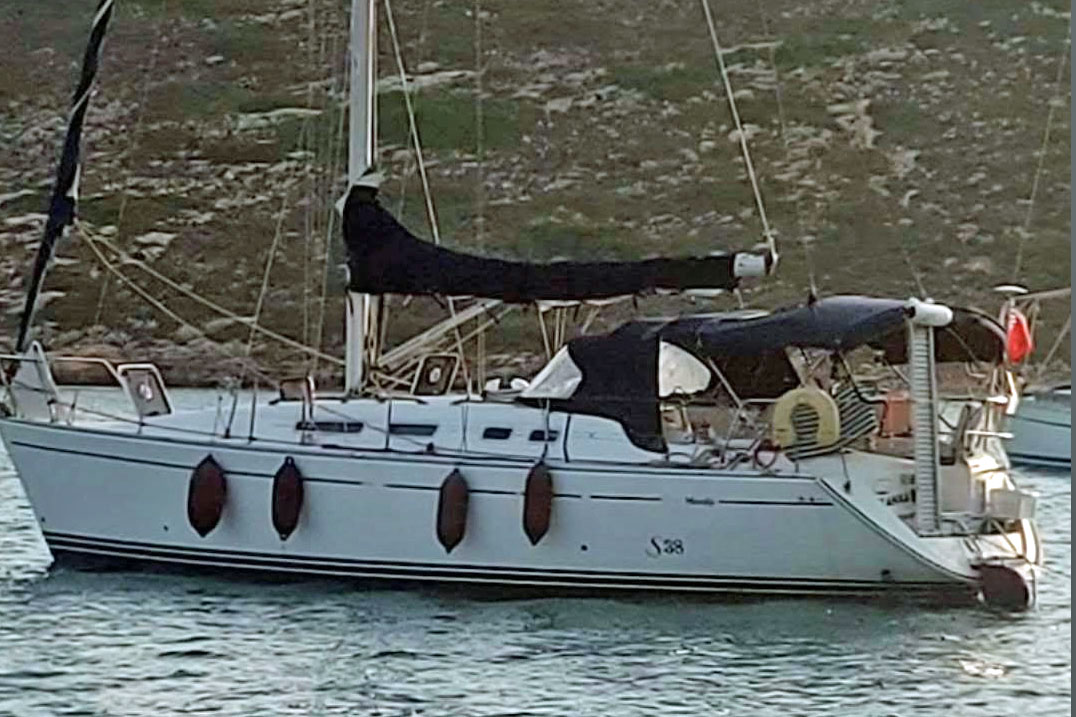
Table of Contents
- The Moody S38 at a Glance
- Design & Construction
- Published Specification: The Moody S38 Blueprint
- Sail Areas & Rig Dimensions
- Performance Analysis: Understanding the Design Ratios
- How the Moody S38 Sails
- Bluewater Capability: Strengths & Trade-Offs
- Configuration, Layout & Cruising Characteristics
- Who This Boat Is Best For
- The Buyer’s Checklist: Common Problem Areas
- Summing Up
- Related Boats
- Frequently Asked Questions (FAQs)
The Moody S38 at a Glance
- Type: Masthead sloop cruising yacht
- Designer: Bill Dixo
- Builder: Moody Yachts / Marine Projects (Plymouth)
- Production Years: Mid‑1990s (approx. 1994–1998)
- Rig: Masthead sloop
- Best for: Coastal cruising, extended passages, couples sailing
- Strengths: Strong build, predictable handling, comfortable interior, good cockpit ergonomics
- Trade‑offs: Age‑related maintenance, moderate performance, limited tankage for long‑range voyaging
Design & Construction
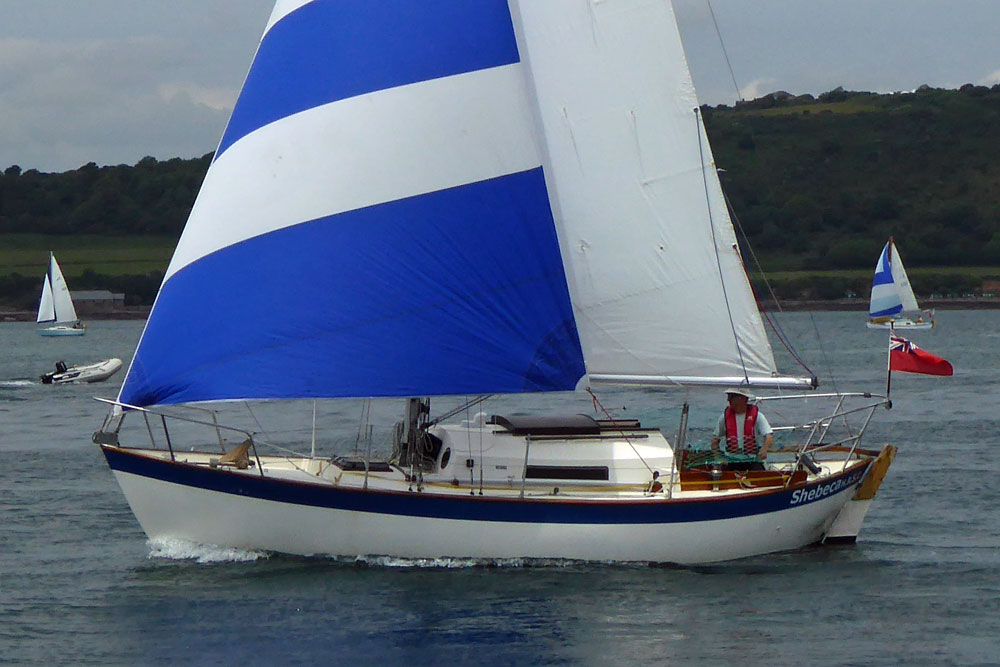
The Moody S38 was developed during a period when Bill Dixon was refining Moody’s move towards sleeker hulls with more modern underbodies. Unlike the centre‑cockpit Moody 38 (1991–96), the S38 adopts an aft‑cockpit layout with a lower coachroof and a more streamlined profile. The hull is GRP with a solid laminate below the waterline and a cored deck, typical of Marine Projects’ construction approach at the time. The keel is a fin with a bulb, and most boats were delivered with a single deep‑draft option rather than the multiple keel choices seen on some earlier Moodys. The rudder is a semi‑balanced spade, giving the boat a more responsive helm than the heavier centre‑cockpit models.
The chainplates are typically integrated into substantial GRP structures within the hull, rather than being bolted through the deck. This arrangement has proven durable, though inspection is still important on older boats. The cabin windows are bonded rather than through‑bolted, which improves aesthetics but requires periodic checking for UV degradation and sealant fatigue.
There were no major variant lines for the S38, which remained consistent throughout its production run, other than minor interior trim differences and optional equipment packages.
Published Specification: The Moody S38 Blueprint
| LOA | 38'0" (11.58 m) |
| LWL | 31'6" (9.60 m) |
| Beam | 12'4" (3.76 m) |
| Draft | 6'4" (1.93 m) |
| Displacement | 15,400 lbs (6,985 kg) |
| Ballast | 6,000 lbs (2,722 kg) |
| Rig Type | Masthead sloop |
| Hull Material | GRP |
| Production Dates | Approx. 1994–1998 |
Sail Areas & Rig Dimensions
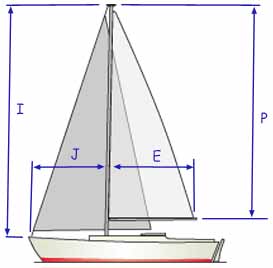 Rig dimensions
- I: 46'0" (14.02 m)
- J: 14'6" (4.42 m)
- P: 40'0" (12.19 m)
- E: 14'0" (4.27 m)
- Mainsail Area: 280 fts² (26.0 m²)
- Foretriangle Area: 333 fts² (31.0 m²)
- Total Working Sail Area: 613 fts² (57.0 m²)
Performance Analysis: Understanding the Design Ratios
| SA/D | 17.0 |
| D/L | 220 |
| B/D | 0.39 |
| Capsize Screening (CSF) | 1.95 |
| Comfort Ratio | 26.5 |
Interpretation
- SA/D 17.0: Moderate power. Enough sail area for steady cruising speeds without being demanding.
- D/L 220: Middle‑weight cruiser. Not heavy like the centre‑cockpit Moody 38, not light like modern performance cruisers.
- B/D 0.39: Respectable stiffness. Helps the boat stand up to its canvas.
- CSF 1.95: Within the offshore‑capable range.
- Comfort Ratio 26.5: Typical of a mid‑size GRP cruiser. Motion is predictable rather than soft.
For more on this topic, you might want to take a look at Understanding Boat Performance & Design Ratios...
How the Moody S38 Sails
Upwind, the S38 tracks reliably and holds a groove without fuss. It is not a high‑pointing yacht, but it maintains respectable VMG and feels settled once trimmed. The semi‑balanced spade rudder gives a lighter helm than the centre‑cockpit Moody 38, and the boat responds well to small adjustments. Reefing is straightforward, and most owners report that the boat prefers to be reefed early to maintain balance.
Downwind, the S38 is steady rather than lively. With a cruising chute it will maintain comfortable passage speeds, and the hull shape avoids the snappy rolling sometimes found in lighter boats. Short‑handed sailors appreciate the cockpit layout, which keeps winches within reach and allows easy movement around the helm.
Bluewater Capability: Strengths & Trade-Offs
The S38 is capable of offshore passages, though it is not a purpose‑built ocean voyager. The deck layout is secure, with good handholds and a cockpit that feels protective without being deep. Tankage is modest, so long‑range voyaging requires careful planning. The hull carries cruising loads reasonably well, though performance will soften if heavily provisioned. The motion is predictable, and the boat’s stiffness helps maintain comfort in moderate seas.
Configuration, Layout & Cruising Characteristics
The aft‑cockpit layout creates a sociable deck space and a more modern feel than the centre‑cockpit Moody 38. The interior is typical of mid‑1990s Moody: warm timber finishes, practical galley, and a saloon that seats a crew comfortably. The aft cabin is generous for a boat of this size, and the forward cabin suits guests or family cruising. Storage is adequate, though not as extensive as the centre‑cockpit models. Ventilation is good, and the bonded windows give a clean exterior look.
Who This Boat Is Best For
Good fit for:
- Couples wanting a comfortable cruiser with predictable handling
- Sailors upgrading from smaller production cruisers
- Owners who value build quality and a solid feel
- Coastal cruisers with occasional offshore ambitions
Less ideal for:
- Long‑range voyagers needing large tankage
- Performance‑focused sailors wanting high pointing angles
- Owners seeking a deck‑saloon layout (Moody 38 DS is the better match)
The Buyer’s Checklist: Common Problem Areas
- Bonded windows: Check for UV‑related sealant fatigue.
- Deck hardware bedding: Re‑bedding may be needed after 25+ years.
- Rigging age: Many boats still carry original or early‑life rigging.
- Engine mounts & exhaust elbow: Typical ageing items.
- Keel bolts: Inspect for corrosion and torque consistency.
- Chainplate structures: Look for moisture ingress around the GRP bonding.
- Original electronics: Expect replacement or upgrades.
Could this be your ideal cruising boat?
It may well be, but before going any further, it might be worth taking a look at my eBook 'How to Avoid Buying the Wrong Sailboat'...
Summing Up
The Moody S38 occupies a useful middle ground in the Moody lineage. It offers a more responsive feel than the centre‑cockpit Moody 38 and a more traditional profile than the later 38 DS. Its build quality, predictable manners, and comfortable interior make it a strong candidate for sailors wanting a reliable cruiser with enough performance to keep passages enjoyable. Age‑related maintenance is inevitable, but most issues are manageable and well understood. For buyers seeking a capable, well‑built 38‑footer with a slightly sportier edge, the S38 remains a compelling choice.
Related Moody Boats
For sailors researching the Moody S38, a handful of other Moody models offer useful context. These boats share similar design philosophies, build quality, and cruising intentions, making them natural comparisons for anyone considering an S38. Each one highlights a different branch of Moody’s evolution, from earlier centre‑cockpit cruisers to later performance‑leaning designs.
Moody 346
The Moody 346 is one of the most popular models in the Moody line, known for its centre‑cockpit layout and strong cruising credentials. Compared with the S38, it feels heavier and more insulated from sea state, with a motion that suits long passages. The interior is notably spacious for its length, especially the aft cabin, which remains a major selling point. Sailors comparing the two will find the 346 more traditional, but equally capable for extended cruising. Read more…
Moody 36S
The Moody 36S sits close to the S38 in terms of era and design intent, offering a sportier feel than the centre‑cockpit models while retaining Moody’s trademark build quality. It shares the Dixon influence seen in the S38, with a responsive helm and a more modern underbody. The interior is comfortable for couples, and the boat’s size makes it manageable for short‑handed sailing. For buyers who like the S38’s style but prefer something slightly smaller, the 36S is a strong contender. Read more…
Moody 37
The Moody 37 bridges the gap between the older centre‑cockpit cruisers and the later Dixon‑designed aft‑cockpit models. It offers a balanced mix of comfort, seaworthiness, and practical layout choices. Compared with the S38, it feels more traditional and slightly heavier, but it remains a capable passage‑maker with a loyal following. Its interior volume and secure cockpit make it appealing for family cruising or extended coastal passages. Read more…
Moody 376
The Moody 376 is widely respected as a robust offshore cruiser with a centre‑cockpit layout and generous accommodation. It contrasts with the S38’s sportier profile, offering instead a heavier, more planted feel underway. The boat carries cruising loads well and has a reputation for reliability on long passages. Buyers weighing the S38 against the 376 will find the latter better suited to bluewater ambitions, while the S38 offers a more modern sailing experience. Read more…
For yet more sailboats within this size range, take a look at these...

Written by Dick McClary, cruising sailor and yachting journalist, publisher of Sailboat‑Cruising.com and admin of the Liveaboard Sailboats for Sale community.

Frequently Asked Questions (FAQs)
1. How does the Moody S38 compare to the centre‑cockpit Moody 38 for cruising comfort?
1. How does the Moody S38 compare to the centre‑cockpit Moody 38 for cruising comfort?
The S38 has a livelier motion and a more responsive helm, while the centre‑cockpit 38 feels heavier and more insulated from sea state.
2. Is the Moody S38 suitable for ocean crossings?
2. Is the Moody S38 suitable for ocean crossings?
Yes, with preparation. Its ratios and construction support offshore passages, though tankage and storage require planning.
3. What are the most expensive refit items on an ageing S38?
3. What are the most expensive refit items on an ageing S38?
Standing rigging, windows, and original electronics tend to be the highest‑cost upgrades.
4. How does the S38 perform when heavily loaded for cruising?
4. How does the S38 perform when heavily loaded for cruising?
It copes reasonably well, though performance softens. Reefing early helps maintain balance.
5. Are there any structural weak points to inspect closely?
5. Are there any structural weak points to inspect closely?
Bonded windows, chainplate bonding areas, and deck hardware bedding are the primary inspection points.
Recent Articles


-
Tayana 55 Review: Specs, Ratios & Bluewater Cruising Guide
Sep 30, 26 05:04 AM
Detailed Tayana 55 review covering specs, design ratios, sailing performance, layouts, problem areas and buyer tips. -
Serious Sailboat Safety Gear: Beacons, Lifejackets, Liferafts
Sep 30, 26 03:38 AM
Serious sailboat safety gear for offshore crews: EPIRBs, PLBs, lifejackets and liferafts, plus the 2026 UK beacon registration change and pre-passage checks. -
Offshore Liferaft Guide: Choosing, Stowing and Servicing One
Sep 30, 26 03:20 AM
Choosing an offshore liferaft? Learn what ISO 9650 Group A means, where to stow it, how often to service it and what to pack in the grab bag.