- Home
- Cruising Yachts 40' to 45'
- Beneteau First 405 Performance Cruiser‑racer Review and Buyer’s Guide
Beneteau First 405 Sailboat
Specs, Performance Analysis & Cruising Characteristics
Key Takeaways: The Beneteau First 405 is a mid‑1980s French cruiser‑racer from Jean Berret that blends genuine passage‑making ability with club‑racing performance. It is a moderately light, masthead‑sloop design with a solid glass hull, fin keel and spade rudder, aimed at sailors who value speed, responsive handling and a comfortable, three‑cabin layout. Strengths include good upwind performance, a practical interior for family cruising and respectable motion comfort for coastal and ocean passages. Trade‑offs are modest tankage, limited stowage for heavy long‑term loads and the usual age‑related issues of a production boat now approaching four decades old. It suits experienced owners who are happy to refit, sail actively and keep an eye on systems rather than those seeking a slow, heavy displacement liveaboard.
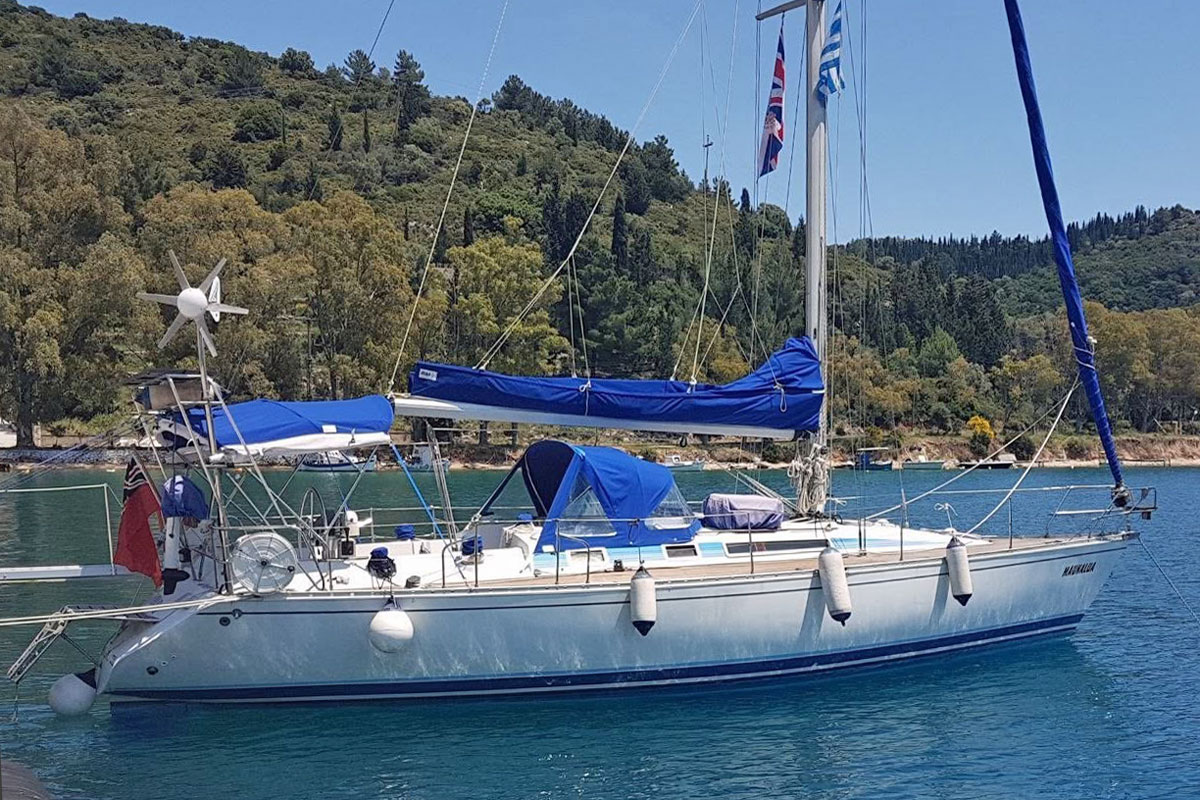 A Beneteau First 405 Sailboat
Table of Contents
- The Beneteau First 405 at a Glance
- Design & Construction
- Published Specification: The Beneteau First 405 Blueprint
- Sail Areas & Rig Dimensions
- Performance Analysis: Understanding the Design Ratios
- How the Beneteau First 405 Sails
- Bluewater Capability: Strengths & Trade-Offs
- Configuration, Layout & Cruising Characteristics
- Who This Boat Is Best For
- The Buyer’s Checklist: Common Problem Areas
- Summing Up
- Related Boats
- Frequently Asked Questions (FAQs)
The Beneteau First 405 at a Glance
- Type: Performance cruiser‑racer monohull
- Designer: Jean Berret (Berret‑Racoupeau)
- Builder: Beneteau, France
- Production Years: Mid‑1980s to around 1990 (bulk of production 1986–1988)
- Rig: Masthead sloop
- Best for: Fast coastal cruising, club racing, occasional ocean passages with a competent crew
- Strengths: Lively performance, balanced helm, comfortable three‑cabin layout, solid hull construction
- Trade‑offs: Modest tankage, limited deep stowage, age‑related structural and systems checks now essential
Design & Construction
The First 405 sits squarely in the mid‑1980s generation of performance cruisers that tried to bridge the gap between IOR‑influenced racer‑cruisers and more modern family yachts. Jean Berret drew a relatively fine entry, moderate beam and fairly flat run aft, with short overhangs and a generous waterline length for the time. The hull is solid fibreglass below the waterline, carrying an iron fin keel and a spade rudder, which keeps weight down and helps the boat feel lively and responsive under sail. Above the waterline, the deck is moulded fibreglass with local reinforcement in way of hardware, and the interior is finished in teak joinery that has generally aged well when looked after.
Most boats were built with a deep fin keel drawing about 7'2" (2.19 m), while a shoal‑draft option around 5'6" (1.68 m) was also offered. Both use internal iron ballast, so keel corrosion and fairing are inspection points today. The rudder is a semi‑balanced spade on a stock that passes through the hull; bearings and stock integrity deserve careful attention on any survey. Chainplates are typically internal stainless flat bars tied into substantial glassed‑in structures along the main bulkheads rather than external strap fittings. That arrangement spreads loads effectively but makes inspection more awkward, so any signs of moisture, staining or cracking around the chainplate landings should be taken seriously. Cabin side windows are set in moulded openings with framed acrylic; on many Beneteau yachts of this era they are bonded and screwed rather than fully through‑bolted, which means the sealant is now well past its original design life. Re‑bedding or replacement is common and should be budgeted for if not already done.
Structurally, the boat uses an internal moulded grid bonded to the hull to carry keel and mast loads, with bulkheads tabbed to both hull and deck. This gives good stiffness for a production boat, but hard groundings can crack the grid around the keel bolts, so a thorough inspection in that area is important. There were layout variations, but the typical arrangement is a forward owner’s cabin with en‑suite head, two aft double cabins, a large saloon and a second head. No formal STIX index was published, as the design predates the EU RCD regime, but the ratios and general behaviour place the First 405 in the “moderate coastal and offshore cruiser” band rather than extreme lightweight or heavy displacement categories.
Published Specification: The Beneteau First 405 Blueprint
| Specification | Value |
|---|---|
| LOA | 40'8" (12.40 m) |
| LWL | 35'6" (10.82 m) |
| Beam | 12'9" (3.89 m) |
| Draft (deep keel) | 7'2" (2.19 m) |
| Draft (shoal keel) | 5'6" (1.68 m) |
| Displacement | 18,500 lb (8,391 kg) |
| Ballast | 7,694 lb (3,490 kg) iron |
| Rig Type | Masthead sloop |
| Hull Material | Fibreglass (solid laminate hull) |
| Production Dates | Mid‑1980s to circa 1990 (major production 1986–1988) |
Sail Areas & Rig Dimensions
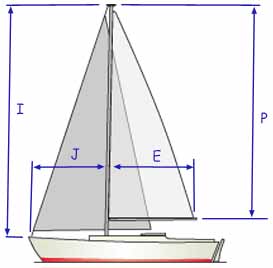 Rig dimensions
The standard masthead sloop rig is relatively conservative in height but carries a generous foretriangle, which suits overlapping genoas and downwind sails.
- I: 50.2' (15.30 m)
- J: 14.44' (4.40 m)
- P: 44.29' (13.50 m)
- E: 14.40' (4.39 m)
Sail areas (standard rig, working sails):
- Mainsail area: 318.9 ft² (29.6 m²)
- Foretriangle (100% headsail): 362.4 ft² (33.7 m²)
- Total working sail area: 681.3 ft² (63.3 m²)
Many owners carry larger genoas (130–150%) and asymmetric or symmetric spinnakers, pushing total sail area well above 800 ft² (≈74 m²) when fully powered up.
Performance Analysis: Understanding the Design Ratios
Using the published displacement, dimensions and sail areas, the key ratios for the standard rig and deep‑keel version are:
| Ratio | Value | What it Indicates |
|---|---|---|
| Sail Area/Displacement (SA/D) | ≈15.6 | Moderate power; good cruising performance, not an extreme light‑air flyer without larger headsails. |
| Displacement/Length (D/L) | ≈185 | “Light” by traditional standards; easier to drive to hull speed, responsive under sail. |
| Ballast/Displacement (B/D) | ≈41.6% | Good stiffness; stands up to canvas, reassuring when pressed upwind. |
| Capsize Screening Formula (CSF) | ≈1.93 | Below the 2.0 threshold often used for offshore suitability; acceptable for ocean passages with sensible loading. |
| Brewer Motion Comfort Ratio | ≈26 | Typical coastal/offshore cruiser; motion is livelier than a heavy displacement boat but not harsh. |
In practical terms, these numbers describe a boat that is quick enough to be enjoyable and competitive at club level, yet not so extreme that it becomes tiring or demanding on passage. The ballast ratio and CSF are reassuring, while the comfort ratio reminds you that this is still a performance‑oriented hull, not a heavy long‑keel cruiser.
For more on this topic, you might want to take a look at Understanding Boat Performance & Design Ratios...
How the Beneteau First 405 Sails
Under sail, the First 405 feels like a proper performance cruiser rather than a sedate family boat. Upwind, the deep‑keel version tracks well and points respectably, especially with a modern laminate genoa and a well‑cut mainsail. The helm is light, with a touch of weather helm when pressed, which most owners find helpful for feedback. In flat water and 12–18 knots of breeze, it is realistic to see sustained speeds in the high 7‑knot range, nudging hull speed without drama.
Downwind, the generous foretriangle rewards a full‑size spinnaker or asymmetric. The boat is stable enough to carry a kite in moderate conditions, but the relatively fine bow and spade rudder mean it prefers to be sailed actively rather than left to its own devices. On longer passages, many owners favour poled‑out headsails and a reefed main for simplicity, which the rig handles well.
Reefing is straightforward, with slab reefs in the main and roller furling on the headsail. The first reef comes in around 18–20 knots apparent for most crews, with a second reef and smaller headsail making sense above the mid‑20s. Short‑handed, the boat remains manageable provided the sail plan is kept conservative and the crew stay ahead of the conditions. The cockpit layout, with primary winches within reach of the helm, suits a competent skipper working with one or two crew.
Motion is livelier than a heavy displacement cruiser but not uncomfortable. The moderate beam and relatively low topsides help the boat slice rather than slam, though like most fin‑keel designs it can pound if driven hard into steep chop. Careful trim and avoiding over‑canvassing go a long way to keeping the ride pleasant.
Bluewater Capability: Strengths & Trade-Offs
The First 405 was not marketed as a pure bluewater tank, yet many have crossed oceans and cruised widely. The underlying hull structure, ballast ratio and CSF support that use, provided the boat is maintained and sensibly loaded. Strengths include a solid hull, internal structural grid, good righting moment and a rig that is not excessively tall, which reduces loads and makes reefing less frantic.
Tankage is modest by modern long‑range standards: around 24 US gallons (91 L) of fuel and roughly 106 US gallons (401 L) of water in original configuration. For extended voyaging, owners often add flexible tanks, watermakers or extra fuel capacity. The boat will carry cruising gear, but its performance‑oriented hull does not enjoy being overloaded; heavy stores high in the ends or on deck will quickly erode the handling and motion.
Deck safety is reasonable, with wide side decks, decent coamings and good handholds, though some owners retrofit additional grab rails and stronger padeyes for jackstays. The cockpit is secure enough offshore, but the relatively open transom and low bridge deck mean attention to washboards and cockpit drainage is important. For ocean passages, upgrades such as stronger companionway closures, storm boards and dedicated harness points are sensible.
In short, the First 405 can be a capable bluewater cruiser in the hands of an experienced skipper who respects its performance roots, keeps weight under control and invests in appropriate safety and systems upgrades.
Configuration, Layout & Cruising Characteristics
On deck, the First 405 has a fairly low coachroof, wide side decks and a cockpit that balances racing ergonomics with cruising comfort. Primary winches are placed for efficient trimming, and the mainsheet system is typically on the coachroof, freeing the cockpit but requiring a bit more movement for the helm when fine‑tuning. The ramped cockpit coamings are comfortable when heeled, though some find them less supportive when the boat is upright.
Below, the standard layout offers a forward double cabin with its own head, two aft double cabins, a generous saloon and a second head. The galley is usually U‑shaped, near the companionway, which works well at sea and keeps the cook secure. The navigation station is proper yacht furniture rather than an afterthought, with space for instruments and paper charts.
Berths are adequate for six adults, with occasional extra sleeping space in the saloon. Headroom is good for most people, and the teak interior gives a warm feel. Ventilation depends on the condition of hatches and portlights; many boats have had these replaced or upgraded over time. Storage is reasonable for coastal cruising, but deep lockers for long‑term provisioning are limited compared with heavier displacement cruisers. Owners who live aboard often add custom lockers, under‑sole storage and better organisation to make the most of the available volume.
For liveaboard use, the boat works best for couples or families who cruise actively rather than sit in one place for months. The three‑cabin layout is excellent for privacy and guests, but the relatively modest tankage and stowage mean it is not the easiest platform for very long stationary periods without shore support.
Who This Boat Is Best For
Good fit for:
- Experienced coastal cruisers who want a boat that sails well, rewards trimming and still offers comfortable accommodation.
- Club racers looking for a dual‑purpose yacht that can race at weekends and cruise with family or friends.
- Offshore‑capable owners prepared to invest in refit work, safety gear and sensible loading for passages.
Less ideal for:
- Owners seeking a heavy, slow‑motion liveaboard with huge tankage and cavernous stowage.
- Those wanting minimal maintenance, as a mid‑1980s performance cruiser now demands ongoing attention to structure, rig and systems.
- Skippers uncomfortable with active sailing, since the boat rewards trimming and engagement rather than passive motoring.
The Buyer’s Checklist: Common Problem Areas
When assessing a Beneteau First 405, a thorough survey and targeted inspection are essential. Key areas include:
- Keel & keel‑to‑hull joint: Look for cracking around the keel stub, signs of previous groundings, rust staining from the iron keel and any movement at the keel bolts. Remediation can range from cosmetic fairing to structural grid repairs.
- Structural grid & bilge: Inspect the internal moulded grid for cracks, debonding or signs of flexing. Pay attention around keel bolts, mast step and main bulkheads. Any structural work here can be labour‑intensive.
- Chainplates & rig: Internal chainplates and their surrounding laminate should be checked for corrosion, crevice attack and moisture. Rigging on boats of this age is often overdue for replacement; budget for a full re‑rig if there is no recent documentation.
- Windows, hatches & deck hardware: Original bonded portlights and hatches may leak or craze. Re‑bedding or replacement is common and can be a meaningful cost if done properly. Check for core moisture around heavily loaded fittings.
- Rudder & steering: Examine the rudder for signs of water ingress, delamination or cracking. Check bearings and steering gear for play. Rudder rebuilds are not unusual on older performance boats.
- Engine & systems: Many boats still carry the original Perkins 4.108 or a later replacement. Assess engine hours, maintenance history, mounts, exhaust and fuel system. Electrical systems are often a patchwork of upgrades; a tidy, documented installation is a positive sign.
- Tankage & plumbing: Original fuel and water tanks may be nearing the end of their life. Look for corrosion, contamination and tired hoses. Upgrading tanks and plumbing can be a worthwhile refit project.
- Deck & non‑skid: Check for wear, crazing and any signs of core issues around stanchions, chainplates and winches. Non‑skid may need renewal for safe movement on deck.
Typical refit budgets vary widely, but a buyer should be prepared for a package that might include standing rigging, sails, keel and rudder work, deck hardware re‑bedding, engine upgrades and interior refresh. The upside is that a well‑sorted First 405 remains a rewarding boat to own and sail.
Could this be your ideal cruising boat?
It may well be, but before going any further, it might be worth taking a look at my eBook 'How to Avoid Buying the Wrong Sailboat'...
Summing Up
The Beneteau First 405 occupies an interesting niche: it is neither a stripped‑out racer nor a heavy, slow cruiser, but a well‑balanced performance yacht that still makes sense today. The design ratios point to a boat that is light enough to be engaging yet stiff enough to feel secure when pressed. Under sail, it rewards an active helm and thoughtful trim, delivering satisfying speeds without demanding extreme effort.
From a buyer’s perspective, the key is to recognise that this is now an older production boat. Structural integrity around the keel and grid, the condition of the rig and chainplates, and the state of windows, deck hardware and systems will define whether a particular example is a joy or a project. For those willing to invest in a careful survey and a sensible refit, the First 405 offers a lot of sailing pleasure, a comfortable three‑cabin layout and enough capability to tackle coastal passages and occasional ocean crossings. It suits owners who enjoy sailing as much as arriving, and who appreciate a boat that still feels lively and rewarding on the helm.
Related Boats
Beneteau First 375 – Slightly smaller and lighter than the First 405, this model offers similar performance‑oriented handling and French cruiser‑racer DNA in a more compact package. A good comparison if you like the First 405 concept but want lower running costs and a bit less boat to manage.
Beneteau First 435 – The logical step up from the First 405, with more length, volume and passagemaking potential while retaining the same Berret‑designed performance focus. Worth a look if you want extra space for crew and stores without moving to a pure cruising hull.
Jeanneau Sun Legende 41 – A contemporary French performance cruiser of similar size, combining a lively hull with a comfortable interior. It makes a useful benchmark for buyers weighing the First 405 against another fast, mid‑1980s offshore‑capable design.
If you're looking for other cruising boats of a similar size to the First 405, check here...

Written by Dick McClary, cruising sailor and yachting journalist, publisher of Sailboat‑Cruising.com and admin of the Liveaboard Sailboats for Sale community.

Frequently Asked Questions (FAQs)
1. How does the Beneteau First 405 cope with heavy weather offshore?
1. How does the Beneteau First 405 cope with heavy weather offshore?
The hull form, ballast ratio and rig allow the boat to handle strong winds competently when reefed early and loaded sensibly. Many owners add storm sails, upgraded deck hardware and improved companionway closures to increase confidence offshore.
2. Is the shoal‑draft version noticeably different to sail compared with the deep‑keel model?
2. Is the shoal‑draft version noticeably different to sail compared with the deep‑keel model?
Yes. The shoal keel improves access to shallow cruising grounds but sacrifices some pointing ability and stiffness. For serious upwind work and racing, the deep keel is preferable; for mixed cruising with frequent shallow anchorages, the shoal version can be a pragmatic choice.
3. What are the most important structural checks before buying a First 405?
3. What are the most important structural checks before buying a First 405?
The keel‑to‑hull joint, internal grid around the keel bolts, chainplate landings and rudder stock are the priority areas. Any signs of cracking, movement or corrosion here warrant detailed investigation and may influence the purchase price or viability of the boat.
4. How suitable is the First 405 as a long‑term liveaboard platform?
4. How suitable is the First 405 as a long‑term liveaboard platform?
It can work well for active cruisers who move regularly and value sailing performance. Those wanting extensive tankage, huge stowage and a very gentle motion at anchor might find a heavier displacement design more comfortable for long‑term static living.
5. What upgrades give the biggest benefit to an older First 405?
5. What upgrades give the biggest benefit to an older First 405?
A modern sail wardrobe, new standing rigging, upgraded deck hardware, improved tankage and a refreshed electrical system transform the boat. Many owners also invest in better ventilation, new portlights and interior lighting to make life aboard more pleasant.
Recent Articles


-
Should I Buy a Boat? Four Questions to Answer Before You Commit
Oct 02, 26 04:40 AM
Thinking "Should I buy a boat?" This guide helps you decide, with key considerations from cost & maintenance to your personal sailing aspirations. -
Offshore Internet with Starlink: Hardware, Plans, and Setup Guidance
Oct 01, 26 01:15 PM
A clear, practical guide to choosing the right Starlink hardware and plan for offshore cruising. Learn what to buy, how to install it, and how to manage power afloat. -
Offshore Liferaft Guide: Choosing, Stowing and Servicing One
Oct 01, 26 06:28 AM
Choosing an offshore liferaft? Learn what ISO 9650 Group A means, where to stow it, how often to service it and what to pack in the grab bag.