- Home
- Cruising Yachts 35' to 40'
- Mystery 35 Sailboat Technical Specification and Buyer Review
Mystery 35 Review: Specs, Performance & Buying Guide
Key Takeaways: The Mystery 35 is a compact, performance‑leaning British cruiser‑racer designed for sailors who value handling and build quality over interior volume. It is stiff, narrow and responsive, with a deep lead bulb keel and a helm that rewards active trimming. Offshore credentials are solid on paper, but tankage, stowage and load sensitivity limit how far you can push it as a long‑distance platform. It sails well when sailed well, but it is not forgiving of late reefing, sloppy trim or heavy loading. It suits experienced sailors who enjoy an honest boat that reflects the skill of its helmsman, rather than those seeking relaxed cruising or maximum space.
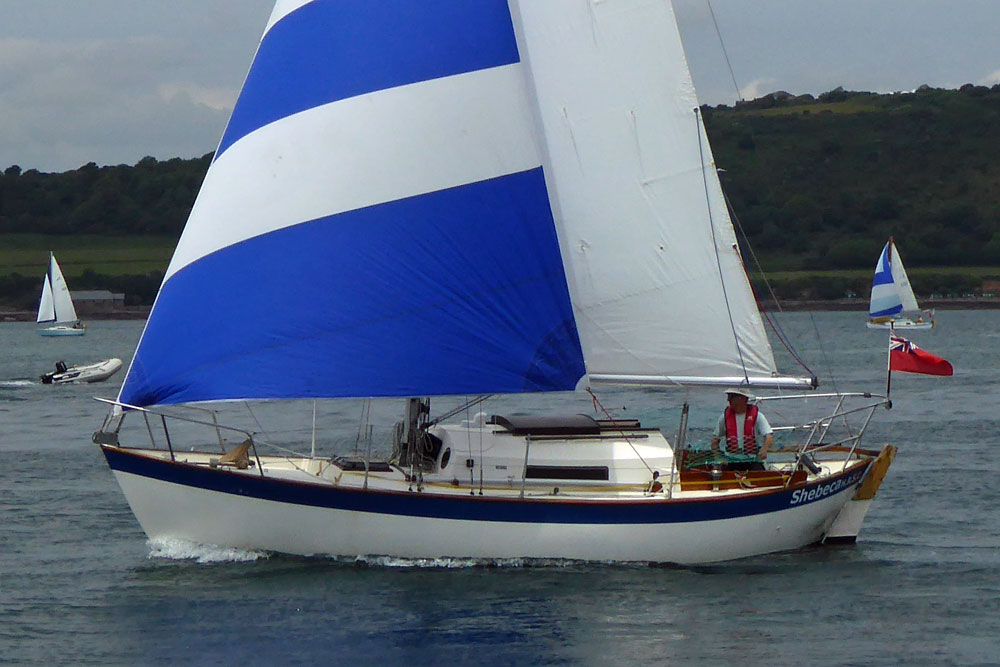
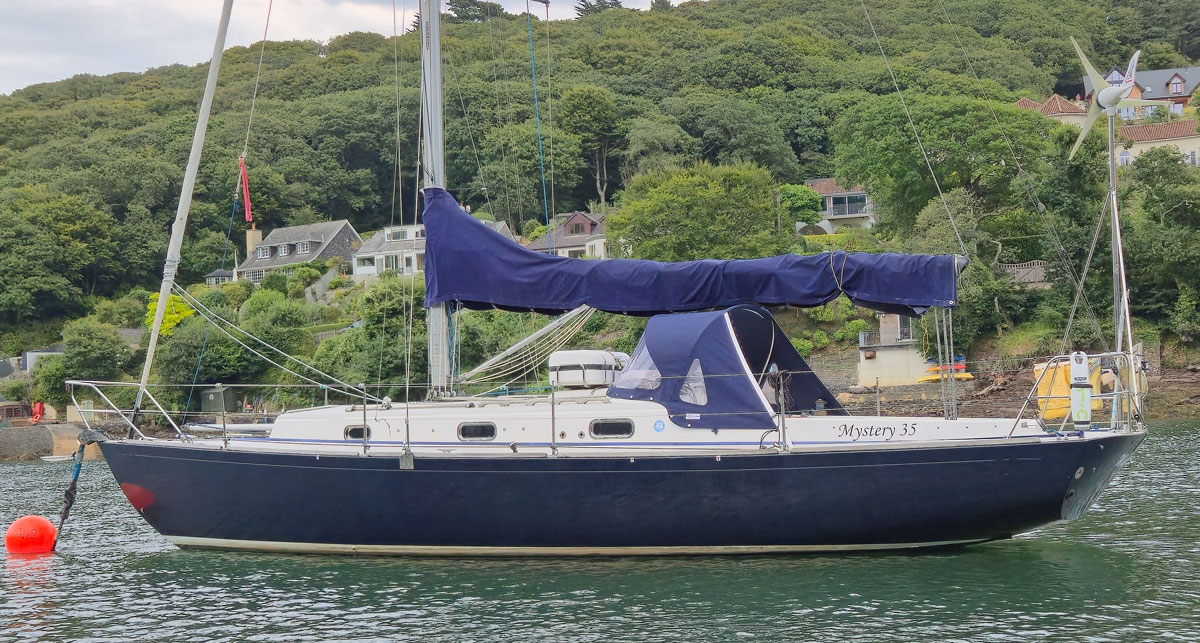 The Mystery 35
Table of Contents
- The Mystery 35 at a Glance
- Design & Construction
- Published Specification: The Mystery 35 Blueprint
- Sail Areas & Rig Dimensions
- Performance Analysis: Understanding the Design Ratios
- How the Mystery 35 Sails
- Bluewater Capability: Strengths & Trade-Offs
- Configuration, Layout & Cruising Characteristics
- Who This Boat Is Best For
- The Buyer’s Checklist: Common Problem Areas
- Summing Up
- Related Boats
- Frequently Asked Questions (FAQs)
The Mystery 35 at a Glance
- Type: Performance‑oriented monohull cruiser‑racer
- Designer: Stephen Jones
- Builder: British Hunter Boats Ltd (early boats) & Cornish Crabbers LLP (later boats)
- Production Years: 2003–2024 (continuous development rather than major redesign)
- Rig: Fractional sloop with deep lead bulb fin keel & spade rudder
- Best for: Experienced coastal & offshore sailors, couples and small crews who enjoy active helming and efficient passagemaking
- Strengths: Stiff hull, deep bulb keel, responsive steering, robust GRP construction
- Trade-offs: Limited interior volume, modest tankage, deep draft, narrow cockpit, constrained stowage
Design & Construction
Stephen Jones’ design brief for the Mystery 35 was clear: a modern interpretation of a traditional performance cruiser, with narrow beam, moderate displacement and a deep, efficient keel. The result is a boat that looks purposeful and sails well, but inevitably sacrifices interior volume and some cruising convenience.
The hull is hand‑laid GRP with a bonded hull‑deck joint and internal stiffening. The keel is a deep lead bulb, through‑bolted to substantial internal structure. This gives the boat a high ballast ratio and reassuring stiffness, but the fixed 5'11" (1.80 m) draft restricts access to many harbours and anchorages. The rudder is a spade on a stainless stock, giving crisp steering but requiring careful inspection on older boats for bearing wear and corrosion.
Cabin windows are typically bonded framed units rather than through‑bolted portlights. This keeps the exterior clean but means ageing sealant and UV‑damaged frames can become leak points. Chainplates are internal stainless straps tied into bulkheads; structurally sound, but inspection access is limited and any corrosion tends to be hidden until it becomes a problem.
There is essentially one version of the boat: deep fin keel, tiller steering, fractional sloop. No shoal‑draft or twin‑keel variants were produced. Interior finish varies slightly between Hunter‑built and Cornish Crabbers boats, but the layout remained consistent. The boat carries RCD Category A certification, but no published STIX figure is available.
Published Specification: The Mystery 35 Blueprint
| Parameter | Value |
|---|---|
| LOA | 35'0" (10.67 m) |
| LWL | 24'9" (7.54 m) |
| Beam | 9'11" (3.02 m) |
| Draft (max) | 5'11" (1.80 m) |
| Draft (min) | Fixed deep fin keel (no shoal option) |
| Displacement | 10,000 lb (4,536 kg) |
| Ballast | 4,800 lb (2,177 kg) lead bulb |
| Rig Type | Fractional sloop |
| Hull Material | Hand‑laid GRP |
| Production Dates | 2003–2024 (Hunter & Cornish Crabbers) |
Sail Areas & Rig Dimensions
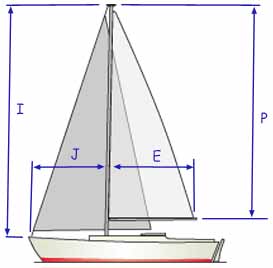 Rig dimensions
Published sail area for the standard fractional rig is around 576ft2 (53.51m2), typically split between a mainsail and non‑overlapping headsail, with additional area available from cruising chutes or spinnakers for offwind work.
Standard rig dimensions are not consistently listed in public databases, and individual boats may vary slightly by spar supplier. Typical values reported by owners and sailmakers are:
- I (foretriangle height): Approximately 39'0" (11.89 m)
- J (foretriangle base): Approximately 11'5" (3.48 m)
- P (mainsail luff): Approximately 40'0" (12.19 m)
- E (mainsail foot): Approximately 13'0" (3.96 m)
These figures are suitable for ballpark calculations and sail planning, but any buyer should confirm the exact dimensions from the original sail plan or current sailmaker’s data for the specific hull.
Performance Analysis: Understanding the Design Ratios
| Ratio | Value | Interpretation |
|---|---|---|
| SA/D | ≈ 19.9 | Healthy sail power; good light‑air ability but not extreme. |
| D/L | ≈ 294 | Moderate‑to‑heavy; comfortable motion but limits outright speed. |
| B/D | ≈ 48% | High stiffness; carries sail well but can feel firm in a chop. |
| CSF | ≈ 1.84 | Below the offshore threshold; favourable for knockdown recovery. |
| Comfort Ratio | ≈ 26 | Reasonable for a 35‑footer; still lively compared with heavier cruisers. |
For more on this topic, you might want to take a look at Understanding Boat Performance & Design Ratios...
How the Mystery 35 Sails
Upwind, the Mystery 35 performs well for its size and shape, but it is not a boat that masks poor technique. The narrow hull and deep keel help it track cleanly, yet the short waterline means it loses momentum quickly if you pinch, mistime tacks or allow the boat to slow in chop. Sailors who stay ahead of trim and keep the boat moving will enjoy its precision; those who prefer a more relaxed approach may find it demanding.
The helm is responsive, but the boat can feel firm at lower heel angles. Reefing needs to be timely. Leave it too long and the heel angle increases sharply, the helm loads up and motion becomes noticeably more abrupt. It will not behave unpredictably, but it does make it clear when you’ve pushed past its comfort zone.
Downwind, performance is modest without an asymmetric or cruising chute. The narrow stern limits surfing potential, and steering requires attention in quartering seas. It rewards active helming and punishes complacency more than wider, flatter modern cruisers.
Motion comfort is acceptable for a 35‑footer with this displacement, but it remains a compact, stiff boat. In steep seas, the bow can pitch, and the boat’s firmness means it does not absorb motion in the way heavier long‑keel cruisers do. Crew movement also affects trim more than on beamier designs, which adds to the sense that the boat expects competent handling.
Overall, the Mystery 35 sails well when sailed well — but it is not forgiving of sloppy trim, late reefing or poor weight management.
Bluewater Capability: Strengths & Trade-Offs
The Mystery 35 has the ratios and certification to support offshore passages, but it is not a naturally forgiving long‑distance cruiser. Tankage and stowage are modest, and the boat’s sensitivity to load means you must be disciplined with gear. The cockpit is functional rather than protective, and the narrow hull does not soften motion in the way heavier offshore designs do. For a couple who sail well and keep the boat light, it is capable. For crews expecting a boat that smooths out rough handling or heavy loading, it will feel more demanding.
Configuration, Layout & Cruising Characteristics
The cockpit is compact and works well for active helming, but it offers limited space for relaxed sailing. Crew movement affects trim more than on beamier boats, which reinforces the sense that the boat expects tidy handling. Below, the layout suits two people well, but storage is constrained and requires careful organisation. For coastal cruising, it works. For extended trips, discipline is essential.
Who This Boat Is Best For
Good fit for:
- Sailors who enjoy an honest, responsive boat that rewards skill and attention
- Couples or solo sailors planning coastal passages with occasional offshore legs
- Club racers wanting a dual‑purpose boat with predictable manners and a tiller‑centric cockpit
Less ideal for:
- Crews who prefer a boat that absorbs mistakes without noticeable performance loss
- Families wanting generous space, multiple cabins or a forgiving motion
- Owners who load their boats heavily for extended cruising or prefer shallow‑draft access
The Buyer’s Checklist: Common Problem Areas
When assessing a Mystery 35, it helps to approach the survey with the understanding that this is a boat that expects competent handling and disciplined ownership. The underlying GRP structure is generally robust, but several areas deserve close attention:
- Keel Joint: Look for cracking or movement around the keel‑to‑hull interface. The boat’s stiffness means grounding loads transmit clearly, and any past impact will show.
- Rudder & steering: The spade rudder gives excellent feel but demands inspection. Check for bearing wear, moisture ingress and any play in the stock. A boat this responsive highlights steering issues more than heavier cruisers.
- Windows & deck fittings: Look closely at bonded Lewmar windows for crazing, UV damage and leaks; re‑bedding can be a medium‑cost refit item. Check deck hardware backing plates and fastenings for moisture and movement.
- Chainplates: Internal and laminated into bulkheads, making inspection awkward. Any corrosion tends to remain hidden until it becomes significant. Ask for historical inspection records.
- Engine: The Yanmar 3YM20 is reliable, but check mounts, exhaust elbow, service history and any signs of vibration. Load sensitivity means a tired engine becomes more noticeable under sail‑assist conditions.The Yanmar engine uses a saildrive unit; ensure the rubber sealing diaphragm has been replaced within the manufacturer's recommended intervals.
- Sails: Many boats still carry original sails. A new main and headsail typically cost £6,000–£8,000. Downwind sails make a significant difference to performance.
- Electronics: Early boats often have outdated systems. A modern navigation refit may run £3,000–£5,000.
- Standing rigging: Anything over 10–12 years old should be replaced. The boat’s sensitivity to trim means tired rigging affects performance more noticeably than on more forgiving cruisers. Budget £4,000–£6,000.
This checklist reflects the boat’s character: structurally sound, but demanding of good maintenance and thoughtful upgrades.
Could this be your ideal cruising boat?
It may well be, but before going any further, it might be worth taking a look at my eBook 'How to Avoid Buying the Wrong Sailboat'...
Related Boats
- Contessa 32: The classic British cruiser benchmark, offering legendary seaworthiness with a narrower beam and tighter living space. Read more...
- Rustler 36: A heavier, long-keel blue water yacht providing additional volume, heavier displacement, and ultimate ocean stability. Read more...
- Sadler 34: A well-regarded unsinkable offshore cruiser featuring twin-skin construction and balanced performance. Read more...
With the Mystery 35 sitting right on the cusp, you might also like to take a look at cruising boats in the following size ranges:
Summing Up
The Mystery 35 is a purposeful, compact cruiser‑racer that sails well and feels secure offshore, but it is not a spacious or forgiving boat. Its strengths lie in stiffness, handling and build quality. Its limitations are interior volume, tankage, stowage and load sensitivity. For the right sailor — someone who values sailing feel and is comfortable with a disciplined cruising setup — it is a rewarding choice. For anyone seeking big‑boat comfort in a 35‑foot hull, it will feel constrained.

Written by Dick McClary, cruising sailor and yachting journalist, publisher of Sailboat‑Cruising.com and admin of the Liveaboard Sailboats for Sale community.

Frequently Asked Questions (FAQs)
1. Is the Mystery 35 a realistic choice for ocean crossings, or is it better kept to coastal work?
1. Is the Mystery 35 a realistic choice for ocean crossings, or is it better kept to coastal work?
The design and certification support ocean passages for a well‑prepared crew, but tankage and stowage mean it suits thoughtful loading and a couple‑scale crew rather than heavy expedition‑style cruising.
2. How does the Mystery 35 compare to classic boats like the Contessa 32 or Sadler 34 in heavy weather?
2. How does the Mystery 35 compare to classic boats like the Contessa 32 or Sadler 34 in heavy weather?
It offers more righting moment and a slightly more modern underwater profile, with a similar “small but capable” feel; motion is a touch livelier than a heavier long‑keel boat but more settled than many modern wide‑stern cruisers.
3. What are typical refit priorities when buying a 15‑ to 20‑year‑old Mystery 35?
3. What are typical refit priorities when buying a 15‑ to 20‑year‑old Mystery 35?
Standing rigging, sails, electronics, window seals, saildrive diaphragm and engine exhaust components usually top the list, followed by cosmetic interior work and any owner‑specific upgrades such as heating or extra battery capacity.
4. Are there known structural weak points in the hull or deck that surveyors focus on?
4. Are there known structural weak points in the hull or deck that surveyors focus on?
Surveyors tend to pay close attention to the keel‑to‑hull joint, rudder bearings, chainplate areas and bonded windows; the hand‑laid GRP hull itself has a good reputation when properly maintained.
5. How does the boat cope with being loaded for extended cruising compared with more voluminous 35‑footers?
5. How does the boat cope with being loaded for extended cruising compared with more voluminous 35‑footers?
It will carry a sensible cruising load without complaint, but performance and trim suffer if you overload it; disciplined stowage and avoiding heavy clutter are key to keeping the boat sailing as designed.
Is the Mystery 35 easy to sail single-handed?
Is the Mystery 35 easy to sail single-handed?
Yes, all main halyards, reefing lines, and control lines lead back to the cockpit, while the non-overlapping blade jib makes tacking light and effortless for a single sailor.
What is the head clearance down below in the saloon?
What is the head clearance down below in the saloon?
Despite her sleek, low-profile coachroof design, the Mystery 35 offers approximately 6'2" (1.88m) of headroom through the main companionway and saloon.
Recent Articles


-
Should I Buy a Boat? Four Questions to Answer Before You Commit
Oct 02, 26 04:40 AM
Thinking "Should I buy a boat?" This guide helps you decide, with key considerations from cost & maintenance to your personal sailing aspirations. -
Offshore Internet with Starlink: Hardware, Plans, and Setup Guidance
Oct 01, 26 01:15 PM
A clear, practical guide to choosing the right Starlink hardware and plan for offshore cruising. Learn what to buy, how to install it, and how to manage power afloat. -
Offshore Liferaft Guide: Choosing, Stowing and Servicing One
Oct 01, 26 06:28 AM
Choosing an offshore liferaft? Learn what ISO 9650 Group A means, where to stow it, how often to service it and what to pack in the grab bag.