- Home
- Cruising Yachts 30' to 35'
- Downeaster 32 Offshore Cruising Sailboat Review
Downeaster 32 Sailboat
Specs, Performance Analysis & Cruising Characteristics
Key Takeaways: The Downeaster 32 is a heavy-displacement cutter-rigged cruising yacht built in the United States between 1975 and 1980. Designed by Bob Poole and strongly influenced by traditional East Coast working craft, it combines a long keel, transom-hung rudder and moderate sail plan with a notably robust fibreglass hull.
Its strengths lie in directional stability, load-carrying ability, offshore comfort and forgiving manners in difficult conditions. The trade-off is modest light-air performance, slower manoeuvring under power and less efficient windward work than modern fin-keel cruisers.
For sailors seeking a traditional bluewater cruiser rather than a marina-to-marina performance yacht, the Downeaster 32 remains an interesting option.
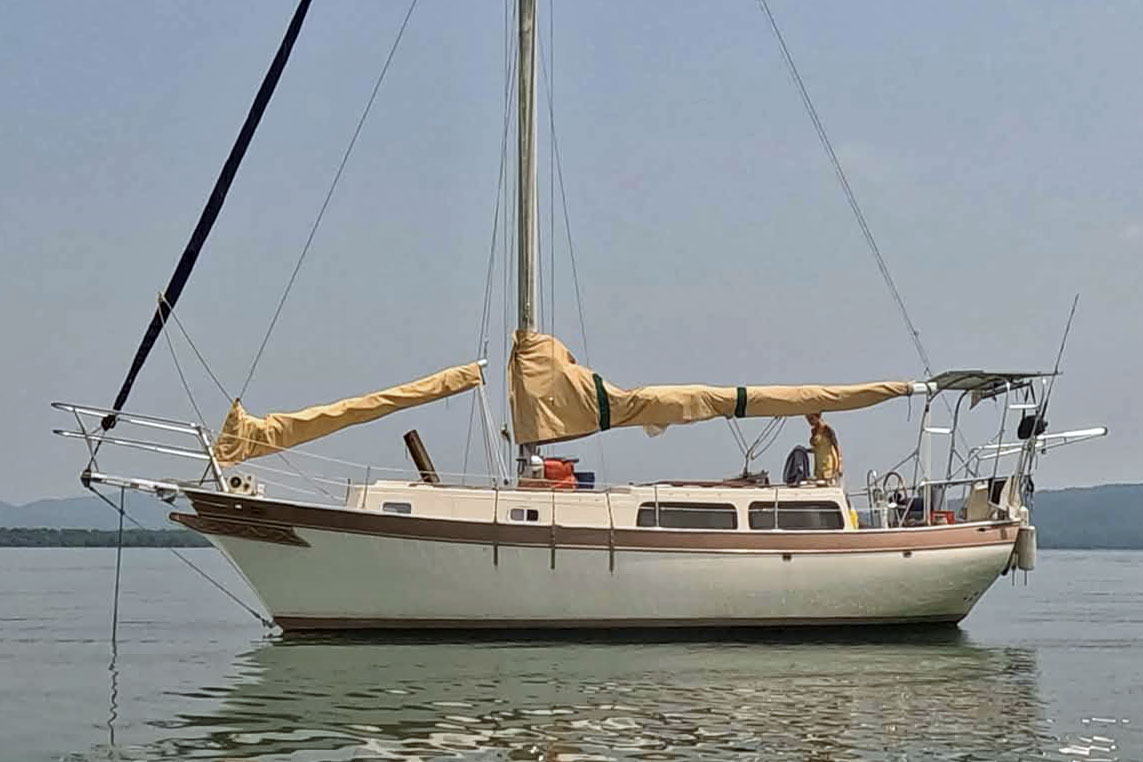 A Downeaster 32
Table of Contents
- The Downeaster 32 at a Glance
- Design & Construction
- Published Specification: The Downeaster 32 Blueprint
- Sail Areas & Rig Dimensions
- Performance Analysis: Understanding the Design Ratios
- How the Downeaster 32 Sails
- Bluewater Capability: Strengths & Trade-Offs
- Configuration, Layout & Cruising Characteristics
- Who This Boat Is Best For
- The Buyer’s Checklist: Common Problem Areas
- Summing Up
- Frequently Asked Questions (FAQs)
The Downeaster 32 at a Glance
- Type: Heavy-displacement offshore cruising yacht
- Designer: Bob Pool
- Builder: Down East Yachts (USA)
- Production Years: 1975-1980
- Rig: Cutter
- Best for: Offshore cruising, passagemaking, liveaboard use and short-handed sailing
- Strengths: Strong construction, excellent tracking ability, comfortable motion at sea, generous tankage potential, protected rudder
- Trade-offs: Modest speed in light winds, relatively poor manoeuvrability astern, ageing systems on most examples, limited windward performance by modern standards
Design & Construction
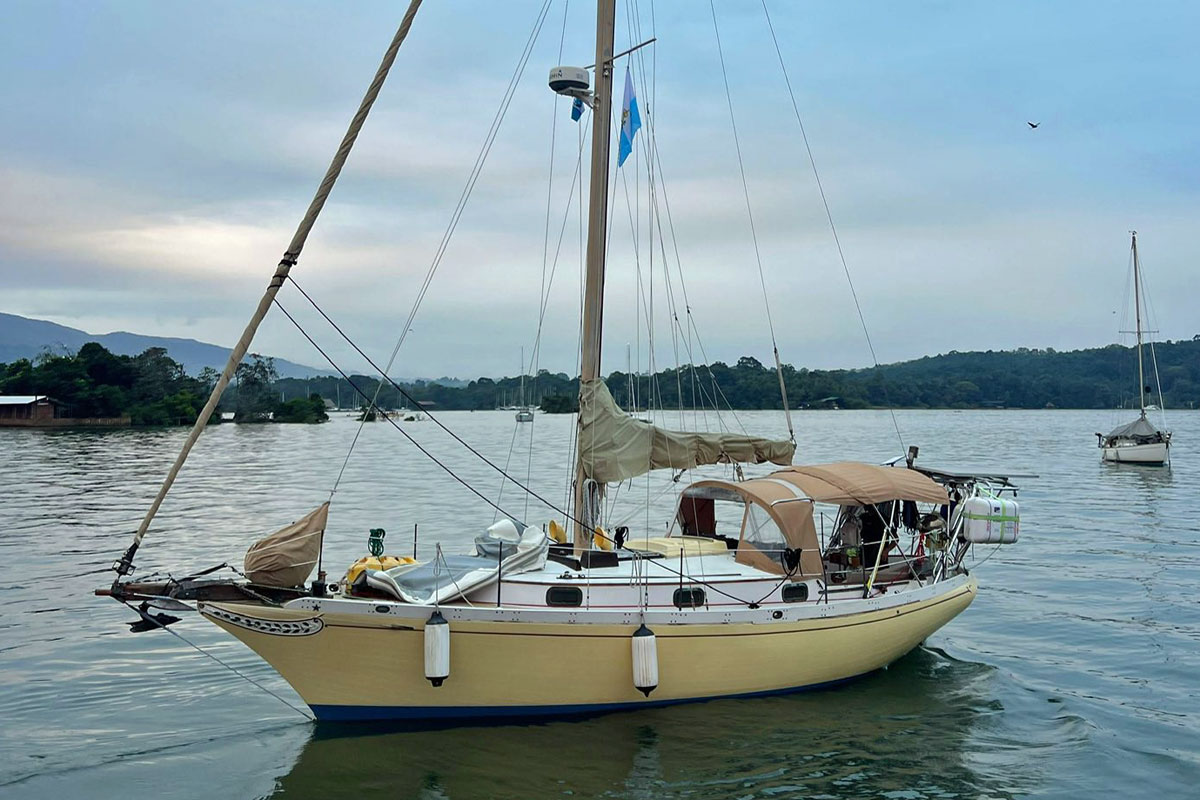
The Downeaster 32 emerged during the 1970s when many American builders were exploring offshore-oriented cruising yachts inspired by traditional working boats. Bob Poole's design reflects that philosophy. The hull carries a pronounced sheer, clipper bow, bowsprit and long keel profile that immediately signals its intended purpose as a capable cruising yacht rather than a performance cruiser. Production ran from 1975 until approximately 1980, with around 134 boats completed.
Construction was conventional for the era, using hand-laid solid fibreglass in the hull with substantial laminate thickness. Numerous owner accounts and historical reviews refer to the boats as heavily built, contributing to the model's reputation for durability.
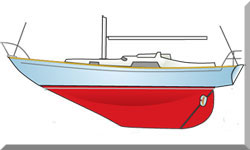
The underbody consists of a long keel carrying external ballast and a transom-hung rudder. This arrangement provides excellent directional stability offshore and offers a degree of protection to both rudder and propeller. The compromise is reduced agility in confined marinas and a wider turning circle under both sail and power.
Unlike many later production cruisers, Downeaster 32 interiors were often completed to varying owner specifications. As a result, layout details differ noticeably from boat to boat. Most examples feature a V-berth forward, saloon berths amidships, a head compartment forward of the main saloon and a quarter berth aft. Headroom is generally considered good for a yacht of this vintage and length.
No reliable evidence could be found that the cabin windows were bonded rather than mechanically fastened, nor that the chainplates were structurally bonded and laminated into the hull. Buyers should therefore inspect individual vessels rather than assume a standard arrangement.
The Downeaster 32 was produced primarily as a cutter-rigged long-keel cruiser. Interior and equipment variations were common, but there is no widely documented alternative keel or centreboard version comparable to some contemporaries. Because the boats were frequently owner-customised, variations in tankage, joinery, engine installations and deck hardware are common.
Published Specification: The Downeaster 32 Blueprint
| Downeaster 32 Published Specifications | |
|---|---|
| LOA | 32'0" (9.75m) |
| LWL | 25'10" (7.87m) |
| Beam | 11'0" (3.35m) |
| Draft | 4'9" (1.45m) |
| Displacement | 17,000lb (7,711kg) |
| Ballast | 5,500lb (2,495kg) |
| Rig Type | Cutter |
| Hull Material | Fibreglass |
| Production Dates | 1975-1980 |
Sail Areas & Rig Dimensions
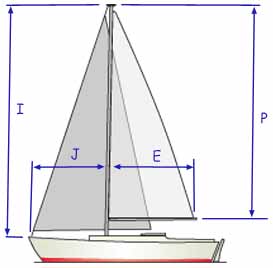 Rig dimensions
| Sail Areas & Rig Dimensions | |
|---|---|
| I | 41'6" (12.65m) |
| J | 16'0" (4.88m) |
| P | 35'6" (10.82m) |
| E | 15'2" (4.63m) |
| Mainsail Area | 269.8ft² (25.1m²) |
| Foretriangle Area | 332.0ft² (30.8m²) |
| Total Sail Area | 601.8ft² (55.9m²) |
Performance Analysis: Understanding the Design Ratios
| Ratio | Value | Interpretation |
|---|---|---|
| SA/D | 14.62 | Modest sail power. Favours steady cruising over lively acceleration. |
| D/L | 440 | Extremely heavy displacement. Strong load-carrying ability and softer motion. |
| B/D | 32.4% | Moderate ballast ratio relying partly on hull form and displacement for stability. |
| CSF | 1.71 | Below 2.0, traditionally viewed as favourable for offshore work. |
| Brewer Comfort Ratio | 38.93 | Strong bluewater comfort figure suggesting a comparatively gentle motion. |
The numbers paint a consistent picture. The Downeaster 32 is not designed to win club races or chase weather windows through raw speed. Instead, it favours carrying stores, maintaining course stability and delivering a more settled motion offshore. Its very high D/L ratio and strong comfort ratio are characteristic of many respected cruising yachts from the 1970s. The relatively modest SA/D figure explains owner observations that the boat benefits from fresh breeze and can feel sluggish in lighter airs.
For more on this topic, you might want to take a look at Understanding Boat Performance & Design Ratios...
How the Downeaster 32 Sails
Under sail, the Downeaster 32 behaves much as her numbers suggest. The cutter rig divides sail area into manageable sections, making reefing straightforward and allowing sail plans to be adjusted incrementally as conditions change. This arrangement particularly suits couples and short-handed crews.
Off the wind, the boat develops an easy rhythm. The long keel promotes steady tracking, reducing the need for constant helm corrections. In a seaway, many owners value the boat's predictable movement and tendency not to be thrown about by every wave.
Upwind performance is respectable rather than impressive. The long keel and comparatively short waterline length mean pointing angles and tacking performance fall behind modern fin-keel cruisers. The boat will generally reward patience and sail trim rather than aggressive helming.
Heavy-weather behaviour is where the design's reputation has largely been earned. The combination of displacement, long keel and cutter rig provides a reassuring sense of control when conditions become challenging.
Bluewater Capability: Strengths & Trade-Offs
As an offshore platform, the Downeaster 32 possesses several characteristics generally valued by passagemakers:
- Heavy displacement and comfortable motion.
- Long keel offering directional stability.
- Protected rudder arrangement.
- Cutter sail plan suitable for varied conditions.
- Strong carrying capacity for cruising stores.
- Deep cockpit security compared with many contemporary designs.
Against those strengths, prospective buyers should understand the compromises:
- Passage times can be slower than on lighter modern yachts.
- Light-air performance is modest.
- Manoeuvring in tight marinas requires planning.
- Most boats are now more than four decades old and often require system upgrades.
For sailors prioritising comfort and robustness over speed, these compromises are often acceptable.
Configuration, Layout & Cruising Characteristics
The broad beam, high coachroof and traditional hull form create an interior that feels surprisingly spacious for a 32-foot hull. Storage is generally adequate for extended cruising, helped by the boat's displacement and carrying capacity.
Galley arrangements vary because many boats were customised, but most examples provide sufficient workspace for offshore meal preparation. The saloon typically offers secure seating underway, while the quarter berth serves as a useful sea berth on passage.
On deck, the bowsprit extends working sail area forward and contributes to the yacht's traditional appearance. Side decks are reasonably secure, although buyers should pay close attention to deck-core condition around heavily loaded fittings.
For liveaboard use, the Downeaster 32 offers more volume than many offshore-oriented boats of similar vintage, though buyers accustomed to modern aft-cabin cruisers may find accommodation modest.
Who This Boat Is Best For
Good fit for:
- Offshore cruising sailors.
- Traditional yacht enthusiasts.
- Couples planning extended coastal or ocean voyaging.
- Liveaboards prioritising comfort over speed.
- Sailors intending to cruise shorthanded.
Less ideal for:
- Performance-oriented sailors.
- Frequent marina-hoppers.
- Buyers seeking modern interior layouts.
- Those unwilling to tackle age-related refit projects.
- Sailors operating primarily in very light-wind regions.
The Buyer’s Checklist: Common Problem Areas
When inspecting a Downeaster 32, particular attention should be given to:
- Engine history - Many boats originally carried Farymann diesels, often criticised as underpowered. Confirm whether a modern replacement has been fitted.
- Compression post support structure - Reports exist of deterioration in supporting timber beneath the compression post, leading to settlement issues.
- Deck moisture and delamination - Check around chainplates, deck fittings, stanchions and hardware penetrations.
- Fuel tanks - Tank replacement can reportedly require significant joinery removal. Inspect carefully for corrosion or contamination.
- Standing rigging age - Assume replacement may be required unless well documented.
- Electrical systems - Many vessels still contain wiring from multiple generations of owners.
- Bowsprit structure and deck fittings - Verify sound attachment points and evidence of proper maintenance.
You may wish to take a look at our article Pre-Purchase Peace of Mind: Sailboat Survey Checklist Guide.
Summing Up
The Downeaster 32 remains a distinctive example of the heavy-displacement cruising philosophy that dominated many offshore designs of the 1970s. Its numbers support its reputation: high displacement, a strong comfort ratio, conservative sail plan and offshore-friendly capsize figure all point towards a yacht designed to look after its crew rather than chase speed records.
Prospective owners should approach each boat as an individual project. Build quality was generally robust, but age now matters more than original specification. A well-maintained example with updated systems can still offer capable offshore cruising at a comparatively accessible purchase price. Conversely, a neglected boat can absorb a substantial refit budget very quickly.
For sailors whose priorities are comfort, carrying capacity, straightforward sail handling and traditional cruising character, the Downeaster 32 remains worthy of serious consideration.
If you're looking for other cruising boats of a similar size to the Downeaster 32, check here...

Written by Dick McClary, cruising sailor and yachting journalist, publisher of Sailboat‑Cruising.com and admin of the Liveaboard Sailboats for Sale community.

Frequently Asked Questions (FAQs)
Is the Downeaster 32 a genuine bluewater cruiser?
Is the Downeaster 32 a genuine bluewater cruiser?
Yes. Its long keel, heavy displacement, cutter rig and favourable CSF figure place it firmly within the traditional offshore cruising category.
How fast is a Downeaster 32?
How fast is a Downeaster 32?
Hull speed is approximately 6.8 knots. Passage averages depend heavily on conditions, but this is not a high-performance cruiser.
Does the Downeaster 32 point well to windward?
Does the Downeaster 32 point well to windward?
Compared with modern fin-keel cruisers, no. It typically sacrifices pointing ability for directional stability and comfort.
Was the original engine adequate?
Was the original engine adequate?
Many owners considered the original Farymann diesel underpowered. Numerous boats have since been repowered.
Is the Downeaster 32 suitable for liveaboard use?
Is the Downeaster 32 suitable for liveaboard use?
Many owners have lived aboard successfully thanks to good interior volume, storage and load-carrying capacity.
What is the biggest structural issue to inspect?
What is the biggest structural issue to inspect?
Compression-post support deterioration and deck-core moisture intrusion are among the most frequently reported concerns.
How does it compare with a Tayana 37?
How does it compare with a Tayana 37?
The Tayana 37 offers greater length, payload and interior volume, but the Downeaster 32 delivers a similar traditional cruising philosophy in a smaller and often less expensive package.
Recent Articles


-
Downeaster 32 Review, Specs & Bluewater Cruising Guide
Nov 20, 26 05:55 PM
Detailed Downeaster 32 review covering specs, performance, construction, common problems, bluewater capability and buying advice. -
Swage or Mechanical Rigging Terminals? Spot Failure Early
Nov 20, 26 04:06 PM
Swage terminals can crack out of sight. Learn the warning signs, how dye testing helps, and when Sta-Lok or Norseman fittings are the better choice. -
Wauquiez Pilot Saloon 60 Review, Specs & Bluewater Buying Guide
Nov 20, 26 09:01 AM
Detailed Wauquiez Pilot Saloon 60 review covering specs, performance, seaworthiness, ownership, buyer checks and bluewater cruising suitability.