- Home
- Cruising Yachts 45' to 50'
- Explorer 45 Sailboat
The Explorer 45 Sailboat: Specs, Performance Analysis & Cruising Characteristics
Key Takeaways: The C&L Explorer 45 is a quintessential "heavy-metal" cruiser from the golden era of Taiwanese boatbuilding. Designed by Stan Huntingford, it features a traditional long keel with a cutaway forefoot. This gives it exceptional directional stability and a soft motion in heavy seas.
While its displacement makes it sluggish in light airs, its massive tankage, protected centre cockpit, and robust GRP layup make it a premier choice for budget-conscious bluewater cruisers and liveaboard families.
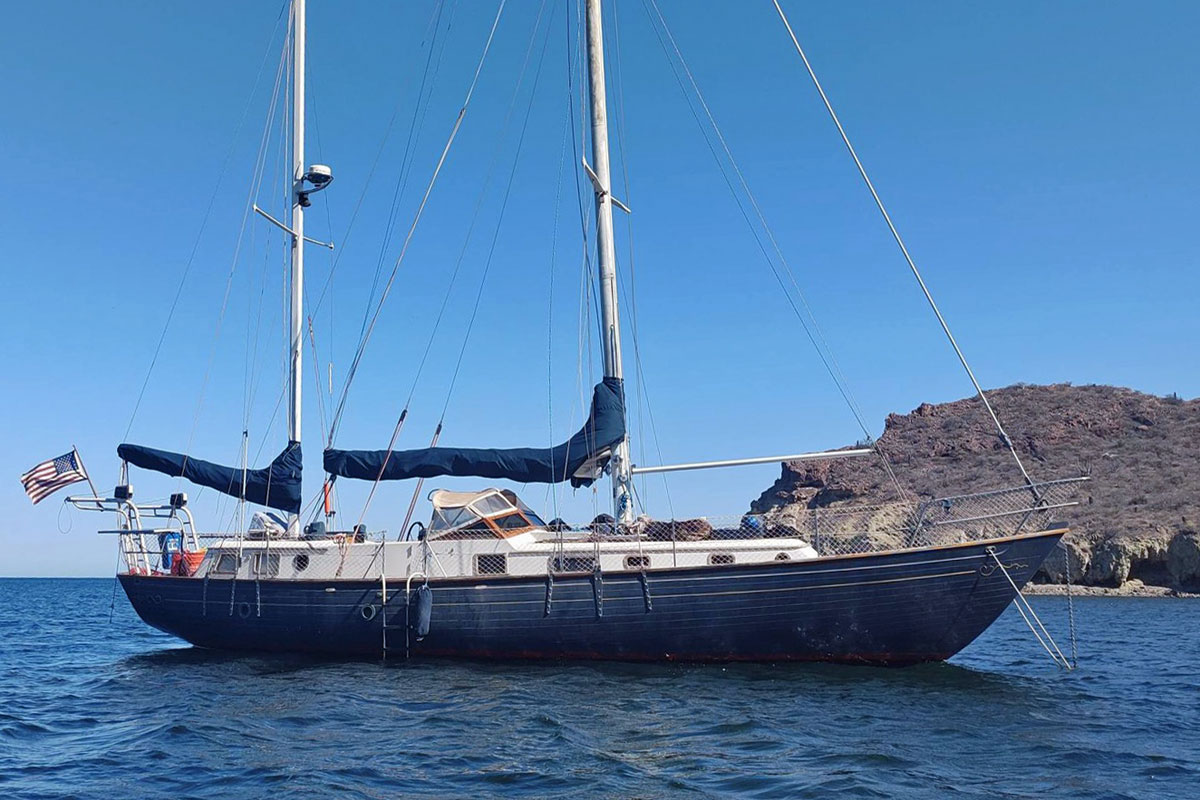
Table of Contents
- Design & Construction
- Sail Areas & Rig Dimensions
- Configuration, Layout & Cruising Characteristics
- Published Specification: The Explorer 45 Blueprint
- Performance Analysis: Understanding the Design Ratios
- The Buyer’s Checklist: Common Problem Areas
- Comparison: Explorer 45 vs The Competition
- Summing Up
- Frequently Asked Questions (FAQs)
Design & Construction
The Explorer 45 is the work of Canadian naval architect Stan Huntingford, a designer celebrated for creating "honest" offshore boats that prioritise safety over silverware. Built primarily by C&L Marine in Taiwan between 1977 and 1982, the Explorer 45 was part of a wave of robust yachts built for the North American cruising market. Unlike modern lightweight hulls, the Explorer is built from hand-laid, heavy-duty fibreglass (GRP), with a solid laminate that often exceeds modern scantlings.
The Long Keel & Heavy Displacement
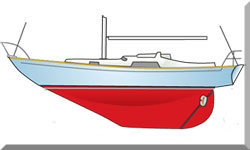
The defining feature of Huntingford’s design is the full keel with a cutaway forefoot and a protected skeg-hung rudder. This configuration is the hallmark of a traditional bluewater vessel. It provides a "forgiving" ride and allows the boat to track straight for hours with minimal autopilot intervention.
The downside is a larger turning circle and a tendency for the stern to "walk" unpredictably in reverse, which is a well-known trait of these classic hulls.
Variations & Layouts
Most Explorer 45s left the yard as staysail ketches or cutter-rigged sloops. The centre-cockpit configuration was the most popular. It provides a cavernous aft stateroom, often with a "great cabin" feel, connected to the main saloon by a walk-through passageway that usually houses a dedicated sea berth or workshop area. Approximately 22 hulls were produced, making them a rare but respected sight in long-term cruising hubs.
Stability Standards
While the Explorer 45 predates modern STIX ratings, its design characteristics—wide beam, heavy encapsulated lead ballast, and moderate freeboard—point to a very high range of stability (LPS). It was designed before the industry moved toward wider, flatter sterns, ensuring it remains stable and controllable when the weather turns foul.
Sail Areas & Rig Dimensions
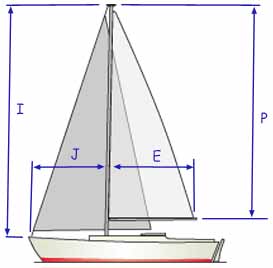 Rig dimensions
The Explorer 45 was designed to be handled by a couple. The staysail ketch rig, in particular, allows for a "snugged down" sail plan. In a squall, the mainsail can be dropped while the boat remains well balanced under jib and mizzen.
- Mainsail Area: 308 ft² (28.6 m²)
- Genoa Area (100%): 455 ft² (42.3 m²)
- Total Sail Area (approx.): 920 ft² (85.5 m²)
Rig Dimensions:
- I: 52'3" (15.93 m)
- J: 20'8" (6.30 m)
Note: Dimensions vary slightly between the cutter and ketch versions.
Configuration, Layout & Cruising Characteristics
The interior of the Explorer 45 showcases traditional craftsmanship and is typically finished in rich teak or mahogany. The U-shaped galley is a standout feature, located in the primary "flow" of the boat but tucked away enough to offer security when cooking at a 20° heel.
Tankage is another area where the Explorer outshines many modern competitors. It often carries over 170 gallons (640 litres) of fuel and nearly 200 gallons (750 litres) of water, integrated low in the hull to improve stability.
The cockpit is deep and safe, though the high centre-cockpit position can feel more exposed to the elements than an aft-cockpit design. Most owners fit a substantial fixed windscreen or full enclosure, turning the cockpit into an all-weather "deck house."
Published Specification: The Explorer 45 Blueprint
Performance Analysis: Understanding the Design Ratios
To understand how the Explorer 45 moves, we must look at its design ratios, which confirm its status as a dedicated blue-water cruiser.
For a comparison of these figures against modern designs, visit our resource on Understanding Boat Performance & Design Ratios.
- Sail Area/Displacement (SA/D): At 15.3, this boat requires a stiff breeze to get into its stride. It is not a coastal racer, but it will keep moving comfortably when others are forced to engine-sail.
- Displacement/Length (D/L): A score of 340 confirms its "Heavy" classification. This is a hull that won't be easily stopped by a head sea.
- Capsize Screening Formula (CSF): A value of 1.71 is significantly better than many modern yachts (which often hover near 2.0), making it an elite choice for ocean-crossing safety.
- Brewer Motion Comfort Ratio: At 40.8, the Explorer 45 is a "heavyweight" in terms of crew comfort. The slow, predictable motion reduces the onset of sea sickness and physical fatigue.
Structural Integrity & Stability Dynamics
The use of encapsulated lead ballast, rather than a bolted-on iron keel, means there are no keel bolts to rust or fail. This creates an incredibly strong, one-piece structure. However, because of the age of these vessels, the hull-to-deck joint and the condition of the plywood-cored decks are the primary areas where structural integrity may be compromised.
The Buyer’s Checklist: Common Problem Areas
When inspecting a C&L Explorer 45, you are looking for the common "Taiwanese Boat" issues of the late 70s.
- Teak Decks: Many were built with teak over GRP. If the screws have backed out or the caulking has failed, the plywood core underneath can rot. Check for soft spots.
- Fuel Tanks: The original black iron or mild steel fuel tanks are notorious for corroding from the top down. Replacing these often requires major joinery work.
- Osmosis: While the hulls are thick, early Taiwanese resins were prone to blistering. Check for evidence of a past epoxy treatment.
- Chainplates: These are often buried behind teak cabinetry. Inspect them for weeping or "crevice corrosion" where they pass through the deck.
Comparison: The Explorer 45 vs The Competition
The Explorer 45 is often compared to the Peterson 44 or the Vagabond 47. While the Peterson is faster and more performance-oriented, the Explorer 45 offers a more traditional, "kind" motion and a slightly more spacious aft cabin. Compared to a Tayana 37, the Explorer gives you significantly more waterline length and interior volume for a relatively small increase in maintenance cost.
If you'd like to compare this boat with others in this size range, take a look at Cruising Boats from 45' to 50' overall....
Could this be your ideal cruising boat?
It may well be, but before going any further, it might be worth taking a look at my eBook 'How to Avoid Buying the Wrong Sailboat'...
Summing Up
The C&L Explorer 45 by Stan Huntingford is a true sailor’s boat. It is built for the sailor who values a "thud" over a "slap" when the boat meets a wave. While it may require a refit of its original systems and close attention to the teak decks, the result is a world-class cruising platform that offers safety and comfort far beyond its current market price.
This article was written by Dick McClary, RYA Yachtmaster and author of the RYA publications 'Offshore Sailing' and 'Fishing Afloat', member of The Yachting Journalists Association (YJA), and erstwhile member of the Ocean Cruising Club (OCC).
Frequently Asked Questions (FAQs)
How does the Explorer 45 handle under power?
How does the Explorer 45 handle under power?
With a long keel, prop walk is significant. Expect the boat to have a mind of its own when reversing. However, once moving forward, its mass gives it strong momentum and makes it less affected by crosswinds than a light fin-keel boat.
Is it easy to sail single-handed?
Is it easy to sail single-handed?
Yes, particularly the ketch-rigged versions. Because the sail area is split into smaller units, the physical effort needed to trim sails is reduced. Adding a modern windvane or a powerful linear-drive autopilot is strongly recommended.
Are the internal tanks hard to replace?
Are the internal tanks hard to replace?
Yes, this is a known challenge. The fuel tanks are often located under the cabin sole or behind engine-room bulkheads. Many owners choose to "plate over" old tanks or install smaller poly tanks if the originals fail.
What is the "Taiwan Turtle" reputation?
What is the "Taiwan Turtle" reputation?
This refers to the heavily built, somewhat slow, but incredibly comfortable cruising boats built in Taiwan during the 1970s and 1980s. The Explorer 45 is a prime example of this "over-built" philosophy.
Can I fit a bow thruster?
Can I fit a bow thruster?
Many owners have retrofitted them. Given the boat's reluctance to turn in tight marinas, a bow thruster is a popular and practical upgrade for this model.
Recent Articles


-
Should I Buy a Boat? Four Questions to Answer Before You Commit
Oct 02, 26 04:40 AM
Thinking "Should I buy a boat?" This guide helps you decide, with key considerations from cost & maintenance to your personal sailing aspirations. -
Offshore Internet with Starlink: Hardware, Plans, and Setup Guidance
Oct 01, 26 01:15 PM
A clear, practical guide to choosing the right Starlink hardware and plan for offshore cruising. Learn what to buy, how to install it, and how to manage power afloat. -
Offshore Liferaft Guide: Choosing, Stowing and Servicing One
Oct 01, 26 06:28 AM
Choosing an offshore liferaft? Learn what ISO 9650 Group A means, where to stow it, how often to service it and what to pack in the grab bag.