- Home
- Electronics & Instrumentation
- Gmdss System
GMDSS for Offshore Sailors
The Complete Safety and Comms Guide
Key Takeaways: Modern GMDSS (Global Maritime Distress and Safety System) for offshore sailors is a multi-layered digital safety net that ensures you are never truly alone. By integrating Digital Selective Calling (DSC), satellite communications, and automated Maritime Safety Information (MSI), the system replaces unreliable manual watches with instant, data-rich alerts. While high-speed tools like Starlink offer superb connectivity for daily life, they remain secondary to the regulated, battle-hardened reliability of the GMDSS framework for emergency response and rescue coordination.
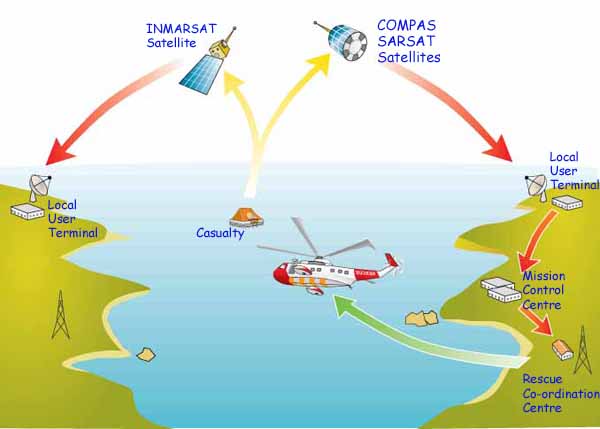 The key components of the Global Maritime Distress & Safety System (GMDSS)
Table of Contents
- The Evolution of Maritime Safety
- Core Components of the GMDSS Infrastructure
- Sea Areas & Your Yacht: Mapping Your Risk
- DSC & MMSI: The Digital Handshake
- EPIRBs & SARTs: Your Last Line of Defence
- MSI & NAVTEX: Receiving Critical Warnings
- Satellite Comms: Inmarsat, Iridium, & the Starlink Paradigm
- Legal Requirements & Certification for Leisure Craft
- Integrating GMDSS with Modern Boat Electronics
- Installation & Maintenance Protocols
- Summing Up
- Frequently Asked Questions
The Evolution of Maritime Safety
For decades, the safety of a vessel at sea relied on the "aural watch." A radio officer or bridge officer sat with headphones, listening for a faint voice or Morse code signal through the static of atmospheric interference. This system was inherently flawed, limited by human fatigue, signal propagation, and the sheer vastness of the horizon.
The International Convention for the Safety of Life at Sea (SOLAS) recognised these limitations and spearheaded the GMDSS. The goal was simple yet ambitious: to automate the distress process. On 1 February 1999, the mandatory listening watch on 2182kHz for SOLAS ships ended. By 2005, the VHF Channel 16 watch also transitioned. Today, the system relies on digital "handshakes" and satellite pings, ensuring that a distress alert is received and acknowledged even if the crew is unable to speak.
What GMDSS Does in a Real Distress
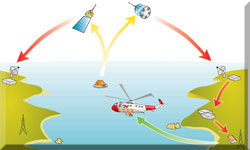
Understanding the hardware is one thing, but knowing how the rescue machinery moves after you hit the button is vital for peace of mind. Here is the operational flow of a GMDSS emergency:
- Distress Alert: You trigger the DSC distress button or an EPIRB. This digital burst contains your MMSI and precise GPS coordinates.
- RCC Notification: The signal is instantly received by a Rescue Coordination Centre (RCC) via coast station or satellite.
- SAR Coordination: The RCC identifies your vessel via your MMSI registration and takes command of the incident, tasking professional Search and Rescue (SAR) assets.
- Relay to Nearby Vessels: The RCC broadcasts a "Distress Relay" to all ships in your vicinity, as they are often the fastest possible responders.
- On-Scene Communication: As rescue assets arrive, the system shifts to short-range VHF for final coordination and recovery.
Core Components of the GMDSS Infrastructure
GMDSS is not a single piece of hardware but a "system of systems." For the offshore sailor, this infrastructure provides three critical functions: alerting, search and rescue coordination, and the dissemination of Maritime Safety Information (MSI).
The architecture relies on both terrestrial and satellite technologies. Terrestrial systems use VHF, MF, and HF radio bands, while satellite systems, primarily overseen by Inmarsat and Cospas-Sarsat, provide global coverage. Each component is designed with redundancy in mind. If your VHF cannot reach a shore station, your EPIRB alerts a satellite.
Sea Areas & Your Yacht: Mapping Your Risk
The equipment you should carry is determined by your "Sea Area." These zones are defined by the range of shore-based communication services available.
| Where you’re sailing | Primary Alerting | Typical Gear | What this means for cruisers |
|---|---|---|---|
| Area A1: Coastal (20–30nm) | VHF DSC | Fixed VHF with DSC | Standard coastal setup; RCCs monitor VHF digital alerts. |
| Area A2: Offshore (to 100nm) | MF DSC | MF/HF Radio or Satellite | Beyond VHF range; requires medium-frequency or satcom. |
| Area A3: Worldwide (70°N to 70°S) | Satcom / HF DSC | Inmarsat, Iridium, or HF | The standard for Atlantic/Pacific crossings. |
| Area A4: Polar Regions | HF DSC with NBDP | High Frequency Radio | Outside traditional satellite footprints; HF is mandatory. |
DSC & MMSI: The Digital Handshake
Digital Selective Calling (DSC) is the most significant advancement in maritime radio. It allows you to send a digital data burst to another vessel or a shore station. This burst contains your Maritime Mobile Service Identity (MMSI), a unique nine-digit number that acts like a telephone number for your boat.
When you press the red "Distress" button, the radio automatically broadcasts your MMSI and, if interfaced with a GPS, your exact coordinates and the nature of the distress.
EPIRBs & SARTs: Your Last Line of Defence
When all else fails and you must abandon ship, the Emergency Position Indicating Radio Beacon (EPIRB) is your lifeline. These units operate on the 406MHz frequency, sending a signal to the Cospas-Sarsat satellite constellation.
Modern EPIRBs now often include an AIS-SART (Search and Rescue Transponder) component. While the 406MHz signal tells the world where you are, the AIS-SART shows your precise location on the chartplotters of nearby vessels. This is a game-changer for local recovery. Traditional Radar SARTs are still common on commercial ships, showing as a line of twelve dots on a radar screen, but for leisure yachts, AIS-based recovery is rapidly becoming the standard due to its integration with modern navigation displays.
MSI & NAVTEX: Receiving Critical Warnings
Safety is as much about avoidance as it is about rescue. The Maritime Safety Information (MSI) system provides navigational warnings, meteorological forecasts, and urgent safety messages.
NAVTEX is the primary tool for this in coastal and offshore waters (up to 400nm). It is a small, low-cost receiver that prints or displays text messages on 518kHz. Because it is a "pull" technology, you don't need to be listening at a specific time; the messages are stored for you to read at your convenience. For those heading further afield, these same messages are broadcast via the SafetyNET service over satellite.
Satellite Comms: Inmarsat, Iridium, & the Starlink Paradigm
For decades, Inmarsat was the primary provider for GMDSS. It remains a benchmark for reliability. However, Iridium’s "Certus" service has recently been approved for GMDSS, offering truly global coverage.
Iridium vs Starlink: The Safety vs Speed Debate
Starlink is a commercial internet service, not a regulated safety system. It does not have the "priority" protocols as GMDSS satellite systems, which ensure that a distress message always gets through regardless of network congestion. Iridium GMDSS features "pre-emption" protocols, which will literally drop other non-essential data calls to ensure your signal reaches a Rescue Coordination Centre.
Starlink for Offshore Sailors: A complete Expert Guide
Legal Requirements & Certification for Leisure Craft
While SOLAS regulations primarily target commercial ships over 300 gross tonnes, leisure craft are subject to national regulations.
- National Leisure-Craft Rule: In the UK, the RYA oversees the Short Range Certificate (SRC), a legal requirement for operating a DSC-equipped radio.
- Offshore Best Practice: The Long Range Certificate (LRC) is highly recommended for blue-water sailors, as it covers MF/HF radio and satellite communications.
Integrating GMDSS with Modern Boat Electronics
Your VHF, AIS, and GPS should all be interconnected, typically via an NMEA 2000 network. This ensures that when you hit the distress button, the radio has the most accurate position data available.
When planning your system, consider power management. High-draw items like HF radios require robust cabling, while sensitive receivers like NAVTEX need careful antenna placement to avoid interference from LED lighting. For more on how these systems fit together, see our guide: Electronics on a Modern Cruising Sailboat.
Installation & Maintenance Protocols
The best safety equipment in the world is useless if the batteries are dead or the antenna cable is corroded. Maintenance is a critical pillar of GMDSS.
- EPIRB Testing: Use the "self-test" function monthly. Check the expiry date of the battery and the hydrostatic release unit (HRU) every season.
- DSC Check: Perform a "DSC Test Call" to a shore station or a buddy boat. Do not use the distress button for testing.
- Antenna Integrity: Check all PL-259 connectors for signs of green corrosion or water ingress, which can cripple your transmit power.
- Battery Redundancy: Ensure your emergency comms can run off an isolated battery bank if the main engine room is flooded.
Summing Up
The GMDSS framework has transformed the ocean from a place of isolation into a monitored safety network. For the offshore sailor, the key is redundancy. By combining traditional DSC radio with modern satellite alerting and automated MSI updates, you ensure that your vessel is visible to rescuers even in the most dire circumstances. While new technologies like Starlink have changed how we live at sea, the "battle-hardened" GMDSS remains the foundation of maritime survival.

This article was written by Dick McClary, RYA Yachtmaster and author of the RYA publications 'Offshore Sailing', member of The Yachting Journalists Association (YJA), erstwhile member of the Ocean Cruising Club (OCC) and owner/administrator of 'Liveaboard Sailboats for Sale'.

Frequently Asked Questions
Do I actually need full GMDSS‑compliant equipment on a non‑SOLAS cruising yacht, and what are the real‑world consequences if I don’t?
Do I actually need full GMDSS‑compliant equipment on a non‑SOLAS cruising yacht, and what are the real‑world consequences if I don’t?
You’re not legally required to carry the full GMDSS suite on a private yacht, but the system’s components—VHF/DSC, EPIRB, NAVTEX, AIS, and MF/HF—aren’t “commercial extras”; they’re the backbone of modern maritime distress and situational awareness. The practical consequence of not carrying them isn’t a fine—it’s a slower, less certain rescue and reduced ability to detect threats or weather hazards early. Cruisers who selectively adopt GMDSS components (DSC VHF + EPIRB + AIS) achieve 90% of the safety benefit with minimal complexity.
How reliable is DSC distress alerting in real offshore conditions, and what are the most common failure points?
How reliable is DSC distress alerting in real offshore conditions, and what are the most common failure points?
DSC distress alerts are extremely reliable when installed correctly, but real‑world failures are surprisingly common—typically caused by missing GPS data, incorrect MMSI programming, corroded NMEA wiring, poor antenna performance, or low battery voltage during a knockdown. The system itself rarely fails; the installation does. A properly wired, GPS‑fed, well‑earthed VHF/DSC set with a tuned antenna has near‑perfect reliability offshore.
Is an EPIRB still essential if I already have DSC, AIS, and satellite communications onboard?
Is an EPIRB still essential if I already have DSC, AIS, and satellite communications onboard?
Yes—because an EPIRB is the only device in the GMDSS ecosystem that is:
- fully automatic,
- globally monitored 24/7,
- independent of your yacht’s power, and
- designed to survive catastrophic loss of the vessel.
DSC, AIS, and satcom all rely on you being conscious, upright, and able to operate equipment. An EPIRB is the last line of defence when everything else has gone wrong.
Do I need MF/HF (SSB) radio now that satellite systems and internet‑based weather routing are common?
Do I need MF/HF (SSB) radio now that satellite systems and internet‑based weather routing are common?
For many cruisers, MF/HF is no longer essential—but it remains uniquely valuable for long‑range voice communication, participation in cruising nets, and receiving weather broadcasts without subscription or bandwidth limits. The trade‑off is installation complexity, grounding requirements, and ongoing maintenance. If you cross oceans and value redundancy, MF/HF still earns its place; if you prioritise simplicity and already carry Iridium/Starlink, it may not.
How does GMDSS actually work during a real distress event, and who receives my alert first?
How does GMDSS actually work during a real distress event, and who receives my alert first?
A DSC distress alert on VHF goes directly to all vessels and coast stations within range, triggering an audible alarm and displaying your position. An EPIRB alert goes to the Cospas‑Sarsat satellite network, then to the nearest Rescue Coordination Centre, which initiates a structured SAR response. AIS‑based distress devices (MOB beacons, AIS‑SARTs) alert only vessels within VHF range. Understanding which system alerts whom—and in what order—is critical to planning your emergency procedures.
What GMDSS components should be integrated, and which should remain independent for redundancy?
What GMDSS components should be integrated, and which should remain independent for redundancy?
GPS data should feed both your VHF/DSC and AIS transceiver, but distress‑critical systems—EPIRB, PLBs, AIS‑MOB beacons—must remain electrically independent. NAVTEX and MF/HF can share antennas with proper splitters, but DSC and AIS must not.
The golden rule: navigation systems integrate; distress systems isolate.
How often should GMDSS equipment be tested, serviced, or replaced on a private yacht?
How often should GMDSS equipment be tested, serviced, or replaced on a private yacht?
DSC radios should be tested weekly, EPIRBs annually (self‑test) with battery replacement every 5–10 years, AIS transceivers monthly, and MF/HF systems at least annually. Antennas and cabling require inspection every season. Most failures occur not because equipment is old, but because it’s never tested.
Recent Articles


-
Should I Buy a Boat? Four Questions to Answer Before You Commit
Oct 02, 26 04:40 AM
Thinking "Should I buy a boat?" This guide helps you decide, with key considerations from cost & maintenance to your personal sailing aspirations. -
Offshore Internet with Starlink: Hardware, Plans, and Setup Guidance
Oct 01, 26 01:15 PM
A clear, practical guide to choosing the right Starlink hardware and plan for offshore cruising. Learn what to buy, how to install it, and how to manage power afloat. -
Offshore Liferaft Guide: Choosing, Stowing and Servicing One
Oct 01, 26 06:28 AM
Choosing an offshore liferaft? Learn what ISO 9650 Group A means, where to stow it, how often to service it and what to pack in the grab bag.