- Home
- Rigging
- Sailboat Standing Rigging
- Rigging a Carbon Mast
Rigging a Carbon Mast: Carbon, PBO or Dyneema
Key Takeaways: If you've got a carbon mast, stainless steel wire or rod is rarely the right call, since it carries unnecessary weight and windage aloft on a spar that was almost certainly designed around lighter rigging.
Carbon rigging is the traditional purpose-built match for a genuine performance rig, offering the closest stiffness and material compatibility with the mast itself, though it comes at a steep price and needs specialist fitting.
PBO does a similar job for less money but has fallen out of favour with several riggers over its brittleness and the way it degrades badly once its UV sheath is nicked.
Dyneema has become the pragmatic middle ground, cheaper than carbon or PBO, field-repairable, and increasingly common even on performance cruisers and superyachts, provided it's sized by someone who understands the mast builder's compression figures.
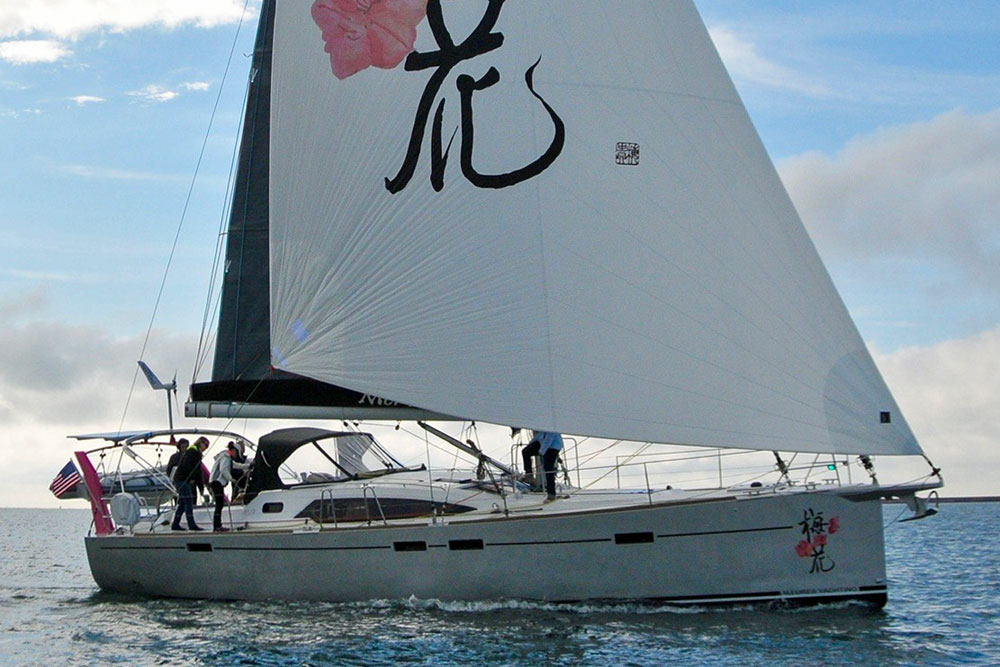
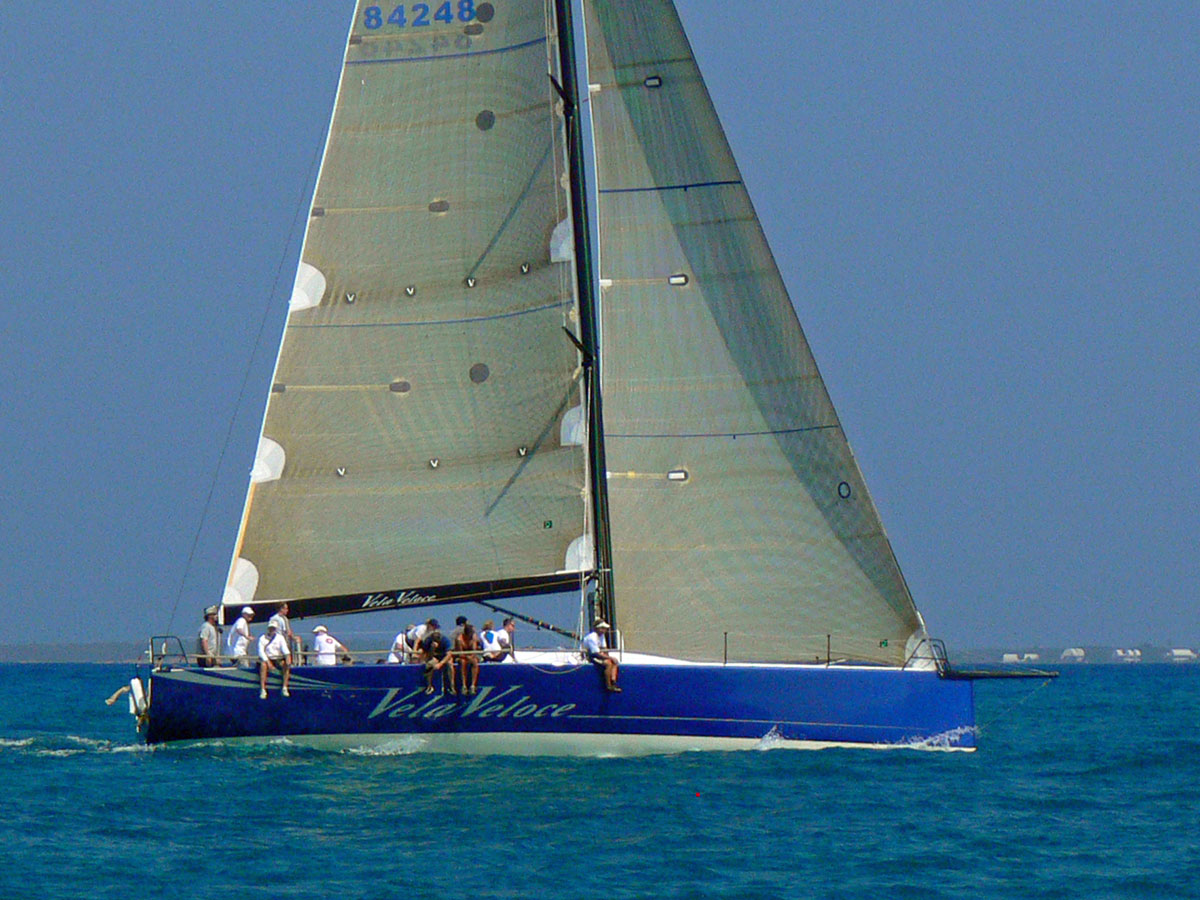 Carbon everything on Vena Veloce
Table of Contents
Why Carbon Masts Change the Rigging Equation
A carbon mast is chosen for one reason above all others: to cut weight aloft, which lowers the centre of gravity, reduces pitching inertia, and lets the designer carry a lighter keel for the same stability. Hanging stainless wire or rod off that spar works against the very reason it was built, since both materials are dense relative to their strength and add back a meaningful chunk of the weight the carbon tube was meant to save.
There's a structural argument too, not just a weight one. Rod rigging is stiff and applies concentrated point loads at its terminals, which suits an aluminium spar's compression tolerances reasonably well but is a less natural match for a carbon tube, where the laminate has been engineered around a particular loading profile. Most spar builders working in carbon, Southern Spars, Hall Spars and similar yards among them, specify the rigging alongside the mast for exactly this reason, so retrofitting stainless onto an existing carbon rig is not simply a like-for-like swap.
Carbon Rigging: The Purpose-Built Match
Carbon fibre standing rigging, sometimes sold as carbon rod, is the rigging most closely matched to a carbon mast in both material properties and intent. Modern products are commonly built from high-grade carbon fibre such as Toray T1100, offering roughly eight times the strength of Nitronic rod for a similar stiffness, at around 80 percent of the weight. Some manufacturers now offer coilable carbon rod, which makes transport and installation considerably easier than the rigid lengths early carbon rigging demanded.
The trade-offs are real. Carbon rigging is expensive, generally the costliest of the three options here, and it needs a specialist to fit and terminate correctly. Visual inspection is also less straightforward than with wire, since a carbon rod doesn't show the same telltale rust staining or broken strands, so owners typically rely on the manufacturer's recommended service intervals and a professional inspection rather than a quick look from the deck. Longevity is good when properly cared for, with some manufacturers quoting a service life of fifteen years or more.
PBO: Strong, Light and Falling Out of Favour
PBO, short for polybenzoxazole, was the first widely adopted high-modulus fibre rigging and remains in use, particularly where a manufacturer offers a drop-in product compatible with existing wire or rod terminations. It's genuinely impressive on paper: high-modulus fibre rigging of this kind can be up to 50 percent stronger than an equivalent diameter of rod or wire, and up to 90 percent lighter, which is precisely the kind of gain a carbon rig is built to exploit.
The catch is durability. PBO degrades rapidly once exposed to UV, so it's always sold with a protective sheath, and if that sheath is ever nicked or worn through, the fibre beneath loses strength quickly and without much visual warning. Several riggers and surveyors have grown wary of it for exactly this reason, and manufacturers themselves have historically recommended replacing a PBO rig after around eight years, sooner if the boat is raced hard, with removable stays such as babystays and runners needing replacement in as little as four. Visual inspection and DIY repair are also essentially impossible once the fibre is enclosed, which is a meaningful downside for anyone planning to be a long way from a specialist rigger.
Dyneema: The Pragmatic Middle Ground
Dyneema has become the practical choice for owners who want most of the weight saving of carbon or PBO without the cost or the inspection headaches. It's noticeably cheaper than either high-modulus alternative, and because it's spliced rather than terminated with a specialist cold-formed or bonded fitting, it can genuinely be repaired at sea with basic tools and a modest amount of practice.
The trade-off against carbon and PBO is stretch. For a given diameter, Dyneema stretches more than an equivalent carbon or PBO cable, which matters more to a dedicated grand-prix racer chasing every tenth of a knot than it does to a performance cruiser. Modern heat-set, pre-stretched grades sold under names such as Dux or DM20 have narrowed this gap considerably by controlling creep, and Dyneema conversions are now common enough that several spar and rigging specialists offer specific fittings to adapt an existing carbon mast's terminations to take it.
Comparing Carbon, PBO and Dyneema
| Feature | Carbon Rigging | PBO | Dyneema |
|---|---|---|---|
| Weight aloft | Lowest, closest match to a carbon spar | Very low | Low, slightly more diameter for equivalent stretch |
| Stretch | Very low | Very low | Low with heat-set grades, more than carbon or PBO |
| UV resistance | Good | Poor once sheath is compromised | Good |
| Inspectability | Limited, relies on service intervals | Very limited, damage often hidden | Good, visible fibre condition |
| Field repair | Not practical | Not practical | Practical with basic splicing skills |
| Relative cost | Highest | High, similar to rod | Lowest of the three |
| Best suited to | Grand-prix racing, superyachts | Legacy rigs, drop-in wire or rod replacement | Performance cruisers, club racers |
Fitting, Inspection and Care
None of these three materials is a straightforward DIY fit in the way a Sta-Lok terminal on wire can be. Carbon rigging and PBO both rely on specialist bonded or cold-formed terminations that need to be done by, or at least specified by, the manufacturer or an approved rigger, and the mast builder's compression figures should always be part of that conversation, since fitting the wrong stiffness of rigging to a carbon spar can affect how the rig loads under sail. Dyneema is the exception, with terminations that are spliced and lashed or fitted with soft shackles, which is exactly why it's the option most owners can genuinely maintain themselves between professional surveys.
Inspection routines differ accordingly. With carbon and PBO, the sensible approach is to follow the manufacturer's recommended service interval rather than rely on a visual check, since visible damage often shows up only after strength has already been compromised. With Dyneema, a straightforward visual check for chafe, fuzzing fibres at any bend, and creep at the lashings will catch most problems early, in much the same way owners already inspect wire or rod rigging.
Whichever material you choose, this decision sits on top of everything covered in the parent comparison. [Insert Parent Page Title Here] goes through the fatigue, inspection and insurance considerations that apply across wire, rod and synthetic rigging generally, and is worth reading alongside this page before committing to a re-rig.
Making the Choice for Your Rig
If you're campaigning a genuine grand-prix racer or looking after a superyacht where budget is a secondary concern, carbon rigging remains the purpose-built match for a carbon spar and the choice most spar builders will specify by default. If you've inherited an older carbon rig already fitted with PBO, it's worth a conversation with a rigger about whether to stay with it or convert, given the durability concerns that have led some builders and surveyors to move away from it.
For most performance cruisers and club racers wanting the bulk of the weight saving without carbon pricing, Dyneema, correctly sized against the mast builder's figures, is the pragmatic and increasingly common answer.
For more on the topic of material choices for standing rigging, see Stainless Steel Wire, Rod or Synthetic Standing Rigging: Choosing the Right Material for Your Sailboat.
Summing Up
Carbon masts ask a different question of their rigging than aluminium ones do, because the whole point of the spar is weight saved aloft, and stainless wire or rod quietly gives a chunk of that back. Carbon rigging matches the mast most closely but at real cost and with limited scope for visual inspection. PBO offers similar weight savings for less money but has earned a reputation for degrading badly and without warning once its cover is compromised. Dyneema splits the difference well enough that it's now the default recommendation for most owners outside the grand-prix end of the sport, provided it's sized properly and inspected as part of the same routine you'd apply to any other rig.

This article was written by Dick McClary, RYA Yachtmaster and author of the RYA publications 'Offshore Sailing', member of The Yachting Journalists Association (YJA), erstwhile member of the Ocean Cruising Club (OCC) and owner/administrator of 'Liveaboard Sailboats for Sale'.

Frequently Asked Questions (FAQs)
Can I just fit stainless wire or rod to a carbon mast?
Can I just fit stainless wire or rod to a carbon mast?
Physically, often yes, but it's rarely sensible. You'll be adding back the weight and windage the carbon spar was built to remove, and rod in particular applies a stiffer, more concentrated load than many carbon tubes are optimised for.
Is PBO still a reasonable choice for a carbon rig?
Is PBO still a reasonable choice for a carbon rig?
It's still available and still fitted, particularly as a drop-in replacement on existing PBO-compatible terminations, but several riggers and surveyors have moved away from recommending it due to its brittleness and the way it fails once UV reaches the fibre through a damaged sheath.
How does Dyneema compare to carbon rigging for stretch?
How does Dyneema compare to carbon rigging for stretch?
Dyneema stretches more than carbon for a given diameter, though modern heat-set grades have narrowed the gap considerably. For most cruising and club racing this difference is not performance-critical, whereas a grand-prix campaign chasing every tenth of a knot will still prefer carbon.
Can I inspect carbon or PBO rigging myself?
Can I inspect carbon or PBO rigging myself?
Not really. Neither shows damage as visibly as wire, stainless rod, or Dyneema, so owners typically rely on the manufacturer's recommended service interval and a professional inspection rather than a deck-level visual check.
Do I need a specialist to fit any of these materials?
Do I need a specialist to fit any of these materials?
Yes, for carbon and PBO in particular. Both rely on specialist bonded or cold-formed terminations that should be fitted, or at least specified, by the manufacturer or an approved rigger, working from the mast builder's compression figures. Dyneema is the most owner-friendly of the three, since its spliced and lashed terminations can genuinely be handled with basic skills.
Recent Articles


-
Rigging a Carbon Mast: Carbon, PBO or Dyneema Compared
Sep 20, 26 08:01 AM
Rigging a carbon mast: how carbon rod, PBO and Dyneema compare on cost, weight and inspection, and why stainless wire or rod rarely make sense. -
Top-Down Furling Guide: Code Zeros and Asymmetric Spinnakers
Sep 19, 26 04:57 PM
Top-down furling explained for cruisers: how it works, which boats need one, common faults, sock versus furler costs, and the rule everyone forgets. -
Standing Rigging Inspection Checklist: A Sailor's Full Guide
Sep 19, 26 03:46 PM
A complete standing rigging inspection checklist covering swage fittings, chainplates, tension and going aloft safely, plus when to call in a professional rigger.