- Home
- Electronics & Instrumentation
- Marine EPIRB
- AIS Enabled Personal Locator Beacons for Sailors
How an AIS Enabled PLB Improves Your Chances of Being Found
Key Takeaways: An AIS enabled PLB gives you a fighting chance when everything else has gone wrong. Instead of waiting for a satellite alert to work its way through the system, an AIS PLB puts a live man overboard target straight onto the screens of boats around you. That means nearby vessels can turn towards you immediately, often cutting recovery time from many minutes to just a handful. In busy waters or when sailing with other boats, the difference is dramatic.
Table of Contents
- How AIS Changes the Odds in a Man Overboard Emergency
- What Actually Happens When an AIS PLB Activates
- Why AIS Matters When Every Minute Counts
- Satellite Alerts Versus AIS: How the Two Systems Work Together
- Range, Reliability and What Affects Performance
- Integration with Modern Chartplotters
- Limitations You Should Be Aware Of
- Choosing an AIS Enabled PLB
- Summing Up
How AIS Changes the Odds in a Man Overboard Emergency
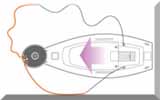
A standard PLB relies entirely on the satellite system. It works, but it takes time. An AIS enabled PLB adds a second, much faster route to rescue by broadcasting a man overboard target directly to any AIS equipped vessel within range. That includes your own boat, which is usually the closest and most motivated responder.
The moment the beacon activates, nearby chartplotters show a bright, unmistakable target with your position, heading and distance. There is no waiting for a rescue centre to relay the alert. Anyone who sees the target can turn towards you straight away.
For coastal cruising, club racing, flotillas and busy anchorages, this immediate visibility is the single biggest advantage of AIS.
What Actually Happens When an AIS PLB Activates
The sequence is surprisingly quick:
- You activate the PLB: The antenna deploys and the unit begins transmitting both AIS and satellite distress signals.
- AIS MOB messages are broadcast locally: These are picked up by AIS receivers on nearby boats and shore stations.
- Your position appears on chartplotters: The target is labelled as a man overboard alert, usually with a distinctive icon and audible alarm.
- Vessels can steer directly towards you: The target updates every few seconds, allowing precise homing even in poor visibility.
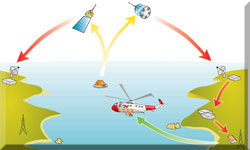
- Meanwhile, the satellite alert is progressing in the background: This ensures that if no one nearby can help, the wider rescue system is already in motion.
This dual pathway is what makes AIS PLBs so effective. You get the speed of local response and the global safety net of the satellite system.
Why AIS Matters When Every Minute Counts
A person in the water is hard to spot, even in daylight. Add waves, spray, low sun or a bit of distance and the odds drop sharply. AIS cuts through all of that by giving rescuers a live, updating target to steer towards.
In practice, this can reduce recovery time from tens of minutes to just a few. That difference matters. Cold water shock, fatigue and disorientation set in quickly. The faster someone gets back to you, the better their chances.
Sailors who have tested AIS PLBs during drills often describe the experience as eye opening. The target is obvious, the approach is straightforward and the stress level drops the moment the icon appears on the screen.
Satellite Alerts Versus AIS: How the Two Systems Work Together
AIS and satellite alerts serve different purposes, and both are important.
AIS
- Works only within line of sight
- Reaches boats that are already close enough to help
- Provides immediate homing
- Ideal for coastal waters, racing fleets and cruising groups
Satellite
- Works anywhere on the planet
- Alerts rescue authorities even if no one is nearby
- Provides global coverage
- Essential for offshore sailing
The best PLBs combine both. AIS gets you found quickly by those around you. The satellite system ensures help is coming even if you are alone.
Range, Reliability and What Affects Performance
AIS range varies, but most AIS PLBs achieve between two and five nautical miles in typical sea conditions. Flat water and elevated receivers can extend this further.
Several factors influence performance:
- Antenna height on receiving vessels: A masthead AIS receiver will pick up your signal far sooner than a deck level unit.
- Your own antenna position: Keeping the PLB upright and clear of the water makes a noticeable difference.
- Sea state: Waves can momentarily block the signal as you move in and out of troughs.
- Clothing and equipment: A PLB mounted on a lifejacket shoulder strap usually performs better than one stuffed in a pocket.
Despite these variables, AIS PLBs consistently outperform visual searching, especially in choppy water.
Integration with Modern Chartplotters
Most modern chartplotters recognise AIS man overboard messages automatically. The screen will usually:
- Sound an alarm
- Display a dedicated MOB icon
- Show range and bearing
- Offer a direct navigation option
Some systems even draw a course line to the casualty. This level of integration makes the recovery process far more controlled and less reliant on guesswork.
Older plotters may need a software update, but compatibility is now widespread.
Limitations You Should Be Aware Of
AIS PLBs are powerful tools, but they are not perfect. A few limitations are worth noting:
- They rely on other vessels being within AIS rang: In remote offshore areas, the satellite alert becomes the primary rescue path.
- They do not replace a full AIS transponder on the boat: Your vessel still needs its own AIS for collision avoidance and visibility.
- They require correct mounting and deployment: A tangled antenna or a unit held low in the water reduces range.
- Battery life is finite: Most units transmit for around 24 hours, though cold water can shorten this.
Understanding these limitations helps you use the device effectively and set realistic expectations.
Choosing an AIS Enabled PLB
When comparing models, focus on the features that genuinely improve your chances of being found:
- AIS transmission
- Satellite alert capability
- GNSS for fast position fixes
- RLS confirmation
- Battery life
- Ease of mounting on a lifejacket
- Antenna design
- Size and weight
A compact unit that sits neatly on your lifejacket and deploys cleanly is usually the most practical choice.
Need help choosing the right PLB for you and your crew?
Click here to see my recommended models and comparison table.
Summing Up
An AIS enabled PLB gives you something incredibly valuable: visibility. Instead of relying solely on a satellite alert that takes time to filter through the system, you become an immediate, unmistakable target on the screens of boats around you. That simple shift often turns a difficult search into a straightforward recovery. For anyone who sails with others nearby, the advantage is hard to ignore.
 DMcC
DMcCThis article was written by Dick McClary, RYA Yachtmaster and author of the RYA publications 'Offshore Sailing' and 'Fishing Afloat', member of The Yachting Journalists Association (YJA), erstwhile member of the Ocean Cruising Club (OCC) and owner/administrator of 'Liveaboard Sailboats for Sale'.

Recent Articles


-
Mystery 35 Review: Specs, Performance & Buying Guide
Aug 29, 26 09:42 AM
An in-depth review of the Mystery 35 sailboat. Read technical specs, design ratios, sail performance, and common buyer inspection areas. -
Beneteau First 405 Review: Specs, Performance & Buyer’s Guide
Aug 26, 26 03:58 AM
Detailed Beneteau First 405 review covering specs, performance, bluewater capability, layouts and buyer’s checklist. -
Moody S38 Review: Specs, Ratios & Buyer’s Guide
Aug 12, 26 04:22 AM
In‑depth Moody S38 review covering specs, performance, design ratios, layout, strengths, trade‑offs & buyer inspection points.