- Home
- Cruising Yachts 35' to 40'
- Bavaria 38CC Centre‑cockpit Cruising Yacht Performance & Ownership Guide
Bavaria 38CC Sailboat
Specs, Performance Analysis & Cruising Characteristics
Key Takeaways: The Bavaria 38CC (often marketed as the Bavaria Ocean 38) is a late‑1990s centre‑cockpit cruiser aimed at couples and families who want genuine passage‑making ability without jumping to 40‑plus feet. It offers a generous aft owner’s cabin, solid German build quality, and Lloyd’s‑supervised construction, with a hull and rig sized for offshore work rather than marina posing. You get comfortable motion, respectable but not sparkling upwind performance, and a layout that works well for extended living aboard. The trade‑offs are a relatively beamy hull, moderate ballast ratio, and the usual centre‑cockpit compromises on cockpit size and deck stowage. It suits sailors who value security, space and practicality over outright speed.
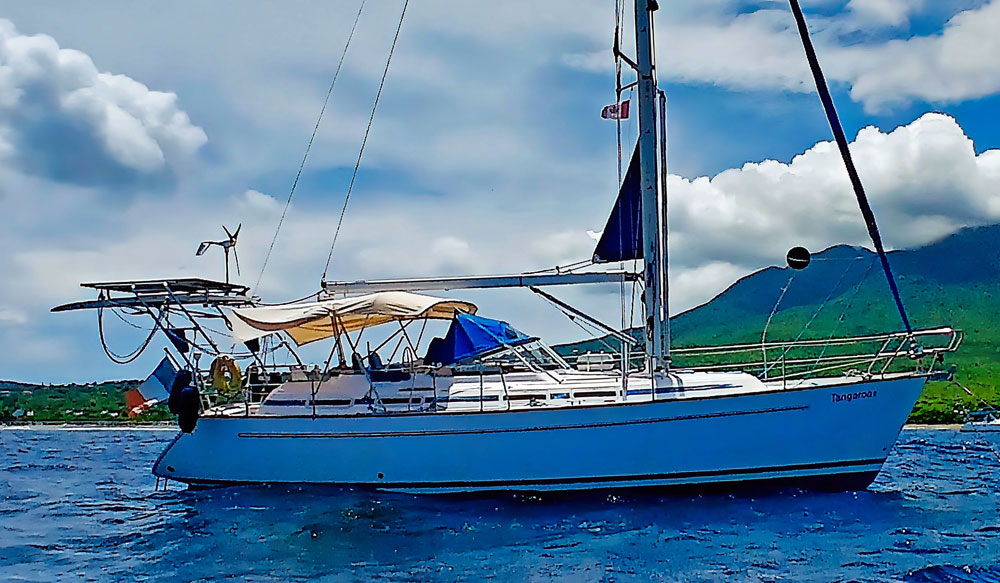 'Tangaroa II', a Bavarai 38CC Ocean
Table of Contents
- The Bavaria 38CC at a Glance
- Design & Construction
- Published Specification: The Bavaria 38CC Blueprint
- Sail Areas & Rig Dimensions
- Performance Analysis: Understanding the Design Ratios
- How the Bavaria 38CC Sails
- Bluewater Capability: Strengths & Trade-Offs
- Configuration, Layout & Cruising Characteristics
- Who This Boat Is Best For
- The Buyer’s Checklist: Common Problem Areas
- Summing Up
- Frequently Asked Questions (FAQs)
The Bavaria 38CC at a Glance
- Type: Centre‑cockpit cruising monohull
- Designer: J&J Design
- Builder: Bavaria Yachts, Giebelstadt, Germany
- Production Years: Approx. 1997–2000 (often branded “Ocean 38”)
- Rig: Masthead sloop, deck‑stepped aluminium spar
- Best for: Couples or small families cruising coastal and ocean routes, liveaboard use, northern European and Atlantic circuits
- Strengths: Lloyd’s‑supervised structure, comfortable aft cabin, sensible systems, good motion comfort, straightforward sailplan
- Trade-offs: Beamy hull with moderate ballast ratio, average windward sharpness, centre‑cockpit compromises on cockpit volume and deck stowage, age‑related refit needs
Design & Construction
The Bavaria 38CC, marketed in many regions as the Bavaria Ocean 38, occupies a distinct place within the broader Bavaria 38 family. Unlike the aft‑cockpit Bavaria 38 and the earlier Bavaria 38 Holiday — both of which were built for charter and coastal cruising — the 38CC was conceived as a centre‑cockpit offshore cruiser with Lloyd’s/Germanischer Lloyd oversight during construction. J&J Design drew a moderate‑displacement hull with fuller sections than the aft‑cockpit variants, giving the boat a steadier motion and allowing space for the large aft owner’s cabin that defines the model. The hull is solid GRP below the waterline with a substantial laminate schedule, while the topsides and deck use cored sections for stiffness and insulation. The keel is a lead fin bolted to a reinforced stub, offered in two depths: a deep fin around 6'4" (1.95 m) and a shallower fin around 5'1" (1.55 m). No centreboard, twin‑keel or lifting‑keel versions were produced.
The rudder is a semi‑balanced spade on a robust stock, giving light helm and predictable control. Chainplates are integrated into reinforced structural zones and glassed into the hull‑deck structure rather than being simple bolted straps. Cabin windows are framed units rather than large bonded glass panels, which reduces long‑term adhesive‑failure risk and makes leak management more straightforward on older boats. Deck hardware is mounted on aluminium backing plates bonded into the deck, improving load distribution and reducing the likelihood of pull‑out under strain.
Interior layouts varied, with the two‑cabin arrangement being the most common: a large aft owner’s cabin, forward guest cabin and a single heads with separate shower. A rarer three‑cabin version existed, typically aimed at charter fleets, which split the aft cabin into two smaller cabins at the expense of storage and overall comfort. These differences matter when assessing boats on the market, as the 38CC/Ocean 38 is often confused with the aft‑cockpit Bavaria 38 models that share the number but not the hull, deck, interior or offshore intent. The 38CC is the only centre‑cockpit Bavaria 38 of its era, built from approximately 1997 to 2000, and carries the CE Category A – Ocean rating. No published STIX figure exists for this model, so the CE rating and construction pedigree remain the primary indicators of its intended offshore capability.
Published Specification: The Bavaria 38CC Blueprint
| Specification | Value |
|---|---|
| LOA | 39'0" (11.9 m) |
| LWL | 32'8" (9.95 m) |
| Beam | 12'11" (3.95 m) |
| Draft (deep) | 6'4" (1.95 m) |
| Draft (shallow option) | 5'1" (1.55 m) |
| Displacement | 18,078 lb (8,200 kg) |
| Ballast | 6,393 lb (2,900 kg) lead |
| Rig Type | Masthead sloop |
| Hull Material | GRP (solid below WL, cored above) |
| Production Dates | Approx. 1997–2000 |
Sail Areas & Rig Dimensions
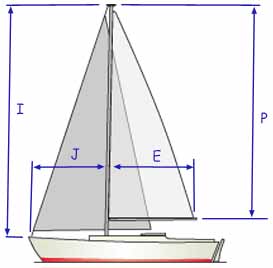 Rig dimensions
The Bavaria 38CC carries a straightforward masthead sloop rig with a conventional mainsail and furling genoa as standard.
- I (foretriangle height): 45'9" (13.96 m)
- J (foretriangle base): 13'3" (4.04 m)
- P (mainsail luff): 44'6" (13.57 m)
- E (mainsail foot): 15'3" (4.65 m)
Typical sail areas:
- Mainsail: ~340–360 ft² (31.6–33.4 m²) depending on cut
- Genoa (around 135–150%): ~500 ft² (46.5 m²)
- Working jib / smaller headsail: ~300 ft² (27.9 m²)
- Total working sail area (main + genoa): ~860 ft² (79.9 m²)
Individual boats may carry slightly different sail plans depending on whether they have upgraded cruising laminates, smaller furling sails, or added downwind sails such as a cruising chute.
Performance Analysis: Understanding the Design Ratios
Using the published dimensions and displacement, the key ratios for the Bavaria 38CC/Ocean 38 are:
| Ratio | Value | Practical Meaning |
|---|---|---|
| Sail Area/Displacement (SA/D) | ≈ 20 | On the lively side for a cruiser; good power in moderate airs without being twitchy. |
| Displacement/Length (D/L) | ≈ 230 | Moderate displacement; enough heft for comfort, but not a heavy-displacement plodder. |
| Ballast/Displacement (B/D) | ≈ 35% | Reasonable stiffness; will heel but stands up well once reefed appropriately. |
| Capsize Screening Formula (CSF) | ≈ 1.98 | Below 2.0; within accepted offshore range, though beam is noticeable. |
| Brewer Motion Comfort Ratio | ≈ 26–27 | Comfortable motion for a 38‑footer; not a heavy ketch, but kinder than many modern lightweights. |
Taken together, these numbers paint a picture of a moderate‑displacement cruiser with enough sail area to keep moving in typical cruising conditions, a ballast ratio that balances stiffness and load‑carrying, and a motion profile that many owners find reassuring on longer passages.
For more on this topic, you might want to take a look at Understanding Boat Performance & Design Ratios...
How the Bavaria 38CC Sails
Upwind, the Bavaria 38CC is honest rather than razor‑sharp. The beamy hull and centre‑cockpit configuration mean you are not chasing fractional‑rig pointing angles, but with a clean bottom, a sensible headsail and correct trim, the boat will tack through respectable angles and hold 6–7 knots in a steady breeze. The helm is light, thanks to the semi‑balanced spade rudder, and feedback is good enough that you can feel when the boat is pressed and ready for a reef.
Downwind, the boat settles into a comfortable groove. The moderate D/L and decent SA/D allow you to carry main and genoa effectively, and many owners add a cruising chute or asymmetric to keep speeds up in lighter trades. The centre cockpit is well protected, which makes long downwind legs less tiring, though the higher cockpit floor can slightly increase the sense of roll compared with a low aft cockpit design.
Reefing is straightforward: a conventional slab‑reef main and furling headsail are typical, with lines led aft. The boat rewards early reefing; once you take the first tuck in the main and roll a little genoa, the heel angle reduces and the boat feels settled again. Short‑handed behaviour is one of its strengths. With an autopilot and sensible sail choices, a couple can manage the boat comfortably, and the rig is not so tall or powerful that it becomes intimidating in a blow.
Motion is where the 38CC earns its keep. The Brewer comfort ratio in the mid‑20s reflects a hull that has enough displacement and length to smooth out the worst of the chop. You still feel the sea, but the boat does not slam like many lighter, flatter‑section modern cruisers. In a seaway, the centre cockpit’s higher position gives a slightly more pronounced vertical movement, but the overall impression is of a boat that looks after its crew.
Bluewater Capability: Strengths & Trade-Offs
The Bavaria 38CC was conceived as an ocean‑rated cruiser, and the CE A – Ocean rating, Lloyd’s‑supervised construction and structural details support that intent. The solid laminate below the waterline, reinforced keel stub and lead keel give confidence when thinking about groundings and long‑term fatigue. Tankage is reasonable for a 38‑footer: around 100 US gallons (380 L) of water and roughly 60 US gallons (230 L) of diesel in standard form, with some boats carrying additional flexible tanks or bow tanks.
Seakindliness is good for the size. The moderate D/L and comfort ratio mean the boat is not excessively lively, and the hull shape avoids extreme flat sections that can pound. Load‑carrying is adequate rather than huge; you can add cruising gear, but if you pile on heavy davits, large tenders and full‑time liveaboard stores, expect some loss of performance and a slight increase in heel angles.
Deck safety is helped by the centre cockpit, high coamings and sensible guardrails. Side decks are wide enough to move forward with harness and jackstays, and the foredeck is clear enough for anchoring and sail handling. The trade‑offs are typical of the genre: the cockpit is smaller than on an aft‑cockpit boat of similar length, and the high coachroof can catch more wind when manoeuvring in tight marinas.
For bluewater work, many owners upgrade ground tackle, add a second forestay or inner stay for heavy‑weather sails, and fit extra handholds below. With those tweaks, the 38CC has crossed oceans and handled Atlantic and Baltic conditions without drama.
Configuration, Layout & Cruising Characteristics
The centre cockpit defines the deck ergonomics. You step down from the side decks into a protected cockpit with a single wheel, good coamings and a fixed windscreen on many boats. Engine access is typically under the companionway, with additional panels in the aft cabin. Locker space aft is reasonable, though not huge; some volume is taken by the owner’s cabin.
Below, the layout is aimed squarely at comfortable cruising. Forward, there is a guest cabin with double berth and stowage, plus a heads compartment with separate shower in many versions. The saloon has a generous U‑shaped seating area to port and a settee or occasional seat to starboard, with a proper table and good light from overhead hatches and side windows. The galley is usually along the port side, near the companionway, with a two‑burner cooker and oven, deep sinks, and a top‑loading fridge. Stowage is adequate for extended cruising if you are organised.
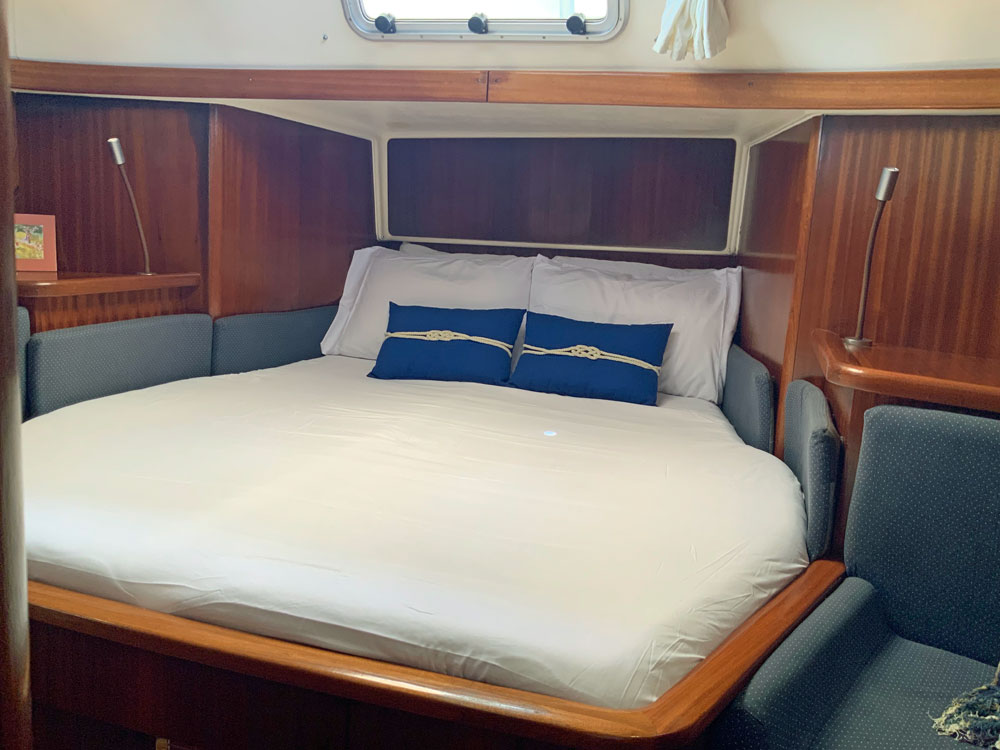 The Aft Cabin
The aft owner’s cabin is the star of the show: a large double berth, seating, lockers and often a vanity or small desk. Headroom is good for the size, and ventilation is helped by opening ports and hatches. For liveaboard use, the combination of a proper aft cabin, workable saloon and decent galley makes the boat attractive. Storage is not endless, but with careful use of under‑berth spaces and lockers, a couple can carry what they need for extended seasons.
Who This Boat Is Best For
Good fit for:
- Cruising couples who want a secure centre cockpit and a proper aft owner’s cabin without going beyond 40' (12.2 m).
- Families planning coastal and occasional ocean passages, valuing comfort and safety over outright performance.
- Liveaboard sailors who appreciate a sensible layout, decent tankage and manageable systems.
- Owners stepping up from mid‑30‑foot production cruisers, looking for more space and offshore capability.
Less ideal for:
- Performance‑oriented sailors who prioritise sharp upwind angles and regatta results.
- Owners wanting huge cockpit entertaining space, as the centre cockpit is more about protection than parties.
- Very heavy liveaboard fit‑outs with extensive deck gear and large tenders, which can push the boat beyond its sweet spot.
- Shallow‑water specialists who need extreme shoal draft; the optional shallow keel helps, but this is not a centreboard design.
The Buyer’s Checklist: Common Problem Areas
When viewing a Bavaria 38CC/Ocean 38, a methodical inspection pays off. Key areas to focus on:
- Keel & keel stub: Check for any signs of grounding: cracking around the keel‑hull joint, rust streaks from bolts, or distortion of the stub. Lloyd’s‑supervised construction is reassuring, but age and impacts still matter.
- Rudder & steering: Inspect the rudder for osmotic blistering, play in the bearings and any signs of water ingress. At the wheel, feel for stiffness or notchiness that might indicate worn bearings or linkage issues.
- Rig & chainplates: Look closely at chainplate areas inside: any cracking, staining or movement in the laminate is a warning sign. Check mast step corrosion, standing rigging age, and turnbuckle condition. Many boats are now due or past due for full rig replacement.
- Deck hardware & leaks: The bonded backing plates are a plus, but you still want to see dry headliners and clean, firm deck around winches, cleats and stanchions. Test all opening ports and hatches for leaks, and look for staining around window frames.
- Engine & saildrive: Original installations were typically Volvo diesels with saildrive. Check service history, age of the diaphragm, and any signs of corrosion or oil leaks. A repower or major overhaul can be a significant cost.
- Electrics & plumbing: Wiring looms from the late 1990s may be tired. Inspect distribution panels, look for non‑professional additions, and test all systems. Check water tanks for taste and cleanliness, and confirm hot‑water systems work under both shorepower and engine.
- Interior joinery & headliners: Bavaria’s joinery of the era is robust but not immune to leaks and wear. Look for delamination, swollen veneers, and sagging headliners, especially under deck fittings and around the mast area.
Typical refit items on a 25‑plus‑year‑old 38CC include full standing rigging replacement, sail wardrobe renewal, saildrive diaphragm, upgraded electronics, and some plumbing and wiring work. Budgeting a realistic refit allowance on top of the purchase price is sensible, especially if you plan offshore passages.
Could this be your ideal cruising boat?
It may well be, but before going any further, it might be worth taking a look at my eBook 'How to Avoid Buying the Wrong Sailboat'...
Summing Up
The Bavaria 38CC/Ocean 38 occupies a useful middle ground in the cruising world. It is neither a stripped‑out racer nor a heavy, slow traditional ketch, but a moderate‑displacement centre‑cockpit cruiser with enough structure and comfort to take care of its crew on longer passages. The design ratios show a boat with respectable sail power, moderate displacement and a ballast ratio that balances stiffness and load‑carrying. On the water, that translates into honest upwind performance, comfortable downwind behaviour and a motion that many owners find reassuring.
From a buyer’s perspective, the key is to separate structural fundamentals from age‑related wear. The Lloyd’s‑supervised hull, lead keel and sensible rig are strong foundations, but after two‑plus decades most examples will need attention to rigging, sails, systems and cosmetics. If you find a well‑maintained boat, or are prepared to invest in a thoughtful refit, the 38CC offers a capable, comfortable platform for coastal and ocean cruising, with a layout that works particularly well for couples and small families who value a secure cockpit and a proper aft cabin.

Written by Dick McClary, cruising sailor and yachting journalist, publisher of Sailboat‑Cruising.com and admin of the Liveaboard Sailboats for Sale community.

Frequently Asked Questions (FAQs)
1. How does the Bavaria 38CC behave offshore compared with other centre‑cockpit cruisers of similar size?
1. How does the Bavaria 38CC behave offshore compared with other centre‑cockpit cruisers of similar size?
Offshore, the Bavaria 38CC has a motion profile that sits in the middle of the centre‑cockpit spectrum. The moderate displacement and relatively full hull sections give it a steadier ride than lighter, flatter‑section cruisers, and the Brewer comfort ratio in the mid‑20s reflects that. It doesn’t have the heavy, damped feel of older long‑keel designs, but it avoids the sharp slamming that some modern production boats exhibit. Helm balance is predictable, and once reefed appropriately the boat tracks well under autopilot. Compared with peers like the Moody 38CC or HR36, it feels slightly livelier but still secure, with the centre cockpit offering good protection in rough conditions.
2. What are the most important structural areas to inspect on a 25‑year‑old Bavaria 38CC?
2. What are the most important structural areas to inspect on a 25‑year‑old Bavaria 38CC?
The priority list starts with the keel stub and keel bolts, checking for any signs of grounding or movement. The rudder should be inspected for water ingress, bearing wear and any play in the stock. Chainplates are glassed into reinforced structural zones, so look for cracking, staining or laminate distortion around their attachment points. Deck hardware sits on bonded backing plates, but bedding compounds may be ageing, so check for moisture around winches, stanchions and cleats. Window frames and hatches can leak if seals have hardened. Internally, inspect bulkhead tabbing, mast step condition and any signs of delamination or soft spots in high‑load areas.
3. Does the shallow‑draft keel option significantly affect upwind performance or stability?
3. Does the shallow‑draft keel option significantly affect upwind performance or stability?
The shallow keel improves access in tidal harbours and estuaries, but it does reduce righting moment and upwind bite. Expect slightly wider tacking angles and earlier reefing compared with the deep‑keel version. Heel angles can increase more quickly in gusts, and the boat may feel a little more tender when pressed. For coastal cruising in mixed depths, the shallow keel is practical, but for long passages or heavier loading the deep keel offers better pointing ability, improved heavy‑weather behaviour and a more planted feel when sailing close‑hauled.
4. What upgrades materially improve the Bavaria 38CC for extended cruising or ocean passages?
4. What upgrades materially improve the Bavaria 38CC for extended cruising or ocean passages?
The most impactful upgrades tend to be structural and systems‑based. Renewing standing rigging, replacing ageing sails with modern cruising laminates, and ensuring the saildrive diaphragm is up to date are core safety items. Many owners add an inner forestay for heavy‑weather sails, upgrade ground tackle, and improve steering system redundancy. Electrical improvements — lithium batteries, solar, MPPT controllers and modern distribution panels — make life aboard easier. Additional tankage, improved ventilation, upgraded autopilot systems and robust cockpit protection (sprayhood, bimini, enclosure) round out the typical offshore preparation package.
5. How suitable is the Bavaria 38CC for long‑term liveaboard use in varying climates?
5. How suitable is the Bavaria 38CC for long‑term liveaboard use in varying climates?
The 38CC works well as a liveaboard platform thanks to its aft cabin, generous saloon and practical galley. Ventilation is good for a boat of its era, with multiple opening hatches and ports, though owners in hotter climates often add fans or improved shading. Insulation is moderate, so colder regions may require diesel heating or upgraded thermal lining. Storage is adequate if organised, and electrical capacity benefits from modern charging and battery upgrades. The centre cockpit provides excellent protection in wet or windy conditions, and the boat’s motion comfort makes extended stays aboard less tiring than on lighter, more reactive designs.
Recent Articles


-
Mystery 35 Review: Specs, Performance & Buying Guide
Aug 29, 26 09:42 AM
An in-depth review of the Mystery 35 sailboat. Read technical specs, design ratios, sail performance, and common buyer inspection areas. -
Beneteau First 405 Review: Specs, Performance & Buyer’s Guide
Aug 26, 26 03:58 AM
Detailed Beneteau First 405 review covering specs, performance, bluewater capability, layouts and buyer’s checklist. -
Moody S38 Review: Specs, Ratios & Buyer’s Guide
Aug 12, 26 04:22 AM
In‑depth Moody S38 review covering specs, performance, design ratios, layout, strengths, trade‑offs & buyer inspection points.