- Home
- Electronics & Instrumentation
- Marine EPIRB
- EPIRB Antenna Performance Factors
How Antenna Orientation and Mounting Height Influence EPIRB Detection and Alert Speed
Key Takeaways: Antenna orientation and mounting height have a bigger influence on EPIRB performance than most skippers expect. If the antenna spends too much time underwater or shielded by the hull, the first distress bursts can be weaker and slower to reach the satellites. A float free unit that clears the deck cleanly and keeps its antenna upright usually gets heard sooner. Even small improvements in exposure can shave minutes off the alerting timeline, which is exactly what you want when things have gone badly wrong.
Table of Contents
- How EPIRB Signals Reach the Satellites
- Why Antenna Orientation Matters So Much
- The Effect of Mounting Height on Early Transmission
- What Happens When a Beacon Floats in Rough Seas
- Cat I Versus Cat II: Differences in Early Signal Quality
- How Hull Shape and Deck Layout Influence Signal Exposure
- Cold Starts, GNSS Performance and First Fix Timing
- Practical Ways to Improve EPIRB Transmission Reliability
- Summing Up
How EPIRB Signals Reach the Satellites
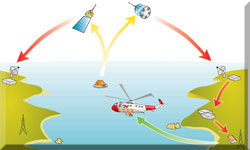
An EPIRB’s job is simple enough on paper: transmit a distress signal on the 406 MHz band until the satellites pick it up. In practice, the signal has to fight its way past sea state, hull structures, spray, and the occasional dunking. The first few minutes after activation are the most important, because that is when the satellites are trying to acquire and verify the alert. Anything that weakens or interrupts the signal during this window can slow the entire process.
The system is designed with plenty of redundancy, but it still relies on a clear path between the antenna and the sky. That is where orientation and height come into play.
Why Antenna Orientation Matters So Much
EPIRB antennas are vertically polarised. They radiate most efficiently when upright, with the tip pointing at the sky. If the antenna leans over, bends, or repeatedly dips underwater, the radiated power drops. The satellites still hear the beacon, but the bursts can be weaker or more intermittent.
A floating EPIRB in a lively sea state may spend half its time with the antenna partially submerged. Every dunk interrupts the signal. The beacon keeps transmitting, but the satellites only receive the bursts that make it through cleanly. This is why orientation is one of the biggest factors in early detection.
The Effect of Mounting Height on Early Transmission
Height helps for the same reason it helps a VHF antenna. The higher the radiating element, the less likely it is to be shadowed by the hull or buried in spray. A Cat I unit that releases from a bracket on the coachroof or pushpit often has a clearer view of the sky than a beacon floating alongside the hull.
Even a metre or two of extra height can reduce the amount of time the antenna spends in the troughs between waves. That translates into more consistent bursts during the first minutes of distress.
What Happens When a Beacon Floats in Rough Seas
Once a beacon is in the water, it behaves like any other floating object. It rolls, yaws, and pitches. The antenna whips around with it. In moderate to rough conditions, the antenna may be underwater for a significant portion of each cycle.
This is not a failure of the beacon. It is simply physics. The satellites will still acquire the signal, but the process can take longer because the bursts are less consistent. The more violent the motion, the more interruptions you can expect.
Cat I Versus Cat II: Differences in Early Signal Quality
Cat I units have a clear advantage in the early stages of an emergency. Because they are mounted above deck and designed to release automatically, they often start transmitting with the antenna upright and exposed. If the vessel is sinking or capsizing, the beacon may already be transmitting before anyone reaches it.
Cat II units rely entirely on manual activation. If the crew is dealing with fire, flooding, or injury, the beacon may be activated later or in a less favourable position. Once in the water, both types behave similarly, but Cat I units tend to enjoy a cleaner start.
How Hull Shape and Deck Layout Influence Signal Exposure
Some yachts shield a floating EPIRB more than others. Deep topsides, high freeboard, and wide beam can all create pockets of shadow where the antenna struggles to radiate cleanly. A beacon floating alongside a modern cruising hull may spend much of its time tucked into a lee created by the topsides.
Deck clutter can also interfere with a Cat I release. Solar panels, davits, and arches can trap a beacon or cause it to tumble awkwardly before it rights itself.
Cold Starts, GNSS Performance and First Fix Timing
Modern EPIRBs use GNSS receivers to embed a position in the distress bursts. A cold start can take anywhere from thirty seconds to several minutes depending on chipset, sky view, and antenna exposure. If the antenna is underwater or shielded, the first fix may take longer.
A clean, upright antenna with a clear view of the sky usually acquires a fix quickly. A beacon that is rolling heavily or repeatedly dunked may take longer to lock on.
Practical Ways to Improve EPIRB Transmission Reliability
Small adjustments can make a noticeable difference:
- Mount Cat I brackets where the beacon has the best chance of releasing cleanly.
- Keep the area around the bracket free of obstructions.
- If using a Cat II unit, store it where it can be reached quickly and activated in an upright position.
- Check that the antenna is not bent or damaged.
- During abandon ship, try to keep the beacon upright until it is transmitting steadily.
- Avoid tying the beacon to anything that might drag it underwater.
These are simple steps, but they help the beacon do its job without unnecessary delays.
Need help choosing the right EPIRB for your boat?
Click here to see my recommended models and comparison table.
Summing Up
Antenna orientation and mounting height are not technical footnotes. They have a direct influence on how quickly an EPIRB is detected and how soon the satellites can verify the alert. A beacon that starts life upright and exposed usually gets heard faster. One that spends its early moments underwater or shielded by the hull may take longer to break through. When minutes matter, those small differences are worth paying attention to.

This article was written by Dick McClary, RYA Yachtmaster and author of the RYA publications 'Offshore Sailing' and 'Fishing Afloat', member of The Yachting Journalists Association (YJA), erstwhile member of the Ocean Cruising Club (OCC) and owner/administrator of 'Liveaboard Sailboats for Sale'.

Recent Articles


-
Mystery 35 Review: Specs, Performance & Buying Guide
Aug 29, 26 09:42 AM
An in-depth review of the Mystery 35 sailboat. Read technical specs, design ratios, sail performance, and common buyer inspection areas. -
Beneteau First 405 Review: Specs, Performance & Buyer’s Guide
Aug 26, 26 03:58 AM
Detailed Beneteau First 405 review covering specs, performance, bluewater capability, layouts and buyer’s checklist. -
Moody S38 Review: Specs, Ratios & Buyer’s Guide
Aug 12, 26 04:22 AM
In‑depth Moody S38 review covering specs, performance, design ratios, layout, strengths, trade‑offs & buyer inspection points.