- Home
- Cruising Yachts 40' to 45'
- Franchini 41S Performance Cruiser Review
Franchini 41S Sailboat
Specs, Performance Analysis & Cruising Characteristics
Key Takeaways: The Franchini 41S is an Italian performance cruiser with a masthead cutter rig, a deep torpedo‑bulb keel and a semi‑skeg rudder, giving a blend of power, balance and offshore reassurance. It is a sailor’s boat first, with a hull drawn by Roberto Starkel and construction typical of Franchini’s higher‑end builds: GRP with Kevlar reinforcements, sandwich topsides and a robust internal structure. The cutter rig adds flexibility in heavy weather and improves short‑handed control. The trade‑offs are age‑related systems, teak deck fatigue and the need for careful inspection of laminated chainplates and bonded windows. It suits experienced cruisers who value seakindliness, proper engineering and a traditional offshore layout.
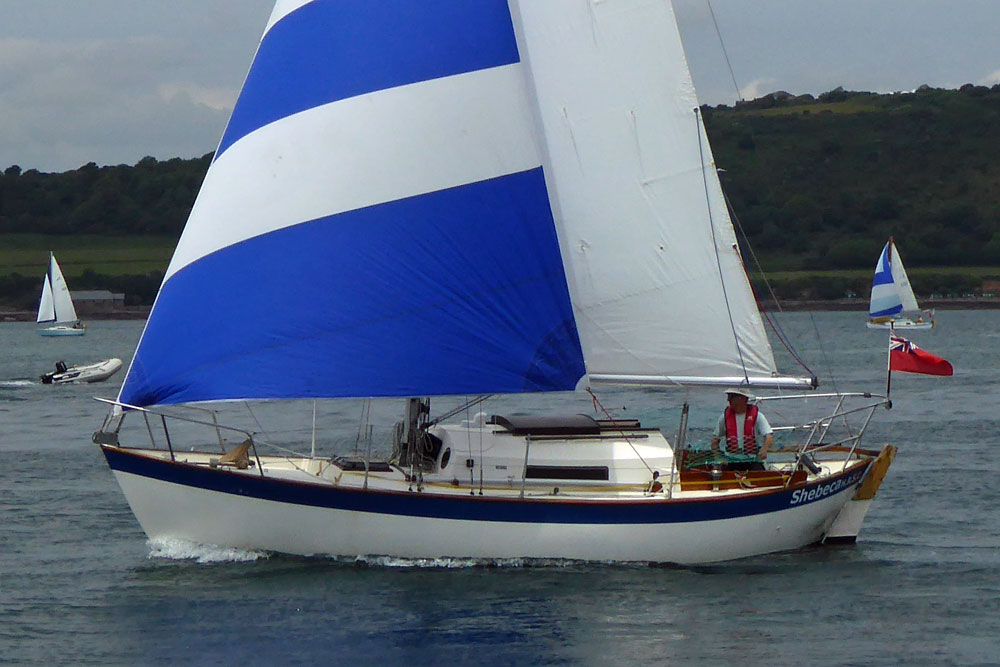
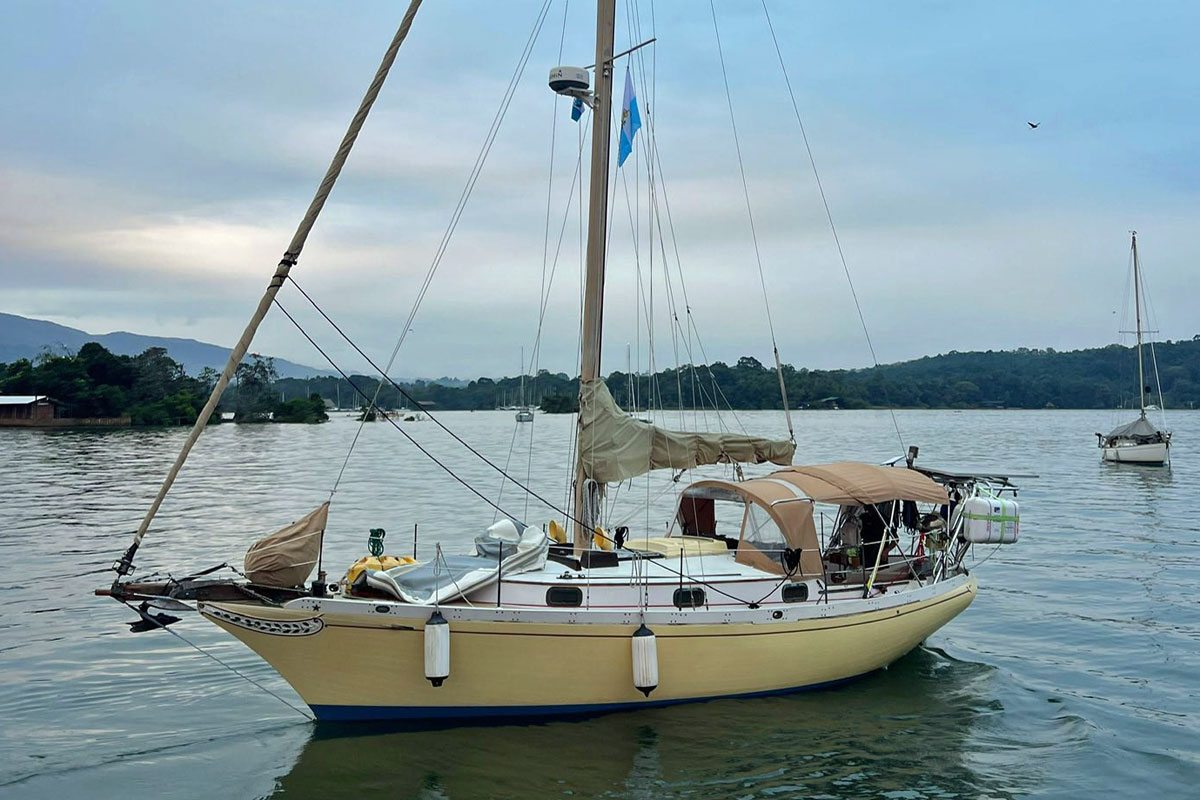
 'Zoe', a Franchini 41S
Table of Contents
- Franchini 41S at a Glance
- Design & Construction
- Published Specification: The Franchini 41S Blueprint
- Sail Areas & Rig Dimensions
- Performance Analysis: Understanding the Design Ratios
- How the Franchini 41S Sails
- Bluewater Capability: Strengths & Trade-Offs
- Configuration, Layout & Cruising Characteristics
- Who This Boat Is Best For
- The Buyer’s Checklist: Common Problem Areas
- Summing Up
- Frequently Asked Questions (FAQs)
The Franchini 41S at a Glance
- Type: Performance cruiser
- Designer: Roberto Starkel
- Builder: Cantiere Navale Franchini (Riccione, Italy)
- Production Years: Early 1990s to late 1990s
- Rig: Masthead cutter
- Best for: Offshore cruising, Mediterranean passagemaking, liveaboard couples
- Strengths: Cutter flexibility, strong construction, comfortable motion, deep cockpit, excellent engine access
- Trade-offs: Ageing systems, teak deck maintenance, limited production numbers, Italian‑centric parts knowledge
Design & Construction
The Franchini 41S sits at the intersection of Italian craftsmanship and performance‑oriented naval architecture. Starkel’s hull gives the boat its sailing pedigree: moderate beam, a relatively short waterline, a deep fin with a torpedo‑bulb keel and a semi‑skeg rudder that balances directional stability with responsive helm feel.
Construction is GRP with Kevlar reinforcement in high‑load areas. The topsides are a sandwich laminate, improving stiffness and insulation, while the deck is foam‑cored GRP. Internally, the structural grid and furniture are bonded into the hull, giving a reassuringly rigid feel under sail.
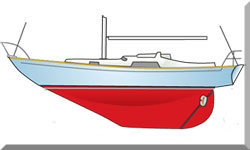
The keel is cast iron with an elliptical bulb, contributing to a ballast ratio around 36%. The rudder sits on a partial skeg, offering more protection than a spade while remaining more agile than a full skeg.
Cabin windows on this generation of Franchini yachts are typically bonded into moulded recesses rather than through‑bolted frames. This reduces leak paths but requires proper surface preparation when re‑bonding. Chainplates are laminated into the structure rather than bolted externally, which improves load distribution but demands careful inspection for hidden corrosion or laminate cracking.
Several versions exist:
- 41 L (earlier layout)
- 41 S (sportier deck & interior)
- 41/43 S CC (centre‑cockpit variant using the same hull)
Draft varies slightly between boats: the original test boat carried around 1.95 m (6'5"), while some later examples show deeper keels around 2.30 m (7'6").
Published Specification: The Franchini 41S Blueprint
| Specification | Value |
|---|---|
| LOA | 42'4" (12.90 m) |
| LWL | 32'3" (9.82 m) |
| Beam | 13'1" (4.00 m) |
| Draft (standard) | 6'5" (1.95 m) |
| Draft (deep option) | Approx. 7'6" (2.30 m) |
| Displacement | 22,670 lb (10,280 kg) |
| Ballast | 8,113 lb (3,680 kg) |
| Rig Type | Masthead cutter |
| Hull Material | GRP with Kevlar reinforcement |
| Production Dates | 1992–late 1990s |
Sail Areas & Rig Dimensions
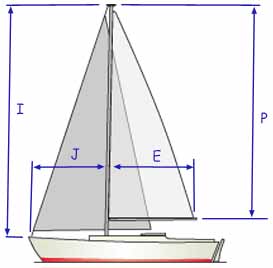 Rig dimensions
The Franchini 41S carries a masthead cutter rig, typically with:
- A full‑size genoa on the forestay
- A smaller staysail on the inner forestay
- A conventional slab‑reefed mainsail
Typical rig dimensions (from Starkel 41 data, which matches the Franchini hull):
| Rig Parameter | Value |
|---|---|
| I | 54'10" (16.71 m) |
| J | 15'6" (4.73 m) |
| P | 56'11" (17.35 m) |
| E | 18'6" (5.65 m) |
| Mainsail area | Approx. 620 ftsuperscript2 (57.6 msuperscript2) |
| Genoa (masthead) | Approx. 540 ftsuperscript2 (50 msuperscript2) |
| Staysail | Approx. 200–250 ftsuperscript2 (18–23 msuperscript2) |
Total working sail area is typically around 108 m2 (1,163 ft2).
Performance Analysis: Understanding the Design Ratios
Using the published displacement, ballast, sail area and waterline length:
| Ratio | Value | Interpretation |
|---|---|---|
| SA/D | ≈ 23.3 | Powerful sail plan; cutter rig improves control when reefed. |
| D/L | ≈ 302 | Moderate‑to‑heavy; prioritises comfort & load‑carrying. |
| B/D | ≈ 36% | Respectable stiffness; stands up to canvas. |
| CSF | ≈ 1.86 | Below offshore threshold; geometry suits ocean passages. |
| Comfort Ratio | ≈ 32 | Calmer motion than lighter 40‑footers. |
For more on this topic, you might want to take a look at Understanding Boat Performance & Design Ratios...
How the Franchini 41S Sails
The cutter rig transforms the 41S from a powerful cruiser into a flexible offshore platform. Upwind, the boat tracks well, with the semi‑skeg rudder giving a steady feel. The staysail becomes invaluable once the breeze rises above the mid‑teens: it keeps the centre of effort low and reduces heel without sacrificing drive.
The boat prefers sailing slightly cracked off rather than pinching. With the genoa and staysail combination, balance improves markedly, and the helm stays light.
Downwind, the displacement and hull form give a composed motion. The cutter rig allows multiple combinations: genoa poled out, staysail stabilising the slot, or a cruising asymmetric for broader angles.
Short‑handed, the cutter layout is a major advantage. The staysail is smaller, easier to handle and keeps the boat under control when the genoa is rolled away. Reefing early is still wise given the SA/D, but the rig makes the process calmer and more predictable.
Bluewater Capability: Strengths & Trade-Offs
The Franchini 41S has the hallmarks of a capable offshore cruiser:
- Semi‑skeg rudder
- Deep bulb keel
- Cutter rig flexibility
- Strong GRP/Kevlar construction
- Comfort ratio above 30
- CSF below 2.0
Tankage is respectable, with around 450 litres of fuel and 400 litres of water. The central fuel tank helps maintain trim.
Deck safety is good, with clear side decks and a deep cockpit. The stern sun deck is pleasant in harbour but needs sensible jackstay routing offshore.
The main trade‑offs relate to age: teak decks, bonded windows, laminated chainplates and original systems all require careful inspection.
Configuration, Layout & Cruising Characteristics
The interior is classic Italian craftsmanship: teak joinery, warm lighting and a practical offshore layout. The aft owner’s cabin is a highlight, with a centreline berth and generous storage. The forward cabin and saloon are well proportioned, and the galley works at sea thanks to sensible handholds and a secure layout.
Engine access is excellent, with multiple panels allowing proper maintenance. Storage is good for a 41‑footer, though not as cavernous as modern wide‑beam designs.
As a liveaboard platform, the 41S suits couples who value a traditional, secure interior over apartment‑style layouts.
Who This Boat Is Best For
Good fit for:
- Offshore cruisers wanting cutter flexibility
- Liveaboard couples
- Sailors who value seakindliness & proper engineering
- Mediterranean & Atlantic passagemakers
Less ideal for:
- Charter operators needing maximum cabin count
- Racing‑focused crews
- Buyers unwilling to tackle teak, rigging or systems upgrades
The Buyer’s Checklist: Common Problem Areas
- Teak decks: worn caulking, loose plugs, wet core
- Inner forestay chainplate: inspect laminate & tensioning hardware
- Staysail furler: bearings, drum, UV cover
- Bonded windows: crazing, UV damage, failed sealant
- Laminated chainplates: hidden corrosion, crackin
- Keel joint: movement, rust streaking, grounding history
- Semi‑skeg & rudder: moisture ingress, bearing play
- Electrical systems: original wiring, switch panels, ad‑hoc owner mods
- Engine: cooling system, mounts, insulation condition
A full refit can reach mid‑five‑figure $ territory, but once completed, the boat becomes a robust long‑term cruiser.
Could this be your ideal cruising boat?
It may well be, but before going any further, it might be worth taking a look at my eBook 'How to Avoid Buying the Wrong Sailboat'...
Summing Up
The Franchini 41S is a masthead cutter‑rigged performance cruiser with genuine offshore capability. Its design ratios, hull form and rig flexibility give it a composed motion, good balance and respectable passage speeds. Age‑related issues exist, but they are manageable with a realistic refit plan. For sailors who appreciate seakindliness, cutter versatility and Italian craftsmanship, a well‑sorted 41S is a rewarding and characterful cruising yacht.

This article was written by Dick McClary, RYA Yachtmaster and author of the RYA publications 'Offshore Sailing' and 'Fishing Afloat', member of The Yachting Journalists Association (YJA), erstwhile member of the Ocean Cruising Club (OCC) and owner/administrator of 'Liveaboard Sailboats for Sale'.

Frequently Asked Questions (FAQs)
How does the cutter rig improve heavy‑weather handling on the 41S?
How does the cutter rig improve heavy‑weather handling on the 41S?
The staysail keeps the centre of effort low, reduces heel and maintains balance when the genoa is rolled away.
Is the laminated chainplate system reliable?
Is the laminated chainplate system reliable?
Yes, but it must be inspected carefully for hidden corrosion or laminate cracking, especially on older boats.
How does the 41S compare to modern wide‑beam cruisers offshore?
How does the 41S compare to modern wide‑beam cruisers offshore?
It offers better motion comfort and balance, but less interior volume.
What is the typical refit priority list for a newly purchased 41S?
What is the typical refit priority list for a newly purchased 41S?
Teak decks, rigging, windows, electrical systems and rudder bearings.
Does the cutter rig make the Franchini 41S harder to handle for a small crew?
Does the cutter rig make the Franchini 41S harder to handle for a small crew?
Not at all. In practice, the cutter layout makes the boat easier for a couple to manage. The smaller staysail is simple to sheet and reef, the centre of effort stays low when the genoa is rolled away, and the boat remains balanced without demanding heavy winch work. Many owners consider the cutter configuration one of the 41S’s strongest features for short‑handed offshore sailing.
Recent Articles


-
Mystery 35 Review: Specs, Performance & Buying Guide
Aug 29, 26 09:42 AM
An in-depth review of the Mystery 35 sailboat. Read technical specs, design ratios, sail performance, and common buyer inspection areas. -
Beneteau First 405 Review: Specs, Performance & Buyer’s Guide
Aug 26, 26 03:58 AM
Detailed Beneteau First 405 review covering specs, performance, bluewater capability, layouts and buyer’s checklist. -
Moody S38 Review: Specs, Ratios & Buyer’s Guide
Aug 12, 26 04:22 AM
In‑depth Moody S38 review covering specs, performance, design ratios, layout, strengths, trade‑offs & buyer inspection points.