- Home
- Cruising Yachts 45' to 50'
- Franchini 47 Italian Bluewater Cruising Yacht Review
Franchini 47 Sailboat
Specs, Performance Analysis & Cruising Characteristics
Key Takeaways: The Franchini 47 is a medium‑heavy displacement Italian cruiser with a conservative hull, generous tankage and a comfortable motion. Sail area is healthy without being aggressive, and the ballast ratio is reassuring for offshore work. It suits experienced sailors planning extended cruising who want a well‑finished interior, good stowage and a boat that looks after its crew when the forecast turns ugly. The trade‑offs are weight, draft and systems complexity: it is not a light‑air flyer, and older examples will usually need a meaningful refit budget for rigging, systems and cosmetics.
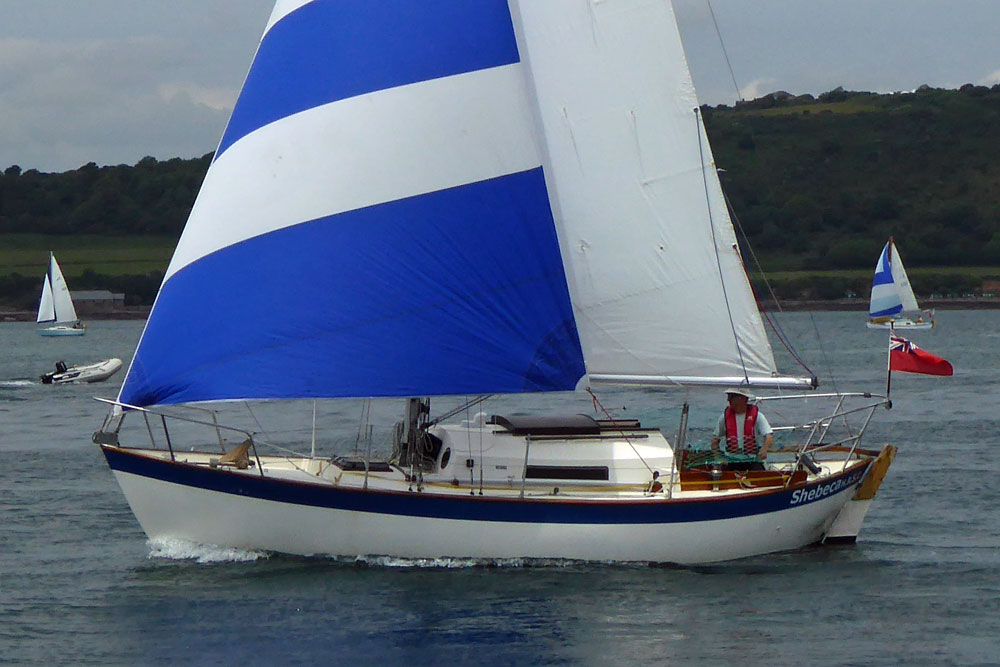
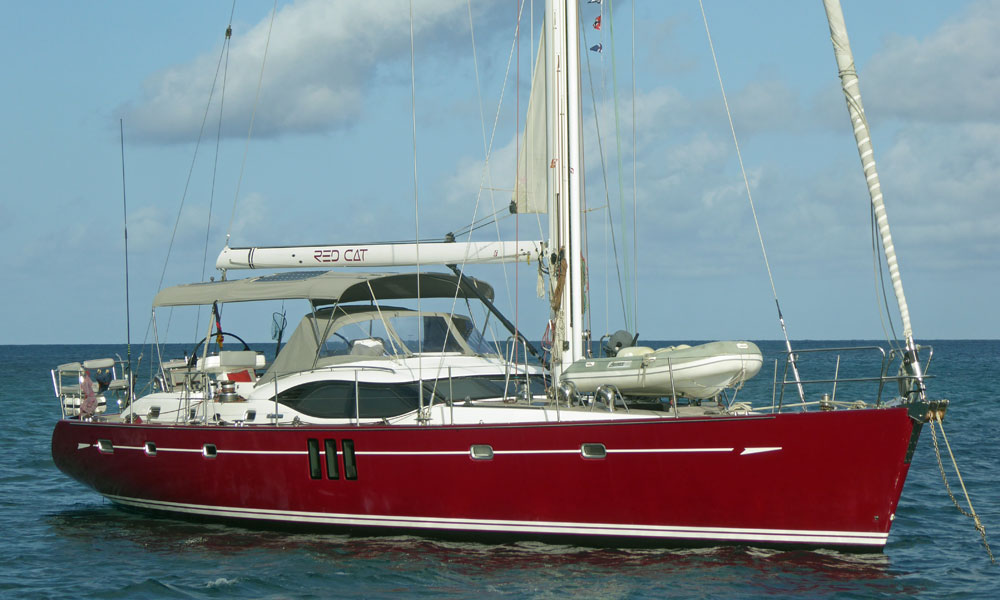
 'Carpe Diem', a centre-cockpit version of the Franchini 47
Table of Contents
- The Franchini 47 at a Glance
- Design & Construction
- Published Specification: The Franchini 47 Blueprint
- Sail Areas & Rig Dimensions
- Performance Analysis: Understanding the Design Ratios
- How the Franchini 47 Sails
- Bluewater Capability: Strengths & Trade-Offs
- Configuration, Layout & Cruising Characteristics
- Who This Boat Is Best For
- The Buyer’s Checklist: Common Problem Areas
- Summing Up
- Frequently Asked Questions (FAQs)
The Franchini 47 at a Glance
- Type: Bluewater cruising monohull (semi‑custom Italian cruiser)
- Designer: Studio Starkel (47 S & 47 L variants)
- Builder: Franchini Yachts, Italy
- Production Years: Late 1990s to early 2000s for 47 S / 47 L; earlier Atlantide 47 motorsailer variant in the 1980s
- Rig: Masthead sloop, deck‑stepped aluminium spar, single wheel; some centre‑cockpit (47 S CC) and aft‑cockpit (47 L) versions
- Best for: Offshore cruising, Mediterranean and Atlantic circuits, liveaboard couples or families wanting three cabins and good tankage
- Strengths: Strong structure, comfortable motion, sensible sail plan, warm interior, serious tankage and systems
- Trade‑offs: Weight and draft, age‑related refit costs, limited production numbers, Italian‑specific fittings that can be harder to source
Design & Construction
Franchini Yachts built its reputation on solid, carefully finished cruising boats rather than chasing the latest fashion. The 47 continues that theme with a moderate hull form, fine bow sections and a reasonably broad stern that stops short of the wide‑body look seen on many modern 47‑footers. The 47 L is the aft‑cockpit version, while the 47 S appears in centre‑cockpit and aft‑cockpit forms, sharing the same underlying hull but with different deck and interior arrangements.
The hull is glass‑reinforced plastic with local Kevlar reinforcements in high‑load areas on some boats, laid up with attention to weight and stiffness rather than minimum‑cost production. A substantial internal grid carries keel and rig loads into the hull shell. The keel is a deep fin with a fairly high aspect ratio and a large ballast bulb, giving a ballast figure around 5,030kg (11,095lb) on a displacement of about 14,500kg (31,967lb) for the 47 L. Draft is roughly 6'4" (1.93m) on that version, while some 47 S centre‑cockpit boats are quoted around 2.0‑2.5m depending on keel configuration.
The rudder is a semi‑balanced spade hung on a substantial stock, with good protection from the keel and skeg geometry on some examples. Steering is via a single wheel with straightforward cable or rod linkages. Chainplates are typically internal, laminated into the hull structure and tied into the main grid rather than being simple bolted strap fittings. This is structurally sound but makes inspection more involved, as you are looking for cracking or moisture around the laminate rather than obvious rust streaks.
Cabin windows are generally bonded rather than through‑bolted framed units, which gives a clean exterior look and reduces potential leak paths but does mean that age‑related adhesive failure or crazing in the acrylic needs careful checking. Decks are GRP, often with teak overlays in the cockpit and on the side decks. Teak thickness and bedding are worth inspecting closely, as replacement is a significant cost item on any 47‑footer.
Variants include the Atlantide 47 motorsailer, which shares the Franchini name but is a different, heavier concept with a more powerful engine and a slightly different hull. For the pure sailing 47s, you will see 47 S centre‑cockpit, 47 S aft‑cockpit and 47 L aft‑cockpit layouts, all with three‑cabin, two‑ or three‑head arrangements aimed at long‑distance cruising rather than charter density.
Published Specification: The Franchini 47 Blueprint
The figures below use the Franchini 47 L as a baseline, as it has the most consistently published data. Other 47 S variants are very close, with minor differences in displacement and draft.
| Specification | Value |
|---|---|
| LOA | 48'8" (14.83m) |
| LWL | 38'3" (11.65m) |
| Beam | 13'6" (4.12m) |
| Draft (max) | 6'4" (1.93m) |
| Draft (min) | Not applicable (fixed fin keel) |
| Displacement | 31,967lb (14,500kg) |
| Ballast | 11,095lb (5,030kg) |
| Rig Type | Masthead sloop |
| Hull Material | GRP with local reinforcements |
| Production Dates | Approx. late 1990s–early 2000s (47 S / 47 L) |
Sail Areas & Rig Dimensions
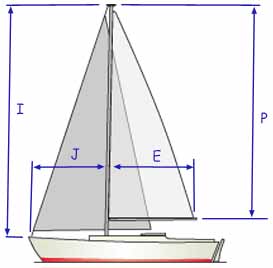 Rig dimensions
Published sail areas for the Franchini 47 L are:
- Mainsail: 50.00m² (538ft²)
- Genoa: 58.00m² (624ft²)
- Total working sail area (main + genoa): 108.00m² (1,162ft²)
Rig dimensions I, J, P and E are not consistently published in primary technical sources for the Franchini 47 family. Broker listings and secondary data sheets either omit them or provide conflicting figures, so your guess is as good as mine. For buyers, the practical takeaway is that the rig is a conventional masthead sloop with a non‑extreme aspect ratio, using a full‑batten or semi‑batten main and a large overlapping genoa on most boats. Any serious survey or sailmaker engagement will quickly produce accurate I, J, P and E figures from direct measurement.
Performance Analysis: Understanding the Design Ratios
Using the 47 L baseline figures (LOA 48'8", LWL 38'3", beam 13'6", displacement 31,967lb, sail area 1,162fts², ballast 11,095lb), we can look at the key ratios.
| Ratio | Value | What It Implies |
|---|---|---|
| Sail Area / Displacement (SA/D) | ≈ 18.5 | Healthy sail power for a cruiser; good in moderate breeze without being over‑canvassed. |
| Displacement / Length (D/L) | ≈ 255–260 | Medium‑heavy; prioritises comfort and carrying capacity over light‑air speed. |
| Ballast / Displacement (B/D) | ≈ 35% | Reassuring righting power for offshore work, without being excessively stiff. |
| Capsize Screening Formula (CSF) | ≈ 1.7 | Below the 2.0 threshold often used for ocean work; favourable for knockdown resistance. |
| Brewer Motion Comfort Ratio | ≈ 37 | Comfortable motion; less snappy than lighter boats, kinder to crew on long passages. |
These numbers place the Franchini 47 firmly in the serious cruising camp. It is not a heavy ketch of old, but it is far from a stripped‑out racer. Owners can expect respectable passage speeds when sailed properly, with a motion that most crews will find forgiving over days at sea.
For more on this topic, you might want to take a look at Understanding Boat Performance & Design Ratios...
How the Franchini 47 Sails
Upwind, the Franchini 47 rewards a firm hand on sail trim. With a decent SA/D and a reasonably deep fin keel, it will point well enough for a cruiser, but it is not a narrow‑hulled performance boat. In 12–18 knots true, a full main and genoa will drive the boat happily at 6.5–7.5 knots, with a comfortable heel angle and a solid feel on the helm. As the breeze builds, the first reef goes in early more for comfort than necessity, and the boat settles into a steady groove.
Downwind, the moderate hull and good directional stability make for relaxed sailing. With a poled‑out genoa or a cruising chute, the boat tracks well and does not suffer from the twitchiness of lighter designs. The semi‑balanced spade rudder gives a positive, predictable helm, and the boat is generally well‑behaved in quartering seas.
Short‑handed behaviour is one of the Franchini 47’s strengths. Most examples are set up with in‑mast or lazy‑jack mains, electric windlass, and sensible line leads back to the cockpit. A couple can reef, tack and gybe without drama, provided winches and clutches are in good order. The weight does mean that the boat carries momentum, so planning manoeuvres early in tight harbours is wise.
Motion is where the numbers and owner reports line up: the boat has a gentle, slightly slow roll and pitch compared with lighter 47‑footers. In a sloppy cross‑sea, that can feel a little more movement than a very heavy ketch, but overall it is a kind platform for long days offshore.
Bluewater Capability: Strengths & Trade-Offs
For offshore work, the Franchini 47 ticks many of the boxes experienced sailors look for. Displacement, ballast ratio and hull form all support ocean passages. Tankage is generous: typical figures around 620–650 litres of fuel and 800–850 litres of fresh water give good autonomy, especially when combined with a watermaker on many refitted boats.
Deck safety is helped by high guardrails, solid pulpits and sensible handholds along the coachroof. Teak‑covered side decks provide grip when dry, though older teak can become slippery when worn, so inspection and maintenance are important. Cockpits—whether centre or aft—are deep enough to feel secure, with good coaming height and protected companionways.
Load‑carrying is a strong point. The D/L ratio and internal volume mean the boat can absorb cruising gear, spares and stores without becoming overwhelmed. That said, like any cruiser, it will suffer if overloaded high and aft, so careful weight distribution remains important.
The trade‑offs are mainly around age and systems. Many Franchini 47s now carry generators, air‑conditioning, bow thrusters and complex electronics. All of these are welcome at anchor but add maintenance overhead. For bluewater work, a buyer should be prepared either to maintain these systems to a high standard or to simplify the boat back towards a leaner configuration.
Configuration, Layout & Cruising Characteristics
Cockpit configuration depends on the variant. The 47 S centre‑cockpit version gives a high, protected cockpit with excellent visibility and a large aft owner’s cabin, while the 47 L aft‑cockpit layout offers a more conventional cockpit with good connection to the stern and slightly sportier lines. Both share a practical, seamanlike feel rather than a pure charter layout.
Deck ergonomics are generally good: wide side decks, solid handrails and sensible sheet leads. Winches are sized appropriately for the loads, and the mainsheet system is robust. Anchor handling is straightforward, with a powerful windlass and a substantial bow roller.
Below, the interior is classic Italian: warm woods, curved joinery and a feeling of quality. The standard layout is three cabins and two or three heads, with a generous saloon, a proper forward cabin and a large aft owner’s cabin on many boats. The galley is usually along the port side or in a U‑shape, with good worktop space, deep sinks and proper refrigeration. Stowage is excellent, with lockers and bins designed for long‑term cruising rather than weekend bags.
For liveaboard use, the Franchini 47 works well. Ventilation is decent, especially on boats with dorade vents and opening hatches, and many examples have been fitted with heating and air‑conditioning. The combination of tankage, stowage and interior comfort makes it a realistic floating home for a couple or small family.
Who This Boat Is Best For
Good fit for:
- Experienced cruising couples who want a comfortable, strongly built 47‑footer for extended passages.
- Families planning Atlantic circuits or Mediterranean seasons, with three cabins and good privacy.
- Owners who value craftsmanship and are willing to invest in maintenance, rather than chasing the lowest possible running costs.
Less ideal for:
- Sailors looking for light‑air performance and regatta results; this is a cruiser first.
- Buyers who want minimal systems and ultra‑simple maintenance; many boats carry generators, air‑conditioning and complex electronics.
- Shallow‑water sailors with strict draft limits, as most Franchini 47s draw around 6'4" (1.93m) or more.
The Buyer’s Checklist: Common Problem Areas
For a prospective buyer, a structured inspection list is essential. Typical focus points include:
- Teak decks: Check thickness, bedding and fastenings. Worn or loose teak is expensive to replace and can hide deck core issues.
- Bonded windows and hatches: Look for crazing, leaks and adhesive failure. Re‑bonding or replacement is manageable but not trivial.
- Chainplate zones: Because chainplates are laminated into the structure, inspect for cracking, moisture staining or distortion around the internal laminate rather than just the visible metal.
- Keel and rudder: Survey for grounding damage, keel bolt condition and rudder bearing wear. Any play in the rudder stock needs attention.
- Rigging and mast fittings: Many boats are now over 20 years old. Standing rigging, tangs and mast fittings should be treated as a major refit item if not recently replaced.
- Engine and drive train: Yanmar engines around 110–125hp are common. Check hours, service history, mounts, shaft alignment and exhaust systems.
- Systems and electrics: Generators, air‑conditioning, watermakers and complex electronics are all positives, but each adds potential failure points. Budget for bringing them up to your standard.
Typical refit costs for a 47‑footer of this age can easily run into the tens of thousands of pounds if you tackle rigging, sails, electronics and cosmetics together. The upside is that once refreshed, the underlying structure and design give you a very capable platform.
Could this be your ideal cruising boat?
It may well be, but before going any further, it might be worth taking a look at my eBook 'How to Avoid Buying the Wrong Sailboat'...
Summing Up
Taken as a whole, the Franchini 47 is a serious cruising yacht for owners who care more about how a boat behaves in a seaway than how it looks on social media. The design ratios point to a comfortable, medium‑heavy cruiser with enough sail power to make good passages, and the construction quality from Franchini Yachts has stood up well when maintained properly.
The main limitations are age‑related: any boat of this vintage will need careful inspection of decks, windows, rigging and systems, and buyers should be realistic about refit budgets. If you go into the purchase with clear eyes and a good surveyor, the Franchini 47 can offer a rewarding mix of Italian craftsmanship, offshore capability and liveaboard comfort that is hard to find in mass‑produced alternatives.

Written by Dick McClary, cruising sailor and yachting journalist, publisher of Sailboat‑Cruising.com and admin of the Liveaboard Sailboats for Sale community.

Frequently Asked Questions (FAQs)
How does the Franchini 47 compare to mainstream 47‑foot production cruisers for ocean passages?
How does the Franchini 47 compare to mainstream 47‑foot production cruisers for ocean passages?
It is generally heavier, stiffer and more comfortable in a seaway, with better tankage and interior finish, but will not match the light‑air speed of some lighter production designs.
What refit items should be prioritised on a newly purchased Franchini 47?
What refit items should be prioritised on a newly purchased Franchini 47?
Standing rigging, sails, deck leaks, teak condition and key systems (engine, generator, electrics) should be at the top of the list, followed by cosmetic upgrades.
Is the Franchini 47 suitable for short‑handed ocean passages?
Is the Franchini 47 suitable for short‑handed ocean passages?
Yes, provided the sail handling systems are in good order and the crew are comfortable managing a 47‑footer. Many owners sail as couples with sensible reefing plans.
How does the centre‑cockpit 47 S CC feel compared with the aft‑cockpit 47 L?
How does the centre‑cockpit 47 S CC feel compared with the aft‑cockpit 47 L?
The centre‑cockpit version offers a more protected cockpit and a larger aft cabin, while the aft‑cockpit 47 L feels slightly sportier and gives better connection to the stern and waterline.
Are parts and specialist knowledge for Franchini 47s easy to find?
Are parts and specialist knowledge for Franchini 47s easy to find?
Generic systems (Yanmar engines, standard rigging, electronics) are straightforward, but some Italian‑specific fittings and interior components may require sourcing through specialist brokers or Italian contacts.
Recent Articles


-
Mystery 35 Review: Specs, Performance & Buying Guide
Aug 29, 26 09:42 AM
An in-depth review of the Mystery 35 sailboat. Read technical specs, design ratios, sail performance, and common buyer inspection areas. -
Beneteau First 405 Review: Specs, Performance & Buyer’s Guide
Aug 26, 26 03:58 AM
Detailed Beneteau First 405 review covering specs, performance, bluewater capability, layouts and buyer’s checklist. -
Moody S38 Review: Specs, Ratios & Buyer’s Guide
Aug 12, 26 04:22 AM
In‑depth Moody S38 review covering specs, performance, design ratios, layout, strengths, trade‑offs & buyer inspection points.