- Home
- Cruising Yachts 40' to 45'
- Gulfstar 44 Sailboat Specs
The Gulfstar 44 Sailboat
Specs, Performance Analysis & Cruising Characteristics
Key Takeaways: The Gulfstar 44 family sits in that interesting space between traditional heavy cruisers and more performance‑oriented production boats. Early Sailmaster versions lean towards motorsailer territory, with a powerful engine and a big deckhouse, while the later sailing‑focused 44s and Mk II hulls are more capable passagemakers with respectable sail area and a comfortable motion. You get a solid fibreglass hull, generous tankage, and a genuinely liveable interior, but you also inherit the realities of a 1970s–1980s American build: ageing systems, potential deck core issues, and the need to budget for rig, engine, and tank work. For the right buyer, they can be honest, long‑legged cruising homes rather than show ponies.
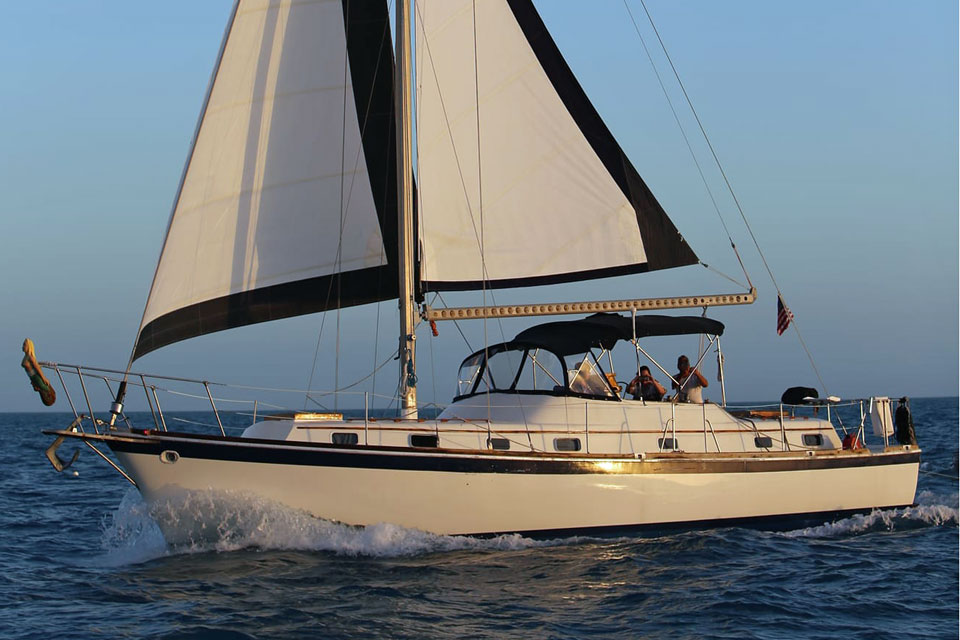 Gulfstar 44
Table of Contents
- The Gulfstar 44 at a Glance
- Design & Construction
- Published Specification: The Gulfstar 44 Blueprint
- Sail Areas & Rig Dimensions
- Performance Analysis: Understanding the Design Ratios
- How the Gulfstar 44 Sails
- Bluewater Capability: Strengths & Trade-Offs
- Configuration, Layout & Cruising Characteristics
- Who This Boat Is Best For
- The Buyer’s Checklist: Common Problem Areas
- Summing Up
- Frequently Asked Questions (FAQs)
The Gulfstar 44 at a Glance
- Type: Bluewater‑leaning cruising yacht (with motorsailer‑style Sailmaster variant)
- Designer: Vince Lazzara and Gulfstar in‑house design team (evolving hulls over the production run)
- Builder: Gulfstar Yachts, Florida, USA
- Production years: Roughly mid‑1970s to mid‑1980s, with early Sailmaster 44s, then cruising 44s, then improved Mk II‑type sailing hulls
- Rig: Primarily masthead ketch and masthead sloop; centre cockpit layout most common
- Best for: Couples or small crews wanting a comfortable liveaboard and long‑range cruiser with traditional, heavy‑displacement manners
- Strengths: Solid hull lay‑up, generous interior volume, good tankage, forgiving motion, centre cockpit security, and a large engine in Sailmaster versions
- Trade‑offs: Age‑related refit needs, moderate sail area on some variants, not a light‑air flyer, and variable build quality between early and later Gulfstar eras
Design & Construction
Hull, deck and structure
The Gulfstar 44 hull is a solid fibreglass laminate with substantial thickness in the keel and bilge areas. These boats were built before aggressive weight‑saving became the norm, so there is plenty of glass in the hull and a generally conservative structural approach. The keel is an integral fin with encapsulated ballast on the later sailing versions, while some earlier boats have a fuller underbody that edges towards a long‑fin or cutaway‑forefoot feel. All Gulfstar 44 variants use a skeg‑hung rudder, which suits long‑distance cruising and offers good protection.
Decks are typically fibreglass with plywood or balsa coring in way of the flat panels. Over time, poorly bedded hardware and old sealant can allow water into the core, so moisture readings around chainplates, stanchion bases, and the mast partners are a key survey item. The cockpit is usually centre‑cockpit, with a deep well and high coamings that feel secure offshore.
Windows, chainplates and fittings
Most Gulfstar 44s were delivered with aluminium‑framed opening ports and fixed windows set into the cabin sides. These are generally through‑bolted or mechanically fastened rather than simply bonded, although many boats have had replacement acrylic or glass panels bonded into the original frames or into new frames during refits. On an older Gulfstar, you should assume that at least some of the original sealant is past its best and budget for re‑bedding or replacement if it has not already been done.
Chainplates are typically stainless flat bar bolted to substantial bulkheads or structural knees inside the hull, rather than being fully encapsulated or laminated into the hull moulding. This is good news from an inspection and replacement point of view, but it does mean that leaks around the chainplate penetrations can lead to hidden moisture damage in the surrounding timber. Pulling interior trim to inspect the chainplate zones is strongly recommended.
Variants and configurations
Across the production run you will encounter several distinct Gulfstar 44 flavours:
- Gulfstar 44 Sailmaster: A centre‑cockpit ketch with a raised deckhouse, large engine, and a layout that leans towards motorsailer use. Often shallower draft and more emphasis on motoring comfort than sailing performance.
- Gulfstar 44 cruising versions (often just “Gulfstar 44”): Centre‑cockpit cruising yacht, usually ketch‑rigged but sometimes sloop‑rigged, with a more sailing‑oriented hull than the Sailmaster. Still heavy and comfortable, but with better upwind ability and more balanced sail plan.
- Later / Mk II‑type Gulfstar 44: Improved sailing hull with a cleaner fin keel and skeg‑hung rudder, more refined interior, and generally better sailing performance. These are the most attractive to buyers focused on bluewater sailing rather than motorsailing.
Draft varies slightly between versions, but you can expect something in the region of 5'6" (1.68 m) for the standard fin keel, with some Sailmaster or shoal‑draft variants a little shallower.
Published Specification: The Gulfstar 44 Blueprint
The figures below represent a typical sailing‑oriented Gulfstar 44 (not the heaviest Sailmaster variant), using commonly cited numbers from specification sheets and broker listings. Individual boats will vary slightly.
| Specification | Value |
|---|---|
| LOA | 44'0" (13.41 m) |
| LWL | 35'0" (10.67 m) |
| Beam | 13'2" (4.01 m) |
| Draft (typical fin keel) | 5'6" (1.68 m) |
| Displacement (approx) | 30,000 lb (13,608 kg) |
| Ballast (approx) | 12,000 lb (5,443 kg) |
| Rig type | Masthead ketch or masthead sloop |
| Hull material | Solid GRP (fibreglass) |
| Production dates | Mid‑1970s to mid‑1980s (various 44 variants) |
Sail Areas & Rig Dimensions
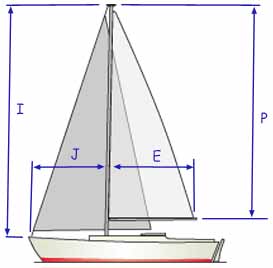 Rig dimensions
Again, figures vary slightly between rigs and years, but a typical masthead sloop or ketch mainmast on a Gulfstar 44 will be in this ballpark:
- I: 54'0" (16.46 m)
- J: 17'0" (5.18 m)
- P: 47'0" (14.33 m)
- E: 15'0" (4.57 m)
From these, approximate sail areas are:
Mainsail area (P × E ÷ 2): About 355 ft2 (≈ 33.0 m2)
Foretriangle / working headsail (I × J ÷ 2): About 460 ft2 (≈ 42.7 m2)
Total working sail area (main plus working headsail): Around 815 ft2 (≈ 75.7 m2)
Many owners carry larger genoas and downwind sails, so real‑world sail area can be higher, but these numbers are a reasonable baseline for design ratio calculations.
Performance Analysis: Understanding the Design Ratios
Using the approximate figures above (displacement 30,000 lb, LWL 35'0", beam 13'2", ballast 12,000 lb, sail area 815 ftsuperscript2), we can derive the key design ratios.
| Ratio | Approx value | What it suggests |
|---|---|---|
| Sail Area / Displacement (SA/D) | ≈ 13.5 | Moderate; prioritises comfort and load‑carrying over light‑air performance. |
| Displacement / Length (D/L) | ≈ 310 | Firmly heavy‑displacement; steady motion and good carrying capacity. |
| Ballast / Displacement (B/D) | ≈ 40% | Reassuring ballast ratio for offshore work, assuming sound keel structure. |
| Capsize Screening Formula (CSF) | ≈ 1.7 | Below the commonly cited 2.0 threshold; favourable for offshore use. |
| Brewer Motion Comfort Ratio | ≈ 39–40 | High comfort; slow, gentle motion rather than quick, snappy responses. |
Interpreting the ratios in practice
SA/D around the mid‑teens means the Gulfstar 44 is not a light‑air rocket, especially when loaded for cruising, but it will keep moving steadily once the breeze is up. Owners who sail in lighter wind areas often fit slightly larger headsails or keep the bottom very clean.
D/L over 300 places the boat firmly in the heavy‑displacement camp. This supports good load‑carrying and a comfortable ride in a seaway, at the cost of acceleration and light‑air speed.
B/D around 40% is encouraging for offshore work, provided the keel structure and ballast encapsulation are sound. It suggests good stiffness once the boat is pressed, though the relatively high topsides and deckhouse on some variants add windage.
CSF around 1.7 is comfortably below the often‑quoted 2.0 offshore cut‑off, indicating a hull form that is less prone to violent capsize behaviour than lighter, beamier designs.
A Brewer comfort ratio close to 40 is high. This is the territory of traditional heavy cruisers that roll slowly and feel reassuring in a swell, even if they are not the quickest boats on the passage log.
For more on this topic, you might want to take a look at Understanding Boat Performance & Design Ratios...
How the Gulfstar 44 Sails
Under sail, the Gulfstar 44 behaves like what it is: a heavy, cruising‑oriented yacht with a moderate sail plan. Upwind, the later sailing hulls will tack through a reasonable angle and make steady progress in 12–15 knots of true wind, especially with a clean bottom and a decent headsail. The Sailmaster variants, with their fuller hulls and more windage, are a little more reluctant upwind and feel happiest cracked off a few degrees.
The helm is generally light to moderate, with the skeg‑hung rudder giving a reassuring sense of grip. In stronger winds, reefing early keeps the boat on its feet and the helm balanced. The ketch rig, where fitted, makes it easy to shorten down in stages and keep the centre of effort low and near the middle of the boat, which is helpful for short‑handed crews.
Downwind, the Gulfstar 44 is steady rather than lively. The longish waterline and displacement help it track well, and the ketch rig offers flexible options for running and broad reaching with reduced rolling if you use a mizzen and small headsail combination. In a quartering sea, the skeg‑hung rudder and weight give a predictable, if slightly ponderous, feel.
Short‑handed, the boat rewards a conservative sail plan and good sail handling systems. Many owners fit in‑mast or in‑boom furling, electric windlasses, and upgraded self‑tailing winches to make life easier. The boat will not punish you with sudden accelerations or violent broaches, but it will remind you if you carry too much canvas in rising wind.
Bluewater Capability: Strengths & Trade-Offs
The Gulfstar 44’s numbers and hull form sit comfortably in the bluewater camp. The heavy displacement, decent ballast ratio, and skeg‑hung rudder all support offshore ambitions. The centre cockpit offers a secure working area with good protection, and the high freeboard keeps a lot of water off the decks.
Tankage is generally generous for the era, with substantial fuel and water capacity, especially on Sailmaster versions. This suits long passages and extended time away from marinas. The trade‑off is that all that tankage, plus cruising gear, pushes displacement up, which reinforces the need for realistic expectations about passage speeds.
Deck safety is generally good, with wide side decks and solid toerails, though the original stanchion bases and lifelines may be well past their prime by now. Many boats have had aftermarket arch structures, davits, and solar arrays added; these can be excellent for cruising but should be inspected carefully for structural integrity and weight distribution.
The main bluewater caveats are age‑related rather than conceptual. You are dealing with a forty‑plus‑year‑old yacht, so the real question is not whether the design can cross oceans, but whether this particular example has been maintained and upgraded to a standard that makes that sensible.
Configuration, Layout & Cruising Characteristics
The centre cockpit layout is a major part of the Gulfstar 44’s appeal. It allows for a generous aft cabin with a proper double berth, good storage, and a degree of privacy that many couples appreciate when living aboard. The walk‑through passage to the aft cabin often houses the engine space, fuel tanks, and a workbench or storage lockers.
Forward, you typically find a saloon with an L‑shaped settee and table to one side and a straight settee to the other, plus a forward cabin with a V‑berth. Some layouts include a second heads compartment forward, which is handy for guests. The galley is usually down and to one side, near the companionway, with ample counter space and room for serious provisioning.
Headroom is generous throughout, and the beam carries well into the ends, which makes the interior feel spacious. Ventilation depends heavily on the condition and number of opening ports and hatches; many owners have upgraded these over the years.
For liveaboard use, the Gulfstar 44 scores highly: there is space for proper mattresses, real storage, and systems such as watermakers, diesel heaters, and large battery banks. The trade‑off is that all of this adds weight, so a realistic cruising fit‑out should be planned with an eye on keeping the boat reasonably trim.
Who This Boat Is Best For
Good fit for:
- Couples or small crews planning extended cruising or full‑time liveaboard life who value comfort, storage, and a forgiving motion over outright speed.
- Sailors who like traditional heavy cruisers but want a centre cockpit layout and a more modern interior than older full‑keel designs.
- Owners comfortable with refit projects, who are willing to invest in systems, rigging, and cosmetic upgrades to bring a solid hull up to modern standards.
Less ideal for:
- Racers or performance‑oriented sailors who want high average speeds and sparkling light‑air performance.
- Buyers unwilling to take on refit work, especially around decks, tanks, wiring, and original engines.
- Very shallow‑water cruisers who need extreme shoal draft; the standard keel is moderate rather than ultra‑shoal.
The Buyer’s Checklist: Common Problem Areas
When viewing a Gulfstar 44, arrive with a structured checklist. Typical age‑related issues include:
- Deck core moisture: Check around chainplates, stanchion bases, deck fittings, and the mast partners. Look for soft spots, stress cracks, and signs of previous repairs.
- Chainplate leaks and bulkhead damage: Inspect the chainplates where they pass through the deck and where they attach inside. Look for staining, rot, or delamination in the surrounding timber.
- Original fuel and water tanks: Many boats still carry original mild steel or aluminium tanks. Check for signs of corrosion, weeping seams, or fuel contamination. Tank replacement can be a major job.
- Engine age and installation: Early boats may still have original Perkins or similar diesels. A well‑maintained engine can be fine, but budget realistically for overhaul or repower if hours and history are unknown.
- Standing rigging and spars: If the rigging is more than ten to fifteen years old, assume replacement is due. Inspect mast steps, spreader roots, and any signs of corrosion at fittings.
- Windows and ports: Look for crazed acrylic, leaking frames, and staining on interior liners. Re‑bedding or replacement is common and should be factored into costs.
- Electrical system: Many Gulfstar 44s have had multiple generations of wiring added. A tidy, labelled, modern distribution panel is a good sign; a rat’s nest of unlabelled wires is not.
- Interior joinery and veneers: Check for water damage around windows, chainplates, and deck fittings. Veneer lifting or dark staining can indicate long‑term leaks.
Typical refit cost themes
Exact numbers depend on region and standard, but as a rough sense of scale:
- Full standing rigging replacement and mast work can easily run into the mid‑four‑figure to low‑five‑figure range.
- Engine repower, if needed, is a five‑figure project once you include ancillary systems.
- Tank replacement, especially if tanks are buried under floors or behind bulkheads, can be labour‑intensive.
- Deck core repairs vary wildly, from modest localised fixes to major surgery.
A Gulfstar 44 that has already had these big‑ticket items addressed by a previous owner is often far better value than a cheaper, tired example that still needs everything.
Could this be your ideal cruising boat?
It may well be, but before going any further, it might be worth taking a look at my eBook 'How to Avoid Buying the Wrong Sailboat'...
Summing Up
The Gulfstar 44, in its various guises, is not a fashion‑driven yacht. It is a solid, heavy cruising platform with a centre cockpit layout, a comfortable motion, and enough tankage and storage to support serious time afloat. The design ratios confirm what the eye suggests: this is a heavy‑displacement cruiser with moderate sail area, good ballast, and a hull form that favours seakindliness and load‑carrying over pace.
For a buyer who understands that and is prepared to tackle (or pay for) the inevitable refit work on a forty‑plus‑year‑old yacht, a well‑sorted Gulfstar 44 can be a capable bluewater home. The key is to focus less on cosmetics and more on structure, tanks, rig, and systems. Get those right, and the boat will look after you when the forecast turns grey and the miles start to add up.

This article was written by Dick McClary, RYA Yachtmaster and author of the RYA publications 'Offshore Sailing' and 'Fishing Afloat', member of The Yachting Journalists Association (YJA), erstwhile member of the Ocean Cruising Club (OCC) and owner/administrator of 'Liveaboard Sailboats for Sale'.

Frequently Asked Questions (FAQs)
1. Is the Gulfstar 44 a genuine bluewater boat or just a coastal cruiser?
1. Is the Gulfstar 44 a genuine bluewater boat or just a coastal cruiser?
In design terms, the Gulfstar 44 sits comfortably in the bluewater category: heavy displacement, decent ballast ratio, skeg‑hung rudder, and a centre cockpit that feels secure offshore. The limiting factor is not the concept but the condition of each individual boat. A well‑maintained, structurally sound example with updated rigging and systems is entirely suitable for ocean passages.
2. How fast is a Gulfstar 44 on passage?
2. How fast is a Gulfstar 44 on passage?
You should plan on conservative average speeds of around 5.5–6.5 knots on passage, depending on loading and conditions. In a steady breeze on a reaching course, the boat will sit happily in the sixes, but it will not match lighter, more modern designs in light airs or downwind surfing conditions. The reward is a calmer motion and less fatigue for the crew.
3. Are the Sailmaster versions poor sailors compared to the later 44s?
3. Are the Sailmaster versions poor sailors compared to the later 44s?
The Sailmaster 44 is more motorsailer‑oriented, with a fuller hull and more windage, so it will not point as high or accelerate as quickly as the later sailing‑focused 44s and Mk II hulls. That said, many owners report that, with a sensible sail plan and a clean bottom, a Sailmaster will still make respectable passages. If sailing performance is a priority, the later cruising 44s are the better choice.
4. What are the biggest structural red flags on a Gulfstar 44?
4. What are the biggest structural red flags on a Gulfstar 44?
The main structural red flags are widespread wet deck core, serious chainplate or bulkhead damage, and badly corroded tanks that are difficult to access. Any signs of keel movement, rudder play, or hull‑to‑deck joint issues also warrant careful investigation. A thorough survey by someone familiar with older American GRP cruisers is essential.
5. How suitable is the Gulfstar 44 as a liveaboard?
5. How suitable is the Gulfstar 44 as a liveaboard?
The Gulfstar 44 is very well suited to liveaboard use. The centre cockpit layout allows for a proper aft cabin, the saloon is spacious, and there is ample storage for long‑term cruising gear. With sensible upgrades to insulation, heating, ventilation, and electrical systems, it can be a comfortable floating home in a wide range of climates.
Recent Articles


-
Mystery 35 Review: Specs, Performance & Buying Guide
Aug 29, 26 09:42 AM
An in-depth review of the Mystery 35 sailboat. Read technical specs, design ratios, sail performance, and common buyer inspection areas. -
Beneteau First 405 Review: Specs, Performance & Buyer’s Guide
Aug 26, 26 03:58 AM
Detailed Beneteau First 405 review covering specs, performance, bluewater capability, layouts and buyer’s checklist. -
Moody S38 Review: Specs, Ratios & Buyer’s Guide
Aug 12, 26 04:22 AM
In‑depth Moody S38 review covering specs, performance, design ratios, layout, strengths, trade‑offs & buyer inspection points.