- Home
- Sailboats 50'-55'
- Jeanneau Sun Odyssey 54 DS Review
Jeanneau Sun Odyssey 54 DS Review: Specs, Ratios and Bluewater Fit
Key Takeaways: The Jeanneau Sun Odyssey 54 DS is a large production deck‑saloon cruiser that blends a relatively slippery hull with big‑boat volume and comfort. It is not an ultra‑heavy, traditional bluewater tank, but a modern masthead sloop with moderate displacement, a powerful rig and a very liveable interior. In the right hands it will make fast passages, carry a reasonable cruising payload and look after a crew offshore, provided systems are maintained and loads are managed sensibly. It suits experienced coastal and offshore sailors who value comfort, space and passage‑making speed over extreme ruggedness, and who are prepared to invest in ongoing systems care and some targeted upgrades.
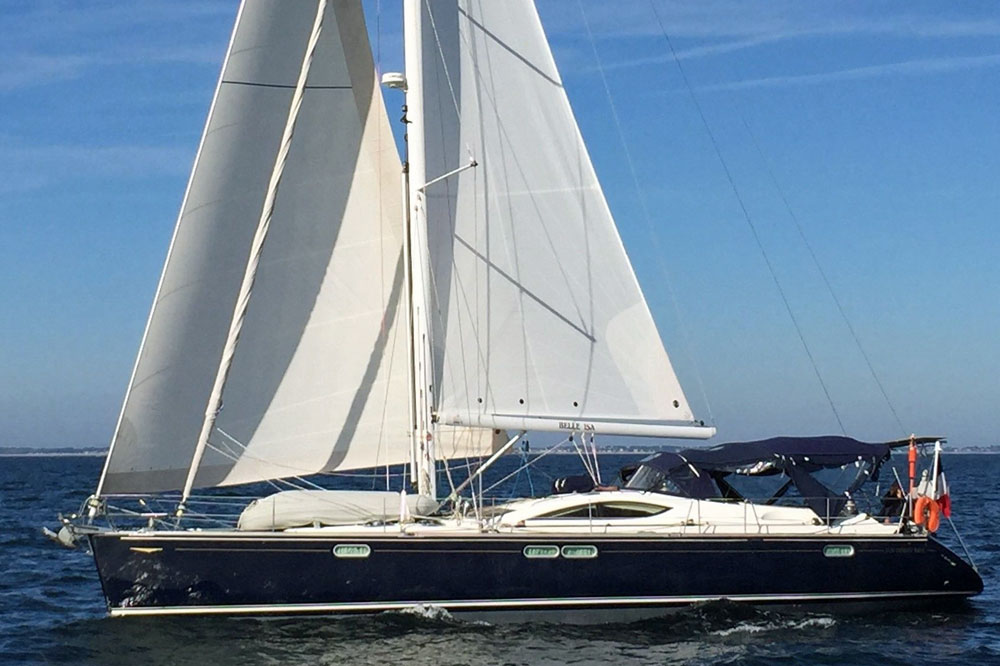 A custom cutter-rigged version of the Jeanneau Sun Odyssey 54DS
Table of Contents
- The Jeanneau Sun Odyssey 54 DS at a Glance
- Design & Construction
- Published Specification: The Jeanneau Sun Odyssey 54 DS Blueprint
- Sail Areas & Rig Dimensions
- Performance Analysis: Understanding the Design Ratios
- How the Jeanneau Sun Odyssey 54 DS Sails
- Bluewater Capability: Strengths & Trade-Offs
- Configuration, Layout & Cruising Characteristics
- Who This Boat Is Best For
- The Buyer’s Checklist: Common Problem Areas
- Summing Up
- Frequently Asked Questions (FAQs)
The Jeanneau Sun Odyssey 54 DS at a Glance
- Type: Large production deck‑saloon cruising monohull
- Designer: Jacques Fauroux (naval architecture) & Vittorio Garroni (styling)
- Builder: Jeanneau, Les Herbiers, France
- Production Years: First hull around 2002; main production from 2004 through late 2000s
- Rig: Masthead sloop, keel‑stepped aluminium spar, swept spreaders
- Best for: Long‑range coastal & ocean cruising, liveaboard use, charter and private ownership
- Strengths: Big interior volume, strong internal hull grid, respectable performance, CE Category A rating, proven on ocean passages
- Trade‑offs: Higher windage, moderate rather than extreme ballast ratio, complex systems, heat build‑up through large windows in hot climates
Design & Construction
The Sun Odyssey 54 DS was conceived as Jeanneau’s flagship in the early 2000s, sitting at the top of the “Deck Saloon” line. Fauroux’s underwater shape is relatively fine forward with a long waterline and a broad stern, while Garroni’s coachroof gives the boat its distinctive “cat‑eye” side windows and raised saloon. The aim was to combine a performance‑leaning hull with the volume needed for modern systems, tankage and comfortable accommodation.
Hull, deck & structural grid
- Hull: Solid hand‑laid fibreglass (GRP) with an internal framework of floors and stringers, glassed to the hull and tied into bulkheads and furniture modules. This creates a stiff structure and spreads keel and rig loads effectively.
- Deck: Fibreglass with balsa core for stiffness and sound insulation, with an inward‑turning hull flange and mechanically/chemically bonded hull‑deck joint. Teak decks were an option on many boats.
- Keel: Fin with bulb, externally fastened cast‑iron keel with stainless keel bolts. Standard draft is around 6'6"–7'6" (1.98–2.29 m) depending on version.
- Rudder: Spade rudder with fibreglass blade and stainless stock, supported in a moulded tube with self‑aligning bearings.
Windows, chainplates & versions
- Cabin windows: The signature deck‑saloon side windows are large, moulded units bonded into the coachroof rather than traditional small, through‑bolted portlights. This gives excellent light but means the bond and sealant condition is a key inspection point on older boats.
- Chainplates: Jeanneau typically uses stainless chainplates integrated into the hull structure, tied into the internal grid and bulkheads rather than simple external strap chainplates. On the 54 DS they are laminated into the structure with load paths carried through floors and bulkheads, so inspection involves access to the interior attachment points and surrounding laminate rather than just deck penetrations.
Variants & layouts
- Keel options: Standard fin with bulb, approx. 6'6" draft. There's also a deep‑draft version drawing around 7'6", often referred to as the “tall rig/deep keel” configuration.
- Rig: Single masthead sloop; no factory ketch or cutter versions, though some owners add inner forestays for heavy‑weather sails.
- Cockpit: Aft cockpit with twin wheels and a large social area forward of the wheels; no centre‑cockpit variant.
- Interior layouts: Multiple cabin/heads configurations (typically three to five cabins, three to four heads) aimed at both private owners and charter fleets. The Moorings 54/554 charter variant shares the same basic hull and deck with different interior detailing.
Stability & certification
The Sun Odyssey 54 DS is CE certified in Design Category A (“Ocean”), meaning it is intended for offshore use in winds above Beaufort 8 and significant wave heights above 4 m, subject to good seamanship. A published STIX number is not readily available in public databases, but the Category A rating and the calculated capsize and comfort ratios give a reasonable picture of its offshore suitability.
Published Specification: The Jeanneau Sun Odyssey 54 DS Blueprint
| Specification | Value |
|---|---|
| LOA | 54'11" (16.74 m) |
| LWL | 48'6" (14.78 m) |
| Beam | 15'11" (4.85 m) |
| Draft (standard) | 6'6" (1.98 m) |
| Draft (deep keel) | 7'6"–7'7" (2.29–2.31 m) |
| Displacement | 37,479 lb (17,000 kg) |
| Ballast | 11,023 lb (5,000 kg) approx. |
| Rig Type | Masthead sloop |
| Hull Material | Fibreglass (GRP), solid hull with cored deck |
| Production Dates | Early 2000s launch; main production from 2004 through late 2000s |
Sail Areas & Rig Dimensions
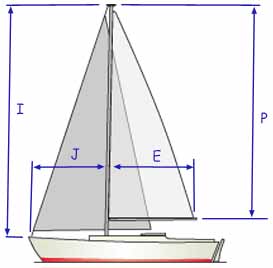 Rig dimensions
The standard masthead sloop rig is generous without being extreme, with a large overlapping headsail and a substantial mainsail.
| Rig & Sail Data | Value |
|---|---|
| I | 66.08' (20.14 m) |
| J | 19.35' (5.90 m) |
| P | 59.92' (18.26 m) |
| E | 19.19' (5.85 m) |
| Mainsail area | ≈575 ft² (≈53.4 m²) |
| Foretriangle (100% headsail) | ≈639 ft² (≈59.4 m²) |
| Total working sail area | ≈1,214 ft² (≈112.8 m²) |
Performance Analysis: Understanding the Design Ratios
Using the published displacement, waterline length, ballast and sail area, the key ratios fall as follows:
| Ratio | Value | Practical Meaning |
|---|---|---|
| Sail Area / Displacement (SA/D) | ≈17.4 | Moderate‑power rig: good passage speeds, needs some breeze but not under‑canvassed. |
| Displacement / Length (D/L) | ≈147 | Moderate displacement: faster than heavy cruisers, still with some “big‑boat” feel. |
| Ballast / Displacement (B/D) | ≈29% | Reasonable stiffness for a beamy cruiser; not an extreme high‑ballast design. |
| Capsize Screening Formula (CSF) | ≈1.9 | Below 2.0, generally acceptable for offshore work with good seamanship. |
| Brewer Motion Comfort Ratio | ≈28.8 | Comfortable motion for a production cruiser; less “soft” than very heavy designs. |
These values place the 54 DS firmly in the “performance cruiser” band: more powerful and livelier than many traditional heavy bluewater boats, yet with ratios that remain within accepted offshore norms.
For more on this topic, you might want to take a look at Understanding Boat Performance & Design Ratios...
How the Jeanneau Sun Odyssey 54 DS Sails
Under sail, the 54 DS feels smaller than its length suggests once you are settled on the helm. The long waterline and moderate D/L help it slip along at 8–9 knots on a reach in typical trade‑wind conditions, and it will sit near its theoretical hull speed of around 9.3 knots without feeling pressed.
- Upwind: With the deep keel and tall rig, the boat points reasonably well, though it is not a narrow‑hulled racer. In moderate airs, a full‑size genoa and a flat main give a steady groove. In stronger winds, reefing early keeps heel under control and reduces leeway.
- Downwind: The standard white sails are not huge, so many owners carry asymmetric spinnakers or cruising chutes to keep speeds up off the wind. Without extra canvas, expect to motor‑sail more than on a high‑aspect rig.
- Helm feel: Twin wheels give good visibility and a relaxed stance. The spade rudder provides positive grip, and the boat tracks well on a reach. Feedback is lighter than on a heavy long‑keeler but not vague.
- Reefing & short‑handed behaviour: Many boats are fitted with in‑mast furling mainsails and electric winches. This makes reefing straightforward for a couple, but demands careful maintenance of furling gear and electrics. With sensible sail plans and a good autopilot, the boat is manageable by two experienced sailors on passage.
- Motion: The comfort ratio suggests a reasonably gentle motion. In practice, the wide stern can lead to some lively behaviour in short, steep seas, but the overall displacement and hull form keep the motion acceptable for most crews used to modern cruisers.
Bluewater Capability: Strengths & Trade-Offs
The Sun Odyssey 54 DS has crossed oceans in private and charter hands, and its CE Category A rating, structural grid and ratios support that use. It is, however, a modern production cruiser rather than a semi‑custom expedition yacht, so expectations should be aligned accordingly.
- Offshore suitability: The CSF below 2.0, Category A certification and proven passage history make it a viable bluewater platform for experienced crews.
- Tankage: Typical fuel capacity is around 108 US gal (410 L), with water in the 238–246 US gal (900–930 L) range, depending on configuration. This is adequate but not huge for long‑range motoring, so many owners add flexible tanks or carry jerrycans.
- Load‑carrying: The hull has good volume and will accept the usual cruising payload of gear, spares and provisions. As with any performance‑leaning cruiser, over‑loading will blunt performance and increase slamming, so keeping weight low and central pays dividends.
- Seakindliness: The motion is comfortable enough for most crews, but those coming from heavier, narrower‑beamed boats (Oyster, Amel, etc.) will notice a livelier feel. Careful sail trim and reefing keep the boat on its feet.
- Deck safety: The large cockpit is excellent at anchor but needs thought offshore: good harness points, cockpit covers and clear line runs are important to keep the working area safe in bad weather.
Configuration, Layout & Cruising Characteristics
The 54 DS was designed to be lived on, and that shows the moment you step below.
- Cockpit & deck ergonomics: Twin wheels, a central table and wide benches make the cockpit a social hub. Winches are generally placed so that primary sail handling happens aft, leaving the forward cockpit clear for guests. Side decks are reasonably wide, with a modest bulwark and handrails along the coachroof.
- Interior: The raised saloon, large bonded windows and high freeboard combine to create a bright, airy main cabin with good outward visibility. In hot climates those same windows can make the interior warm, so air‑conditioning or effective shading is highly desirable.
- Galley: Typically laid out along one side with plenty of counter space, large refrigeration and domestic‑style appliances on many boats. This suits liveaboard life but adds to the electrical load, so battery capacity and charging systems need to be up to the task.
- Berths & heads: Layouts vary, but expect generous double cabins fore and aft, often with en‑suite heads, plus additional cabins in charter versions. Headroom is around 6'7" (2.0 m) in many areas, which makes the boat feel like a floating flat rather than a cramped cruiser.
- Storage: There is good locker space, though some is taken up by systems and tanks. For long‑term liveaboard use, owners often add dedicated spares storage and rationalise what is kept on board to avoid clutter.
Overall, the 54 DS is very much a “liveaboard‑friendly” design: comfortable at anchor, easy to heat or cool with the right systems, and pleasant to spend long periods aboard.
Who This Boat Is Best For
Good fit for:
- Experienced coastal & offshore cruisers who want a large, comfortable platform that still sails well.
- Liveaboard couples or families who value space, light and domestic‑style amenities.
- Charter operators or ex‑charter buyers looking for a proven hull with a modern interior, provided they are ready to invest in refit work.
Less ideal for:
- Sailors seeking extreme ruggedness and very high ballast ratios for high‑latitude work or heavy‑weather chasing.
- Minimalist cruisers who prefer simple systems and very low maintenance; the 54 DS has complex electrics, plumbing and comfort systems.
- Owners restricted to very shallow waters, unless they specifically choose a shoal‑draft version and accept the performance trade‑offs.
The Buyer’s Checklist: Common Problem Areas
For a buyer looking at a Jeanneau Sun Odyssey 54 DS, especially a mid‑2000s boat, the following areas deserve close attention:
- Bonded deck‑saloon windows: Check for crazing, leaks, failed sealant and any signs of movement or cracking around the window recesses.
- Teak decks (if fitted): Inspect for worn caulking, loose plugs and fasteners, and any signs of water ingress into the balsa core beneath.
- Chainplate & rig attachments: Access interior chainplate zones, looking for stress cracking, corrosion or moisture staining. Have a rigger check standing rigging age, terminals and mast step condition.
- Keel bolts & keel‑hull interface: Look for rust streaks, movement at the keel joint and any grounding history.
- Rudder & steering: Check for play in bearings, smooth movement, and any signs of water ingress into the rudder blade.
- Systems load & electrical: Assess battery bank size, charging (alternator, shore, solar, generator), and the condition of electric winches, furlers and air‑conditioning units.
- Plumbing & tankage: Inspect water and fuel tanks for corrosion or contamination, and check all hoses, seacocks and pumps.
- Engine & drive: Typical Yanmar installations are robust, but hours, maintenance history, exhaust elbow condition and shaft/prop wear all matter.
- Charter history: Moorings 54/554 and other ex‑charter boats may have higher wear; a thorough survey and realistic refit budget are essential.
Could this be your ideal cruising boat?
It may well be, but before going any further, it might be worth taking a look at my eBook 'How to Avoid Buying the Wrong Sailboat'...
Summing Up
The Jeanneau Sun Odyssey 54 DS sits in an interesting niche. It is big enough to feel like a proper ship, yet still a production boat with all the advantages and compromises that implies. The design ratios show a moderate, performance‑leaning cruiser: SA/D in the high‑teens, D/L in the mid‑hundreds, ballast around 29 per cent and a capsize number under 2.0. That combination delivers respectable passage speeds and acceptable offshore behaviour without turning the boat into a heavy plodder.
Construction is better than some critics assume when they hear “production boat”: a solid GRP hull, a proper internal grid, laminated bulkheads and a well‑engineered keel and rudder. The deck‑saloon windows, cored deck and complex systems are the main areas where age and neglect can bite, so a buyer’s focus should be on structural integrity, rig and systems rather than on the basic hull itself.
For the right owner—someone who understands modern systems, is willing to invest in maintenance and refit, and wants a comfortable, fast cruiser rather than a spartan expedition boat—the 54 DS can be a very satisfying long‑range home. It rewards good seamanship and thoughtful upgrades, and it has already proved itself on many ocean routes.
 DMcC
DMcCThis article was written by Dick McClary, RYA Yachtmaster and author of the RYA publications 'Offshore Sailing' and 'Fishing Afloat', member of The Yachting Journalists Association (YJA), and erstwhile member of the Ocean Cruising Club (OCC).

Frequently Asked Questions (FAQs)
Does the Jeanneau Sun Odyssey 54 DS have enough stability for ocean crossings?
Does the Jeanneau Sun Odyssey 54 DS have enough stability for ocean crossings?
Yes, for typical trade‑wind routes and sensible weather routing. The CSF is around 1.9, the boat carries a Category A rating, and many examples have completed Atlantic and other ocean passages. It is not an extreme high‑ballast design, so good reefing discipline and load management remain important.
How does the 54 DS compare to heavier bluewater cruisers like Oyster or Amel models?
How does the 54 DS compare to heavier bluewater cruisers like Oyster or Amel models?
Compared with heavier, more traditional bluewater boats, the 54 DS is lighter, faster and more spacious inside, but offers slightly less ultimate stiffness and ruggedness. It suits sailors who prioritise comfort, speed and modern systems over the “armoured” feel of some semi‑custom bluewater yachts.
Is the standard tankage sufficient for extended passagemaking?
Is the standard tankage sufficient for extended passagemaking?
Fuel capacity around 108 US gal (410 L) is adequate for typical passages with a mix of sailing and motoring, but not generous for prolonged motoring in calms. Many owners add extra fuel capacity or carry jerrycans. Water capacity around 238–246 US gal (900–930 L) is workable, especially with a watermaker.
What are the most common refit priorities on a mid‑2000s Sun Odyssey 54 DS?
What are the most common refit priorities on a mid‑2000s Sun Odyssey 54 DS?
Key refit items usually include standing rigging, sails, electronics, air‑conditioning, battery and charging systems, and any deck‑saloon window or teak deck issues. On ex‑charter boats, interior cosmetics and plumbing can also need attention.
Is the boat manageable by a couple on long passages?
Is the boat manageable by a couple on long passages?
Yes, provided the couple are experienced and the boat is set up sensibly. In‑mast furling, electric winches and a good autopilot make sail handling straightforward, but they add complexity. A couple used to modern systems will find the 54 DS a comfortable, workable platform for long‑distance cruising.
Recent Articles


-
Should I Buy a Boat? Four Questions to Answer Before You Commit
Oct 02, 26 04:40 AM
Thinking "Should I buy a boat?" This guide helps you decide, with key considerations from cost & maintenance to your personal sailing aspirations. -
Offshore Internet with Starlink: Hardware, Plans, and Setup Guidance
Oct 01, 26 01:15 PM
A clear, practical guide to choosing the right Starlink hardware and plan for offshore cruising. Learn what to buy, how to install it, and how to manage power afloat. -
Offshore Liferaft Guide: Choosing, Stowing and Servicing One
Oct 01, 26 06:28 AM
Choosing an offshore liferaft? Learn what ISO 9650 Group A means, where to stow it, how often to service it and what to pack in the grab bag.