- Home
- Electronics & Instrumentation
- Marine EPIRB
- PLB Performance When Partially Submerged
Does a PLB Work if Only Your Head and Shoulders Are Above Water?
Key Takeaways: Yes, a PLB will still work if you’re in the water with only your head and shoulders showing, but only when the antenna is fully upright and clear of the surface. The moment the antenna dips into the water, signal strength drops sharply and satellite acquisition can slow right down. A buoyant pouch, a raised antenna mount or a unit with AIS can make a real difference to how quickly you’re found.
Table of Contents
- How a PLB Actually Sends Its Distress Signal
- Why Antenna Height Matters So Much in the Water
- The Effect of Waves, Spray and Body Position
- Buoyant Pouches and Raised Antenna Mounts
- AIS Enabled PLBs and Why They Help
- Practical Tips for Using a PLB in the Water
- Common Misunderstandings About PLB Performance
- Summing Up
How a PLB Actually Sends Its Distress Signal
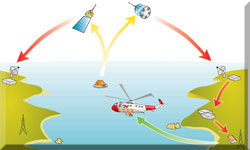
A PLB relies on a clear line of sight to the sky to reach the satellite network. The 406 MHz signal is designed to punch through poor weather, but it still needs the antenna to be upright and out of the water. The GPS receiver inside the unit also needs a reasonable view of the sky to lock onto enough satellites to calculate an accurate position.
When you’re floating low in the water, your body and the sea surface create a natural barrier. The PLB will still transmit, but the quality of that transmission depends on how much of the antenna is exposed.
Why Antenna Height Matters So Much in the Water
Water absorbs radio signals. Even partial submersion can weaken the transmission enough to slow the alert reaching the satellite network. The difference between an antenna held high and one brushing the surface can be minutes, and minutes matter in a man overboard situation.
A fully upright antenna also helps the GPS receiver maintain a stable fix. If the unit is constantly dipping into the water, the GPS lock can be intermittent, which affects the accuracy of the position sent to the rescue authorities.
The Effect of Waves, Spray and Body Position
Most sailors imagine activating a PLB in calm water. The reality is usually very different. Waves lift and drop you, spray hits your face and your arms tire quickly. All of this affects how well you can keep the antenna clear.
Three factors make the biggest difference:
- Wave height: Bigger waves mean more time with the antenna underwater.
- Your buoyancy: A lifejacket that keeps you high in the water helps enormously.
- Your grip: Holding a PLB above the surface for long periods is tiring, especially in cold water.
This is why accessories that support the unit or raise the antenna are worth considering.
Buoyant Pouches and Raised Antenna Mounts
Some PLBs are designed to float on their own, but many need a buoyant pouch. These pouches do more than keep the unit on the surface. They help hold the PLB upright, which keeps the antenna clear for longer and reduces the need to grip it tightly.
Raised antenna mounts, found on a few newer models, lift the radiating element higher above the water. Even a few extra centimetres can improve the signal path to the satellites.
AIS Enabled PLBs and Why They Help
AIS enabled PLBs add a second layer of protection. While the 406 MHz signal alerts the rescue authorities, the AIS transmission is picked up by nearby vessels. In a man overboard situation, this local detection can be the quickest route to recovery.
AIS transmissions are short range, but they don’t rely on satellites. If your crew are searching for you, an AIS enabled PLB gives them a live target on their plotter, even if the 406 MHz signal is struggling due to antenna submersion.
Practical Tips for Using a PLB in the Water
A few simple habits can make a big difference:
- Mount the PLB on your lifejacket so it sits high when inflated.
- Choose a buoyant pouch if your unit doesn’t float.
- Practise deploying the antenna so you can do it quickly under stress.
- Keep the antenna as upright as possible, even if you need to rest your arm occasionally.
- Consider an AIS enabled model if you sail offshore or shorthanded.
Common Misunderstandings About PLB Performance
A few points often cause confusion:
- A PLB doesn’t need to float to work, but floating helps keep the antenna clear.
- The GPS fix isn’t instant. It can take several minutes, and longer if the antenna is dipping into the water.
- The 406 MHz signal is powerful, but it’s still affected by submersion.
- A PLB isn’t a substitute for a lifejacket, which keeps you high enough in the water for the unit to function properly.
Need help choosing the right PLB for you and your crew?
Click here to see my recommended models and comparison table.
Summing Up
A PLB will work when you’re floating with only your head and shoulders showing, but only if the antenna stays upright and clear of the water. The more consistently you can keep it exposed, the faster the satellites will lock on and the sooner help will be on its way. Accessories that support the unit, and AIS capability for local detection, can make a meaningful difference in a man overboard situation.

This article was written by Dick McClary, RYA Yachtmaster and author of the RYA publications 'Offshore Sailing' and 'Fishing Afloat', member of The Yachting Journalists Association (YJA), erstwhile member of the Ocean Cruising Club (OCC) and owner/administrator of 'Liveaboard Sailboats for Sale'.

Recent Articles


-
Mystery 35 Review: Specs, Performance & Buying Guide
Aug 29, 26 09:42 AM
An in-depth review of the Mystery 35 sailboat. Read technical specs, design ratios, sail performance, and common buyer inspection areas. -
Beneteau First 405 Review: Specs, Performance & Buyer’s Guide
Aug 26, 26 03:58 AM
Detailed Beneteau First 405 review covering specs, performance, bluewater capability, layouts and buyer’s checklist. -
Moody S38 Review: Specs, Ratios & Buyer’s Guide
Aug 12, 26 04:22 AM
In‑depth Moody S38 review covering specs, performance, design ratios, layout, strengths, trade‑offs & buyer inspection points.