- Home
- Cruising Yachts 35' to 40'
- Beneteau First 36.7 Performance‑cruiser Buyer’s Review and Technical Evaluation
Beneteau First 36.7 Sailboat
Specs, Performance Analysis & Cruising Characteristics
Key Takeaways: The Beneteau First 36.7 is a Farr-designed performance cruiser-racer that sits squarely between a club-racing weapon and family coastal cruiser. It offers lively upwind pace, rewarding helm feel and a cockpit clearly biased towards racing, yet the three-cabin layout and workable galley make week-long cruising perfectly realistic. Deep and shoal keels, a powerful fractional rig and moderate displacement give good light-air performance and solid heavy-weather behaviour, provided sail choice and reefing are managed sensibly.
The trade-offs are typical of a performance production boat: lighter construction, modest tankage, limited stowage for long-term liveaboard use and a need to inspect keel structure, rig and deck carefully on older examples. It suits sailors who enjoy sailing the boat actively and value speed and responsiveness more than armchair comfort.
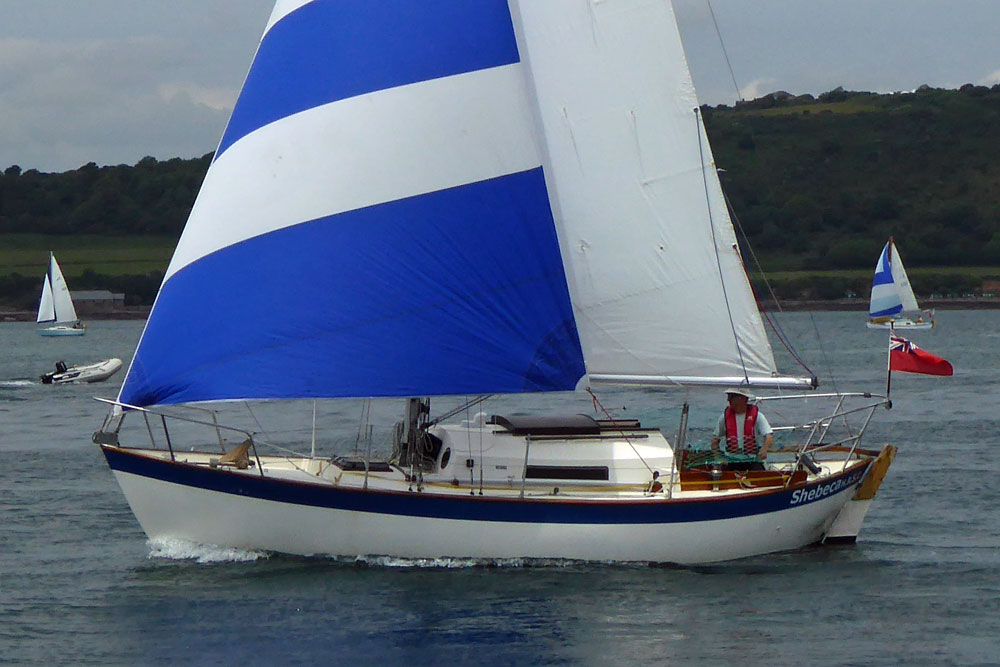
 'Decision', a Beneteau First 36.7 cruiser-racer
Table of Contents
- The Beneteau First 36.7 at a Glance
- Design & Construction
- Published Specification: The Beneteau First 36.7 Blueprint
- Sail Areas & Rig Dimensions
- Performance Analysis: Understanding the Design Ratios
- How the Beneteau First 36.7 Sails
- Bluewater Capability: Strengths & Trade-Offs
- Configuration, Layout & Cruising Characteristics
- Who This Boat Is Best For
- The Buyer’s Checklist: Common Problem Areas
- Summing Up
- Frequently Asked Questions (FAQs)
The Beneteau First 36.7 at a Glance
- Type: Performance cruiser-racer monohull
- Designer: Farr Yacht Design (Design No. 446)
- Builder: Beneteau (France & Beneteau USA, Marion, South Carolina)
- Production Years: Approx. 2000–2021, around 800 hulls built
- Rig: Fractional sloop, keel-stepped aluminium mast with double swept spreaders
- Best for: Club racing, performance-oriented coastal cruising, short offshore passages with a switched-on crew
- Strengths: Fast & responsive, good upwind performance, strong one-design community, practical three-cabin layout for family cruising
- Trade-offs: Light construction, modest tankage & stowage, more maintenance focus on keel, rig & deck than heavier bluewater cruisers
Design & Construction
The First 36.7 was conceived by Farr Yacht Design as a smaller sibling to the successful First 40.7, with a brief that blended one-design racing with production-boat practicality. The hull shows the fingerprints of contemporary offshore raceboats: plumb bow, flat sheer and reverse transom, combined with a fairly beamy midsection that carries volume into the ends to lengthen the effective waterline when heeled. Underwater, the boat carries a fin keel with lead ballast and a spade rudder, offered in two main versions: a deep draft around 7'2" (2.20 m) and a shoal draft around 5'11"–5'11" (1.80 m–1.80 m), both designed to give a forgiving stall profile and strong righting moment for a production hull.
Construction follows Beneteau’s typical early-2000s pattern. The hull is single-skin GRP with a substantial structural inner moulding bonded and laminated to the shell. That inner grid picks up loads from the keel, rudder and rig via tie rods and backing plates, spreading them across the hull rather than relying on isolated frames. The deck is a balsa-sandwich laminate, giving a good stiffness-to-weight ratio and reasonable thermal and sound insulation, with an inner deck liner to tidy the finish. The hull–deck joint is mechanically fastened and bonded, protected by a teak toerail. Chainplate loads are taken into the structural grid via tie rods rather than simple bolted strap chainplates on the topsides, so you are looking at a system where the chainplate attachments are effectively integrated into the laminated inner structure rather than being isolated fittings.
Coachroof and hull portlights on the First 36.7 are conventional framed units rather than the large bonded glass panels seen on more recent designs, which is helpful from a maintenance perspective: leaks tend to be gasket or bedding issues rather than wholesale adhesive failure. The rudder is an under-hung spade with a composite stock running in self-aligning bearings, giving a precise helm but placing more emphasis on careful inspection of bearings, stock and blade for grounding damage. Keels are lead, bolted through the structural grid with stainless steel studs and backing plates; Beneteau’s own documentation notes epoxy-based coatings and anti-corrosion treatment, but surveyors and owners still highlight keel–hull joint integrity as a key inspection point after any grounding.
Layout-wise, most boats are three-cabin, one-head arrangements: two aft cabins under the cockpit and a forward cabin, with a saloon, L-shaped galley and navigation station amidships. Wheel steering is common in North America, while some European boats were delivered with tillers, which changes cockpit ergonomics and helm feel quite noticeably. Deep and shoal keels, wheel or tiller, and minor interior trim differences are the main variants; there are no centreboard, bilge keel or alternative rig (ketch/cutter) versions in standard production. The boat carries CE Certification in Category A (A8/B8/C8/D10), but there is no widely published STIX number specific to the First 36.7, so stability assessment relies on ratios, righting-moment data and CE category rather than a quoted STIX figure.
Published Specification: The Beneteau First 36.7 Blueprint
| Specification | Imperial | Metric |
|---|---|---|
| LOA | 36'0" | 10.98m |
| LWL | 30'4" | 9.23m |
| Beam | 11'4" | 3.45 m |
| Draft (deep keel) | 7'2" | 2.20 m |
| Draft (shoal keel) | 5'11" | 1.80m |
| Displacement | 12,941 lb | 5,870 kg |
| Ballast (deep keel) | 3,847 lb | 1,745 kg |
| Rig Type | Fractional sloop | Fractional sloop |
| Hull Material | GRP (fibreglass) | GRP (fibreglass) |
| Production Dates | c. 2000–2021 | c. 2000–2021 |
Sail Areas & Rig Dimensions
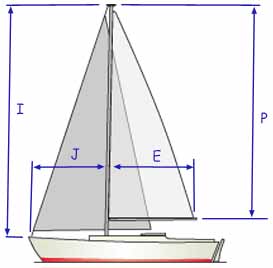 Rig dimensions
From class association and SailboatData figures, the standard rig dimensions are:
- I 46'5" (14.15m),
- J 13'1" (3.98m),
- P 45'5" (13.85 m),
- E 15'8" (4.75m).
Typical sail areas are:
Mainsail: ~398ft2 (36.8m2) depending on cut
Working headsail (100% foretriangle): ~303ft2 (28.1m2)
Upwind sail area (main + genoa): ~845ft2 (78.5m2)
Symmetric spinnaker: ~1,023ft2 (95.0m2)
These numbers vary slightly between sources because some quote class-legal racing sails, others quote standard cruising inventories, but they sit comfortably in the performance-cruiser band for a 36-footer.
Performance Analysis: Understanding the Design Ratios
Using the published displacement, waterline length and sail areas, the key ratios for the First 36.7 are:
| Ratio | Value | Practical Meaning |
|---|---|---|
| Sail Area/Displacement (SA/D) | ≈ 24.6 (upwind), ≈ 19.1 (100%) | Powerful sail plan for a production cruiser, good light-air performance and lively acceleration. |
| Displacement/Length (D/L) | ≈ 209 | Moderate displacement: not ultra-light, not heavy; capable of semi-planing behaviour off the wind. |
| Ballast/Displacement (B/D) | ≈ 29.7% | Reasonable stiffness for a beamy hull; relies on keel geometry as much as pure ballast percentage. |
| Capsize Screening Formula (CSF) | ≈ 1.93 | Below the 2.0 threshold often cited for offshore work, suggesting acceptable initial stability. |
| Brewer Motion Comfort Ratio | ≈ 24.7 | More comfortable than many stripped-out racers, but livelier than heavier bluewater cruisers. |
In practical terms, the boat has enough sail power to reward trimming and crew weight placement, without being so extreme that cruising crews feel overwhelmed. The moderate D/L and relatively fine ends help it maintain speed in a chop, while the ballast ratio and keel design give good resistance to heel once the boat is pressed. The CSF and comfort ratio sit in the middle ground: the First 36.7 is not a heavy-displacement ocean plodder, but it is more forgiving than many pure raceboats of similar length.
For more on this topic, you might want to take a look at Understanding Boat Performance & Design Ratios...
How the Beneteau First 36.7 Sails
Upwind, the First 36.7 is one of those boats that encourages you to play the traveller and mainsheet. The fractional rig, generous mainsail and relatively modest foretriangle mean that mainsail trim is central to performance and balance. In flat water and moderate breeze, the boat points well, carrying speed through tacks and rewarding a slightly bow-down mode when you need to punch through chop. Owners report a precise helm with the wheel version and a notably firm feel with the tiller version, especially when pressed hard; that firmness is a function of a large rudder and powerful hull form rather than a design flaw, but it does highlight the need for good sail trim and timely reefing.
Downwind, the boat feels lively but predictable. With a symmetric spinnaker and a competent crew, it will surf readily in the high teens of apparent wind, yet the hull form and rudder keep control manageable. The beamy stern gives good form stability, but like most modern performance hulls, it prefers being sailed actively rather than left to its own devices with a locked-off autopilot and poorly trimmed sails. Short-handed, the boat benefits from smaller headsails, a well-thought-out reefing plan and reliable autopilot; many owners race with full crews but cruise with two or three people, and the deck layout supports both modes reasonably well.
Motion-wise, the moderate D/L and relatively fine bow sections mean the boat can be lively in a steep sea, but it does not slam excessively if sailed with a touch of heel and the right amount of speed. The comfort ratio tells you it is not a heavy-displacement comfort cruiser, yet reports from coastal passages and shorter offshore races suggest that crews find it manageable and even enjoyable in typical mid-latitude conditions, provided they stay ahead of the sail plan.
Bluewater Capability: Strengths & Trade-Offs
The First 36.7 carries a CE Category A certificate, which indicates that the design meets regulatory requirements for offshore use. That said, its design intent is closer to offshore racing and performance cruising than to long-term liveaboard voyaging. Tankage is modest: around 20–21 US gallons (75–79 L) of fuel and roughly 71–79 US gallons (269–300 L) of fresh water, depending on source and fit-out. For coastal cruising and short offshore hops, this is workable; for ocean passages, most owners would add flexible tanks, watermakers or jerrycan storage.
Deck safety is generally good: high lifelines, solid pulpits and stanchions, non-slip moulded deck surfaces and a cockpit that keeps crew secure while still allowing efficient racing manoeuvres. The wide side decks and decent handholds make moving forward straightforward, though the low coachroof and modern sheer mean you need to be disciplined with jackstays and harnesses offshore. Load-carrying capacity is adequate for cruising gear, but the boat is sensitive to weight: piling heavy stores, dinghies and extra equipment into the ends will blunt performance and may affect trim.
Structurally, the hull and grid system are robust for a production racer-cruiser, but they are not designed to shrug off repeated hard groundings or heavy loads from over-canvassed sailing. Surveyors and experienced owners highlight keel–hull joint integrity, mast step condition, chainplate tie rods and deck core moisture as key areas to inspect before committing to serious offshore plans. With those addressed, and with a conservative sail plan and sensible loading, the First 36.7 can be used for bluewater passages by experienced crews who understand its performance-oriented nature.
Configuration, Layout & Cruising Characteristics
The cockpit is unapologetically race-focused: a full-beam mainsheet traveller, primary winches well placed for grinders, and a large wheel (on most boats) that allows the helmsman to sit outboard with good visibility. For cruising, this translates into a cockpit where sail controls are close at hand and seating is comfortable enough, though not as cosseting as on more cruising-oriented designs. The open transom and wide stern make boarding from a dinghy straightforward and give good access to the water.
Below, the three-cabin layout offers two aft doubles and a forward cabin, with a single heads compartment. Headroom is around 6'2" (1.88 m) in the saloon, which feels generous for a 36-footer. The galley is typically L-shaped to port, with a gimballed cooker, fridge and reasonable worktop space. Storage is adequate for coastal cruising but limited for extended liveaboard use; lockers are sized for weekend gear rather than months of provisions. The navigation station is proper and functional, with space for instruments and paper charts, which appeals to sailors who still value a dedicated nav area.
Berths are comfortable enough for adults, and the boat can sleep six to eight people depending on how you use the saloon. Ventilation is via opening hatches and portlights, and the interior finish is typical Beneteau of the era: light woods, moulded liners and a clean, modern feel. For liveaboard use, the main constraints are stowage volume, tankage and the need to manage condensation and ventilation carefully; for week-long cruises and club racing, the layout works very well.
Who This Boat Is Best For
Good fit for:
- Sailors who enjoy trimming sails and sailing the boat actively, both in racing and cruising modes
- Crews looking for a dual-purpose boat that can race competitively at club level and cruise comfortably for a week or two
- Owners who value modern performance, responsive helm feel and a supportive one-design community
Less ideal for:
- Couples planning long-term liveaboard life with heavy stores and extensive gear on board
- Sailors who prefer heavy-displacement motion and very high comfort ratios over speed and responsiveness
- Buyers who want minimal maintenance and are uncomfortable with the idea of monitoring keel bolts, rig and deck core over time
The Buyer’s Checklist: Common Problem Areas
When assessing a used First 36.7, experienced surveyors and owners suggest paying particular attention to:
- Keel–hull joint: Look for any signs of cracking, weeping or distortion around the keel stub after groundings or heavy lifts. The structural grid is strong, but hard impacts can damage the bonding and laminate.
- Mast & rig: Some forum reports mention boats on their second mast, often due to damage or fatigue. Inspect the mast step, partners, spreaders and standing rigging carefully, and budget for a full rig replacement if age or history is uncertain.
- Chainplate tie rods & structural grid: Check for cracking, corrosion or movement where tie rods meet the grid and where loads are transferred into the hull. Any signs of stress cracking or delamination around these points warrant further investigation.
- Deck core & moisture: The balsa-sandwich deck can suffer from core degradation around poorly bedded fittings. Use a moisture meter and tap test around stanchions, winches, traveller, mast partners and deck hardware.
- Rudder & bearings: Inspect the rudder blade for signs of water ingress, delamination or impact damage, and check bearings for play. A firm helm is normal; excessive stiffness or grinding is not.
- Interior wear & systems: As with any early-2000s production boat, expect ageing upholstery, original wiring and plumbing that may need updating. Check the fuel and water tanks, seacocks and heads installation for leaks or corrosion.
Typical refit costs will vary by region, but as a ballpark: a full new rig (mast, standing & running rigging) can easily reach mid-five figures; keel and grid repairs after a grounding can be similar; deck core repairs are highly dependent on extent but can run into several thousand pounds. A well-bought boat with documented maintenance will usually be cheaper than a bargain hull needing structural work.
Could this be your ideal cruising boat?
It may well be, but before going any further, it might be worth taking a look at my eBook 'How to Avoid Buying the Wrong Sailboat'...
Summing Up
The Beneteau First 36.7 occupies a useful niche: faster and more engaging than many mainstream cruisers, yet more forgiving and habitable than stripped-out raceboats. Its Farr hull, fractional rig and moderate displacement give it the ability to sail quickly and cleanly in a wide range of conditions, while the three-cabin layout and practical interior make family cruising straightforward. The design ratios and CE Category A rating support its use for offshore passages by experienced crews, but the boat’s lighter construction, modest tankage and performance focus mean it is best treated as a capable racer-cruiser rather than a heavy, load-lugging ocean home.
For a buyer who understands those trade-offs, inspects keel, rig, deck and structural grid carefully, and budgets sensibly for upgrades, the First 36.7 can be a rewarding boat that delivers both satisfying sailing and comfortable coastal cruising.

This article was written by Dick McClary, RYA Yachtmaster and author of the RYA publications 'Offshore Sailing' and 'Fishing Afloat', member of The Yachting Journalists Association (YJA), erstwhile member of the Ocean Cruising Club (OCC) and owner/administrator of 'Liveaboard Sailboats for Sale'.

Frequently Asked Questions (FAQs)
1. How does the First 36.7 compare to heavier bluewater cruisers for ocean passages?
1. How does the First 36.7 compare to heavier bluewater cruisers for ocean passages?
It offers higher average speeds and more engaging sailing, but demands more attention to loading, reefing and structural maintenance than a heavier-displacement cruiser.
2. Is the shoal-draft version significantly compromised compared to the deep keel?
2. Is the shoal-draft version significantly compromised compared to the deep keel?
The shoal keel gives better access in shallow waters and marinas, at the cost of some pointing ability and ultimate stiffness; for cruising-focused owners, it can be a sensible choice.
3. What sail inventory works best for short-handed coastal cruising on a First 36.7?
3. What sail inventory works best for short-handed coastal cruising on a First 36.7?
A smaller non-overlapping headsail, reliable reefing on the main, and a furling code sail or asymmetric for reaching will usually give a manageable, versatile setup.
4. How sensitive is the boat to extra cruising gear and liveaboard weight?
4. How sensitive is the boat to extra cruising gear and liveaboard weight?
It will carry reasonable cruising stores, but performance and motion suffer if heavy items are stacked in the ends; careful weight distribution is important.
5. Are wheel and tiller versions different to live with day-to-day?
5. Are wheel and tiller versions different to live with day-to-day?
Yes: the wheel version offers a more familiar cruising feel and easier helm sharing, while the tiller version gives a more direct connection but can feel firm when pressed.
Recent Articles


-
Mystery 35 Review: Specs, Performance & Buying Guide
Aug 29, 26 09:42 AM
An in-depth review of the Mystery 35 sailboat. Read technical specs, design ratios, sail performance, and common buyer inspection areas. -
Beneteau First 405 Review: Specs, Performance & Buyer’s Guide
Aug 26, 26 03:58 AM
Detailed Beneteau First 405 review covering specs, performance, bluewater capability, layouts and buyer’s checklist. -
Moody S38 Review: Specs, Ratios & Buyer’s Guide
Aug 12, 26 04:22 AM
In‑depth Moody S38 review covering specs, performance, design ratios, layout, strengths, trade‑offs & buyer inspection points.