- Home
- Rigging
- Standing Rigging Inspection Checklist
- What to Do If Dismasted At Sea
Dismasting at Sea: A Practical Response Plan and Jury-Rig Options
Key Takeaways: When a rig comes down, the order of priorities is the crew, the propeller and rudder, then the hull. Account for everyone, stop the engine, check that no lines are trailing in the water, and stop the wreckage pounding the hull, because a spreader end or the broken base of the mast can hole a fibreglass boat quickly. Release the stays that are slack first and leave the loaded ones until last, since clevis pins come out far more easily when unloaded. Carry cutters that suit your largest wire or rod, because the capacity engraved on many tools is for soft steel, not stainless. Decide early whether to salvage the rig or let it go: the hull comes first. Then choose between motoring, a jury rig or a tow, and keep a written record for your insurer. Most of this works only if you've thought it through, equipped the boat and briefed the crew before it happens.
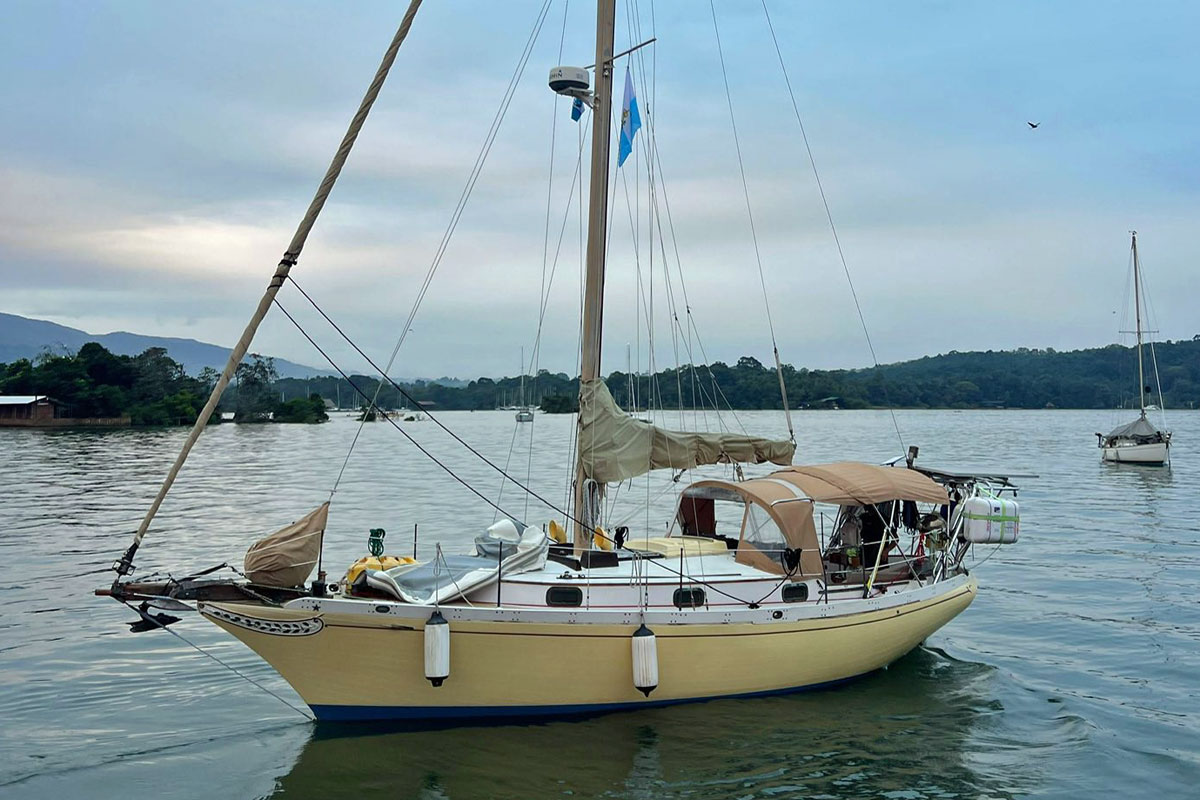
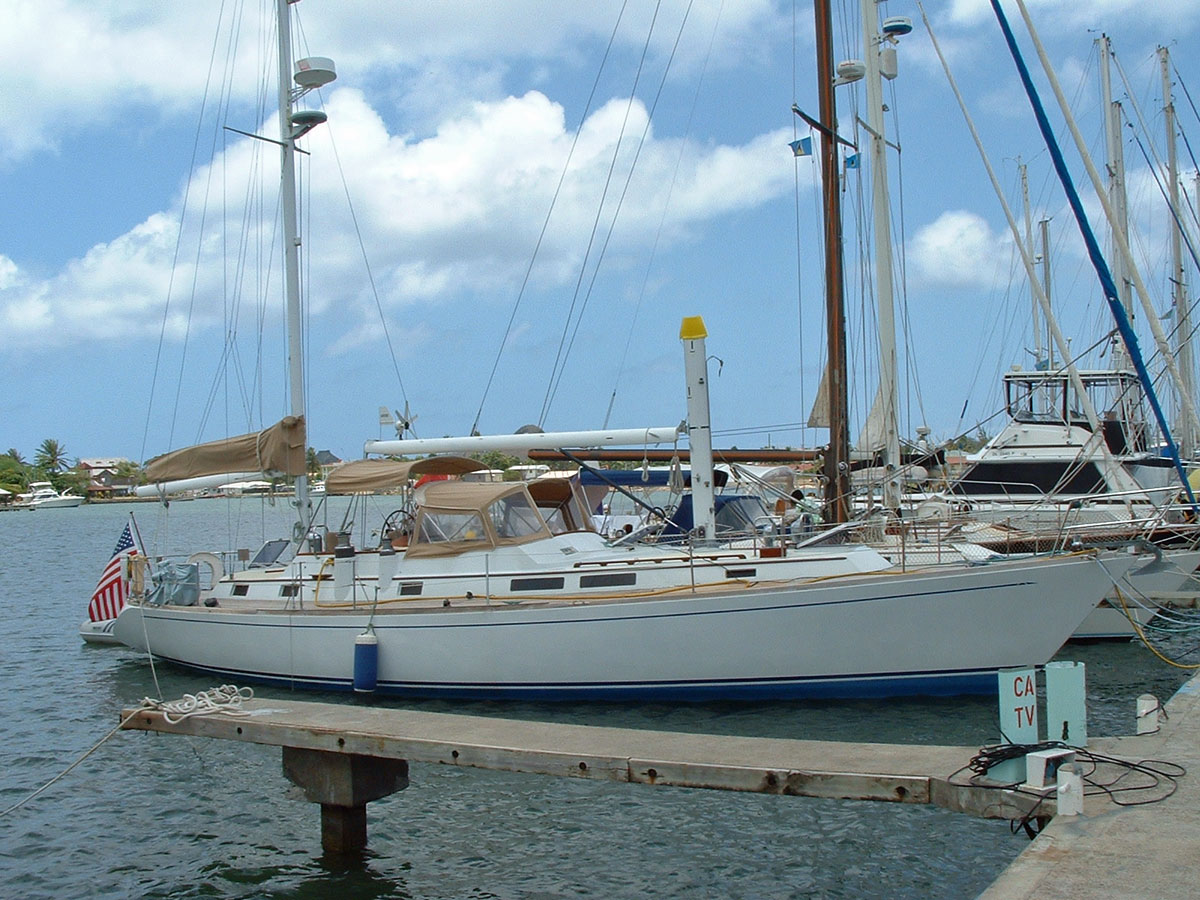 Sailboat dismasted through chainplate failure
'Crusader', a Dawn 48 (pictured above), lost her keel-stepped mast north of St Vincent when a chainplate failed without warning. Her skipper and his wife, good friends of ours, cut the rig clear and motored to Rodney Bay Marina in St Lucia for repairs.
Dismastings are rarely the end of the story. Many boats that lose their rigs are brought home safely, and the crews that manage it usually have one thing in common: they'd thought about it beforehand. This guide sets out a practical order of work, the tools that suit the job, and your options for getting home. It follows on from the short rig-failure section in our main inspection guide, A Sailor's Checklist: Inspecting & Maintaining Your Standing Rigging. No article can replace practice and a plan for your own boat, so treat this as a starting point.
The First Ten Minutes: Priorities in Order
The shock of a dismasting makes people want to act on everything at once. It helps to hold on to a simple order, which experienced sailors describe in much the same way: look after the crew, keep the hull from being holed, and make sure the propeller is free.
| Priority | What to Do | Why It Matters |
|---|---|---|
| 1. The crew | Account for everyone, keep people clipped on and clear of the wreckage and any wire under tension | Wreckage, loaded wire and a pitching deck are dangerous, and wire under tension can whip when cut |
| 2. Propeller and rudder | Stop the engine and check that no lines are trailing in the water; pull in sheets and halyards | Lines and rig in the water can foul the prop and rudder, and leave you without manoeuvrability |
| 3. The hull | Fend the wreckage off, or cut it away, if it is hitting the hull | A spreader end or the broken base of the mast can hole a fibreglass hull in minutes |
| 4. The rig | Release slack stays first and loaded ones last; decide whether to lash the rig on board or let it go | The rig can act as a sea anchor and foul the boat, but it may also hold equipment you need |
| 5. Calling for help | Decide early whether you need to call, and use Pan-Pan or Mayday as the situation warrants | Early notice costs nothing and gives rescuers time |
| 6. The record | Write down what happened and when, take photographs, and note the conditions | It will matter if you make an insurance claim |
Releasing the Rig: Pins, Cutters and the Order of Work
You have two ways to free the boat from its rig: remove the pins, or cut the wire. In practice you'll often need both. Release the stays and shrouds that are slack first, and save any that are under heavy load until last, because clevis pins are easy to remove when unloaded and can be very difficult when loaded, particularly on a pitching deck. Pins may also have been bent or deformed in the fall, so don't count on them coming out cleanly.
Some sailors report that knocking out clevis pins with a drift punch and hammer is quicker than cutting, and that you can ignore the cotter pin and simply hit it. Splaying split pins only slightly when you fit them, around 15 degrees, makes them easier to pull with pliers in an emergency, though you'll need to judge that against the risk of a pin working loose in normal use. If pins won't budge, cut.
For cutting, opinions differ and sources disagree, so match the tool to your own rigging, and try it before you need it.
| Tool | Suited To | Notes |
|---|---|---|
| Pliers, drift punch and hammer | Removing split pins and knocking out clevis pins | Easiest on slack stays; pins may be deformed by the dismasting |
| Hacksaw with spare blades | Wire and rod | Slow but dependable; carry plenty of blades |
| Large manual bolt cutters | Wire, if the size and quality suit your rigging | Choose a tool that can cut your largest wire; a cheap unit may not cut stainless rigging |
| Cable cutters with long handles | Wire | Check the rating: a tool marked for steel wire may not be rated for stainless 1x19 |
| Hydraulic cutters | Wire and rod | Fast and effective, but expensive |
| Angle grinder | Not recommended | One Yachting World report found it hard to cut rod while the rig was moving |
A word about ratings. One owner reported that cutters engraved with a maximum capacity of 12 mm steel wire failed on 10 mm stainless 1x19, which is much harder. Always test your cutters on a spare piece of your own rigging wire or ask the maker about capacity for stainless.
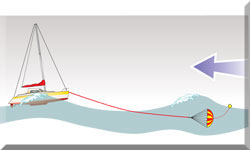
Don't be in too much of a hurry to cut everything. In a gale, one sailor writing in Cruising World suggests cutting away all but the headstay so that the sunken rig acts as a sea anchor and keeps the bow to the weather until conditions allow a jury rig. Another crew found the opposite problem, with the sinking rig dragging the bow down by the forestay. The right answer depends on your boat and the conditions, so think about it before it happens.
Keep the Rig or Let It Go?
If the broken rig is threatening the hull and you can't secure it, jettison it. The hull comes first, and the boat is worth more than the spar. If the mast broke cleanly, is trailing to leeward, the sea state is moderate and nothing is hitting the hull, you may have time to recover useful items before you let the rest go. Sails, halyards, the boom and sections of intact rigging can all be used for a jury rig. Recover what you can safely, then free the rest.
Getting Home: Motor, Jury Rig or Call for Help
Once the boat is safe, the question is how to reach port. Your choices are to motor, to set a jury rig, to ask for a tow, or a combination of these.
| Option | When It Suits | Trade-Offs |
|---|---|---|
| Motor | The engine works, the prop is clear and port is within fuel range | Simplest option; limited by fuel, sea state and a boat that may roll badly without a rig |
| Jury rig | No engine, not enough fuel or a long distance to cover | Slow, and usually good only for reaching or running; needs materials, time and a calm crew |
| Tow or assistance | Close to land or shipping, or the crew is tired or injured | Depends on what is available; agree terms and tell your insurer early |
| Combination | Port is further than your fuel range | A small jury sail can reduce rolling and extend motoring range |
If the engine is working, motoring is usually the simplest answer, and there's little point in complicating things with a jury mast when the engine can get you home. A jury rig earns its place when you've no engine or too little fuel.
Jury-Rig Ideas: Pole, Boom and Mast Stump
A jury rig uses whatever you have aboard to set a small sail. Common ideas include stepping a spinnaker pole or the boom as a short mast, or using what remains of the mast if a stump is left standing. One source suggests that a stump around 40 to 50 percent of the original height might carry a reduced sail. Sails that suit the job are a storm jib, a trysail or a cut-down piece of the mainsail. Don't expect to sail to windward: with a short mast and a small sail, expect slow progress, mostly on a broad reach or run.
The stays for a jury rig come from spare halyards, lashing line and any wire you've saved. If you use bulldog grips to join or terminate wire, treat them as a last resort for temporary repairs only. Marine suppliers say they shouldn't be used for permanent standing rigging, and they reduce the wire's strength, so fit at least three, with a thimble, the saddle on the loaded part, and re-check the nuts after the first load. Our guide to swage and mechanical terminals covers this in more detail, and explains why mechanical terminals are the better item for the spares locker.
Don't try to design a jury rig on the day. The crews who manage it best have usually looked at their boat beforehand and know what could serve as a mast, where it would step and how it would be supported. A Hallberg-Rassy 46 dismasted during the 2017 ARC was brought in under a jury rig by a well-prepared crew.
Before You Leave: Your Rig-Failure Kit and Plan
Most of the useful work happens before the mast falls. Build a kit, keep it where you can reach it, and make sure everyone knows where it is.
- Cutters that suit your largest wire or rod, tested on a spare piece, kept in an accessible place and not buried in a locker.
- A hacksaw with plenty of spare blades, plus a drift punch, hammer and pliers.
- Spare clevis pins in the most common sizes on your boat, with split pins.
- Spare wire and a few mechanical terminals of the right sizes, as discussed in our guide to spares for long distance cruising.
- Seizing wire, lashing line, self-amalgamating tape and a sharp knife.
- Fenders and a spare halyard plan, so you can fend off or secure wreckage.
- A head torch for each crew member, since many dismastings happen at night.
Splaying split pins only slightly, around 15 degrees, makes them easier to pull with pliers in an emergency. Folded fully back they are less likely to snag but need pliers or cutting to remove, and some sailors prefer that extra security. Weigh the two against how you sail.
Brief your crew. Agree who does what, where the cutters are, and the order of work. Planning together gives people a sense of purpose, and keeps them occupied and calm.
And remember that prevention is much cheaper than a jury rig. Regular inspections of the terminals, chainplates and wire catch the faults that cause most failures, as described in our guides to swage terminals, hidden chainplates and rigging age.
After the Event: Safety, Insurance and Records
Once you're safe, write down what happened, the conditions, and what you observed, and take photographs of the failed parts before they're thrown away. Contact your insurer promptly, stick to the facts, and avoid speculating about blame in early conversations. Keep any failed fittings, since they may be needed for a claim. Our guide to yacht insurance explains what insurers commonly expect.
Summing Up
A dismasting is survivable, and most of what decides the outcome is settled before it happens. Look after the crew first, then the propeller and rudder, then the hull. Release slack stays before loaded ones, use cutters you've tested on your own wire, and decide early whether to save the rig or let it go. Then choose between motoring, a jury rig and a tow, and write everything down for your insurer. Equip the boat, brief the crew, and inspect the rig so it doesn't happen at all.
Frequently Asked Questions
What is the first thing to do when a rig comes down?
What is the first thing to do when a rig comes down?
Account for the crew, then stop the engine and check that no lines are trailing in the water so the propeller isn't fouled. Next, stop the wreckage hitting the hull, by fending it off or cutting it free, before you decide what to do with the rig.
Are bolt cutters enough to cut away a rig?
Are bolt cutters enough to cut away a rig?
Only if they're big enough and good enough for your wire. Sources disagree about what works best, and the capacity marked on many tools is for soft steel, not stainless 1x19. Test your cutters on a spare piece of your own wire, and carry a hacksaw with spare blades as a backup. Rod needs a hacksaw or hydraulic cutters.
Should I cut the whole rig away or try to save it?
Should I cut the whole rig away or try to save it?
If it's threatening the hull and you can't secure it, cut it away: the boat matters more than the spar. If it's trailing cleanly in moderate conditions, you may have time to recover useful items first. In a gale, some sailors keep the headstay attached as a sea anchor, but others have had the sinking rig drag the bow down, so decide in advance.
Is it quicker to knock out the clevis pins or cut the wire?
Is it quicker to knock out the clevis pins or cut the wire?
Pins come out easily when a stay is slack and can be very hard when it's under heavy load. Release the slack stays first and leave the loaded ones until last. If a pin won't move, cut the wire instead.
Can I really sail with a jury rig?
Can I really sail with a jury rig?
You can make progress, but not much and not to windward. A short mast and a small sail will mostly serve for reaching or running, so a jury rig is best used to extend your range or steady the boat. If the engine works and port is within fuel range, motoring is usually simpler.
Recent Articles


-
Downeaster 32 Review, Specs & Bluewater Cruising Guide
Nov 20, 26 05:55 PM
Detailed Downeaster 32 review covering specs, performance, construction, common problems, bluewater capability and buying advice. -
Swage or Mechanical Rigging Terminals? Spot Failure Early
Nov 20, 26 04:06 PM
Swage terminals can crack out of sight. Learn the warning signs, how dye testing helps, and when Sta-Lok or Norseman fittings are the better choice. -
Wauquiez Pilot Saloon 60 Review, Specs & Bluewater Buying Guide
Nov 20, 26 09:01 AM
Detailed Wauquiez Pilot Saloon 60 review covering specs, performance, seaworthiness, ownership, buyer checks and bluewater cruising suitability.